Raw Earth Ink
Spit mixed with dirt – Muddy words flow
Author Spotlight: Logan Medland
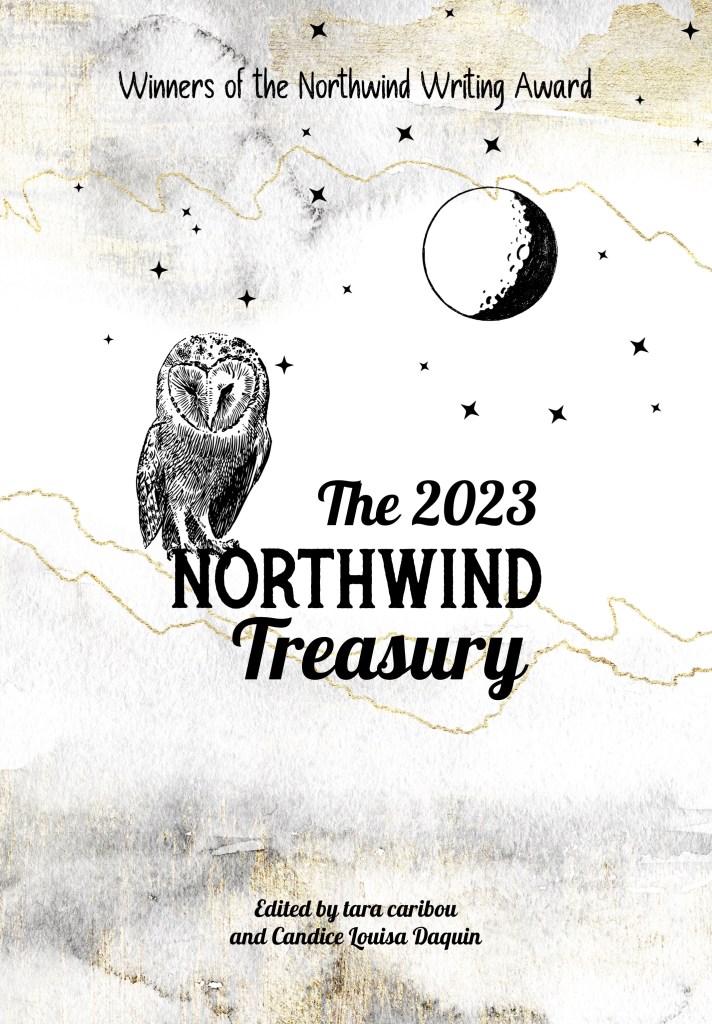
Logan Medland won 1st prize in Fiction in the Northwind Writing Award 2023 for his short story “Start a Religion – Stay Out of Jail.” It is an honor to feature his Q&A here on Raw Earth Ink as part of our promotion of truly exceptional authors.
Q & A
Candice: In Start a Religion – Stay out of Jail, you seem to master the genre of the short story, is this a genre you feel very attached to? If so, why? How do you feel it differs from poetry or prose alone? Is it challenging given you have also written novels, to put everything together with the restrictions of a short-story.
Logan: Short story writing was always my first love. The form seems to me as simple as a piece of music. An idea that begins, perhaps with a phrase, and then grows into its own completion, anywhere from a page to twenty pages. To me a short story feels like one idea, or one riff, worked out. When I started to work on longer forms: novels, plays, musicals, the difficult lesson that I had to learn was how to understand form and structure in a larger piece. This involved getting very lost in the forest at times. Short stories have always felt like a single journey and often, when I get an idea for one I already have a glimpse of the ending.
C: As a musician, how do you compare musical scores with the written word, if that’s possible? How are they alike or different in your experience with both?
L: To me music and writing come from essentially the same place, which has to do with a movement of ideas through time. Sentences have rhythm, tone, color, accents, cadences, pauses and dissonance, just like music. In music, like in writing, a central theme connects everything.
C: A favorite line from Start A Religion – Stay Out Of Jail is: “One morning a man from a rival religion came to our door. He told me he was a member of CROC, The Church for the Removal of Obstinate Cults. It was his duty to stop the pagan activities that have been taking place under the cover of our religion. I told him the media had misrepresented us; that we were merely goat farmers with a flair for theatricality.” You’re incredibly funny, are you like that in life as well as the written word? How important is humor to you? Especially when dealing with potentially serious subject matter.
L: I’d like to think I’m incredibly funny in real life, but I think I’m more the type that thinks of the funny thing to say while in the car on the way home from the party. I do live very much for a certain sense of absurdity. It seems like we live in a crazy world, and having a strong sense of the absurd protects me surrendering to some of the madness in which we live.
C: Is writing in Canada and writing in New York City two different experiences for you and how? In other words, is there a big city voice and a smaller city voice? Countryside voice? Are there distinctions you’re aware of that differentiate Canadian writers from American? Or do you see it as more an age/race/gender/location issue, than nationality?
L: I feel like there are definitely national differences for writing. Canadian writers tend more toward the poetic and personal I feel, Americans more towards big issues. While in Canada I lived for many years in a very rural area. I think it influences setting and characters, you have to write about what’s around you of course. Ultimately I think a writer’s voice is an individual thing, definitely all of age/race/gender etc play a part, but for me it comes down in the end to personal life experiences: we all draw from the subconscious, so the way your pysche was formed is the well that you draw from. This effects which writers first spark your imagination and what you want to write about.
C: Start a Religion – Stay Out of Jail – was a judges favorite because it possesses a rare combination of being both humorous and incredibly clever, whilst also telling and insightful as to cults, people and human nature. Not easy to do, it could have fallen flat but it didn’t. I found myself laughing out loud, nodding and also feeling anger and sorrow. How do you fit all of this into one short story!
L: This story came about from the first sentence and flowed quickly from there. At the time I was living in the country and we were pretty isolated, so the idea of actually starting a cult seemed kind of plausible in a ridiculous kind of way. People I knew were starting yoga schools, life-coaching businesses etc. so this seemed to me only one more step. To me absurdism is so close to real life, you only have to shift a few things for it to become comedic and sad at the same time.
C: You are a pianist and composer and director of musicals; why are you writing short stories? Is there an impetus that isn’t met in music? Or do they compliment each other as invariable facets of the same thing; the creative impulse?
L: Oddly enough for me, my early music career was in classical music, which gave me a huge amount of discipline, but not a lot of creative outlet because you are only interpreting the works of others. I tried writing classical music at one time, but found that I was very restricted, I guess with too much reverence for the masters and didn’t find my voice there. As an avid reader from a very early age, words came easier, and with less self-judgement. At present I’m working a lot on writing new musicals: writing in a more popular vein: musicals as opposed to classical music is liberating, and writing for theatre enables me to play with words and music at the same time. Oddly enough I don’t really feel there’s a strong distinction between “commercial” and “artistic” writing, the only differences are really in terms of genre.
C: In Hurricanes in the South, your description is so vividly written, it has such an unapologetic blunt approach that distinguishes your writing. Is this intentional? If a style you are drawn toward, how did this come to be? You focus on the real but using extreme events to illustrate some of the metaphor around the chosen subject. Here there is a seeming zombie-apocalypse but I get a sense this is much more about the modern world underneath the obvious. As if the speaker is seeing people as dead because they feel dead (to them) not literally but figuratively.
L: The style of this story I think came about as a way to contrast the the catastrophe surrounding the narrator. In a way it felt like this character had to be detached and almost unemotional to talk about this. Like they were a hollowed out person. And of course, yes, this is definitely all a metaphor, but hopefully not one that’s too specific ie it really could be about any kind of wasteland and loss: spiritual, cultural, physical, or simply the death of hope or faith.
C: Be honest, you don’t sleep do you? I say this because who can do everything you do and still have time to write award-winning short-story-fiction? What’s your secret? Or what’s in your coffee?
L: Haha, I do like to sleep, but sometimes I get caught between being a night owl, and an early riser. Being a freelance artist is both a blessing and a curse. When I have time away from music directing and professional music gigs, I keep myself sane by writing. Sometimes I have several months free, and if I didn’t create, I’d probably get very stressed about work. There’s something satisfying about creating your own work that gives me strength. In all honesty, there’s a certain restlessness that gets me up in the morning, and an awareness that time is always fleeting that gets me motivated when I get lazy.
C: In Hurricanes In The South, one favorite line is; “I wait for what must be years. Days at least. Minutes or hours, seconds, millenniums. It’s a long time anyway, if time is the right word. An elongated moment that stretches and stretches and simply cannot be snipped off. I give up hope; I get up and run around the house in a frenzy. I stick my fingers in an electric socket; I take a knife to my arms.” I read this several times and it felt to me very much like you were writing about a universal experience most of us can tap into. How important is it for your work to speak to people about their own experiences, even if not direct? To indirectly demand they consider things that are hard and potentially painful?
L: I’m so glad you like this moment! To me it’s the culmination of the story. It’s a moment that is very despairing for the narrator, and yet also is not quite real, the electricity doesn’t work and the knives are dull, in this strange dystopia in which he is living, even suicide does not seem real. But I think it gets to the heart of the alienation this person is feeling and I’m glad it came through. I genuinely hope that writing, and reading other’s writing is an effective way to deal with some of the worst things in life. I think the thing that comes to me now, rereading this story, is how little the narrator is able to feel anything.
C: The direct writing approach is very distinctive, and when employed by a writer of short fiction often seen as a more masculine way of writing. If you didn’t know better, would you say your writing has a gender? If not, how do you feel your writing evolves in terms of the way it approaches the reader?
L: I have written a lot of stories in first person. I feel like there’s something very immediate about the voice, and the character is immediately more intimate with the reader. I’m not sure there’s a gender to my writing voice, ideally each character would have somewhat of a different voice, some more masculine or feminine, along a spectrum. Being a writer and assuming the voice of a character allows one to explore other tonalities within oneself.
C: When you compare how you wrote when you began and now, what are the most palpable differences you observe in how that writing has shifted?
L: The biggest difference in my writing now is knowing more of what to leave out. Often when I go back and rework old work, it’s ninety percent cutting things out. Sometimes you cut what you once thought were some of the best lines, which now seem overwritten.
C: What wakes you up in the night and gets you writing? Or conversely, wakes you up early in the morning.
L: There’s nothing more exciting than a new good idea. I used to carry around a pad in the old days before cell phones, but now the memo page is full of stuff tapped out at various times, and every once in a while I go through and reread old memos and discover some wonderfully odd things. For me, it’s really just the pursuit of a really strong unusual idea, and then the problem solving that takes place when you work out that idea over the longer term.
C: Where do you feel you struggle the most as a writer, in terms of any aspect of the writing experience to you personally?
L: The biggest challenge is simply keeping the faith. Trying to make a living as an artist has been a long journey with many highs and lows, and the struggle to find any kind of publication or readership makes one doubt one’s abilities and want to give up.
C: What do you get out of other writers and how? Meaning, when you read a book, you absolutely love, what is it specifically that really pulls you in?
L: That’s a big question. I think it has to do with – for example, taking cooking as a metaphor. Reading a great book is like seeing a dish really well made, first in the process – I always have a huge respect for that – but then also the way it all comes together in a soulful or emotional experience, the way a great meal moves you emotionally, and then there’s the third aspect of it, the realizations that come with great literature: that you can read something and be forever changed by it.
C: Which writers have cultivated in you an urge to write as well as them, even if differently and what was it about their writing or story that encouraged you to begin your journey as a writer?
L: So many: Initially Dostoevsky (Notes from the Underground) gave me a love of perverse characters and unique voice, Chekov, for his clarity and playfulness and then later Calvino and Barthelme. From Bartheleme, I loved the notion that many of his stories seemed like extended riffs. Take an idea and keep pushing it. I have a huge respect for Kurt Vonnegut: his ability to combine a colloquial style with very large philosophical questions. I think all of these writers have a sense of playfulness that I connected with.
C: How much does the physicality of your existence influence your writing? And what else do you believe really drives you as a writer in terms of influence and/or tools that you utilize consciously or subconsciously to craft your storytelling?
L: This is a challenging question I’ve never thought of. I do think there are writers who live an entirely different life in their literature: people with lifelong illnesses who can be someone else in their writing, and that it is therefore an escape. I think the things that influence a writer have to do with how they process the world. For me, I think wit, irony, philosophizing are coping mechanisms.
C: Is there anything you really despise about writing or writers, a pet peeve or something that disgusts you when you read it?
L: I’m not a big fan of didactic writing. I don’t care about a writer’s politics, I don’t want to see an echo of myself in someone else’s writing, and I want to see flawed human beings as characters in writing, not “good” or “bad” people. I don’t think writing should be about “teachable moments”, it should be about exploring the breadth of the human soul and human experience, from the glorious to the perverse.
C: How do you envision your writing journey in say, five years’ time, what do you hope in terms of where you will find yourself?
L: Well wishfully thinking … there’s a lot I’d like to have happen. But realistically, what I want in five years time is more opportunities to write, both for theatre and for fiction, and to get the opportunity to use my skills to share my work more widely.
C: If you were describing yourself to someone else, anonymously and they did not know you, what would you want them to know about you?
L: I’m like the duck that looks like they are sitting very serenely on the pond, but underneath there’s a whole lot of furious paddling going on.
C: If you weren’t a writer, what do you think you’d have liked to do with your life and why?
L: At one time, I really wanted to be a painter.
C: In this moment as you read this, name one novel that blew your socks off and describe why it did?
L: Italo Calvino’s “If on a Winter’s Night a Traveller” was one book that really blew me away on first read.
C: Do you think film and plays and theater, music and dance and all those other forms of art, and entertainment, influence a writer as much as novels and writing do?
L: I would hope they do. I think fiction benefits from having outside influences. I love writer’s with a sense of theatricality, musicality etc.
C: What do you make of writers who do MFA programs versus those who do not? In other words, do you think a writer needs a degree of ‘education’ or do you believe a writer is born able to write or becomes able to write through lived experience primarily?
L: I never did an MFA program, though I did a classical music degree. I feel like the biggest danger in the “higher eduction” of artistic fields is that it risks homogenizing writing, and an individual voice is harder to find. I think an artist should struggle, find mentors, copy their betters and write until they’ve gotten written of all their bad writing. We have had centuries of great literature without MFA programs.
C: Not in relation to writing per say (although everything is related if you’re a writer) what makes you really furious these days? And what makes you really happy?
L: Well …. I could get into politics here, but … in all honesty there aren’t a lot of things that make me furious except online customer “service” and airline travel. Aside from this there are a few things that make me despair, the biggest being how with only a little more effort and intelligence and kindness we could make this world a lot better and yet we don’t.
C: What role do you think mental health plays in our role as writers? Can you be entirely balanced as a writer? Does it tend to attract people who struggle in some way? Has it no bearing? How does it play into a writer’s output if at all?
L: Great question! Writing in my youth was definitely a way to process mental health issues. Poems in my teens were ways to deal with depression and anxiety and to try and process a world I didn’t understand. The arts in general are a form of meditation for me, which has been a great mental health tool. Yes artists do tend to be crazy, but I’m not sure if they are drawn to the arts because they are, or because a life in the arts makes you unstable. I think people who are off-kilter have a lot to offer the world, and I also think certain types recognize they can’t live a typical “normal” life and give themselves permission to fly their own “freak flag”.
C: Do you consider yourself an indie writer? What do indie writers bring to the table that other kinds of writers such as large-publisher-writers or journalists do not possess or utilize?
L: I guess I’m an indie writer yes. I think everything right now is so much about publicity, and clicks and “platforms” and “brands” etc, that we miss out on really interesting off-kilter perspectives from real people. So much of our cultural life, and our experience is commodified. It’s nice to come across stuff that isn’t.

Logan Medland is a writer and professional musician based out of New York City. His short stories have been published in numerous literary magazines in Canada (where he’s from). In the U.S. both his first
novel: The Edge of the World, and his second novel: That Mad Cervantes, were semi-finalists in the Amazon Emerging Novel Competition. He is the composer and writer of Fingers and Toes, a 30’s era musical that was part of the New York Musical Festival in 2010, and has had three regional productions since then. Most recently he wrote music and lyrics for “Love Goddess: The Rita Hayworth Musical” which played Off-West End at the Cockpit Theatre, November/December 2022 and is currently under development for a U.S. production. Since the early 2000’s he has worked as a professional music director/arranger and pianist for Broadway and Off-Broadway shows such as “Cats” (International tour),
Chicago (US tour) Jersey Boys (US tour) and “Dr. Zhivago” and “A Bronx Tale” on Broadway. He is currently working simultaneously as a composer, lyricist and book writer on a number of projects in
development.
To read The 2023 Northwind Treasury, including Logan’s winning piece, you can purchase it (come December) in paperback on Lulu, Barnes & Noble, or Amazon or as an eBook on Lulu, Nook, Kobo, or Kindle. To see the list of contents and winners, visit our winner’s page.
 Raw Earth Ink