Raw Earth Ink
Spit mixed with dirt – Muddy words flow
Author Spotlight: Adele Evershed
Adele Evershed won 3rd prize in Poetry in the Northwind Writing Award 2023 for her poem “What Does Water Become?” It is an honor to feature her Q&A here on Raw Earth Ink as part of our promotion of truly exceptional authors.
Q & A
Candice: In What Does Water Become? there are many messages within this single poem, not least the power of the layout and ultimate message. Regarding poetry, is this a genre you feel really speaks for you more than any other? If so, why? How do you feel it differs from other forms?
Adele: I think of poetry as an attempt to find answers in a world where the questions keep changing. This is true whether it’s on an individual level, like looking for answers about love or loss, or on a macro level, looking to shed light on injustice or, in the case of my poem about climate change. Poetry does not necessarily have the answers, but by appealing to a reader’s feelings, it can stir a response and change the way we view aspects of the world. Of course, other genres can do this, but because of poetry’s compactness, rhythm, use of metaphor, and appeal to our senses, it has an immediacy that other genres don’t offer. How language is used demands you listen, you can’t skim, you have to be present. And the one thing that marks poetry out from other forms is the way it looks on the page. What Does Water Become is a concrete poem, so I was aware of the shape of the words on the page and how the shorter lines speed your reading to give an impression of water rushing away.
Finally, to quote Emily Dickenson’s poem, “I Dwell in Possibilities,” her house is poetry, and she says it’s “A fairer House than Prose—More numerous of Windows—Superior—for doors.”
I also write flash fiction, but poetry opens more windows and doors; it makes me pay more attention to the words, but equally, it makes me think about the pauses and what might happen in that space.
C: How did the writing of poetry come to appeal to you and start your journey? Why not prose or other forms, what was it about poetry?
A: As I mentioned, I also write flash fiction, a story of 1000 words or under. I think these forms are closely connected, and some flash fiction reads like a long-form poem. Both genres rely heavily on metaphors, making language work hard with a limited word count. If there is a difference it is probably flash fiction has a story arc but having said that I do have prose poems that have a narrative. Sometimes, I’ve started a piece of writing thinking it will be a poem, and it morphs into a flash or vice versa. I have written a novella in flash, Wannabe, published by Alien Buddha Press, and that is a collection of different-length flashes and poems, so it is a hybrid. Each story/poem can are complete pieces in themselves but when you read the collection you can discern a bigger story. Over the last few years, I have noticed more calls for hybrid submissions, mainly by indie presses. I think we are seeing more blurring around the edges and experimental writing in what was once considered traditional genres, and that’s exciting.
I also write haiku, which I find meditative and it helps me hone my language. There is a very active haiku community on line and it has been one of the joys of the last two years for me to meet and interact with some wonderful haiku poets. I write a daily haiku from a prompt on X and tweet it @AdLibby1.
C: You marry description alongside life in a seamless way and actually bring the reader into the room with your presentation of the subject-matter. The poem feels female, is that something you are conscious of or would you refute the necessity of putting a gender on it? In other words, is there a palpable difference in your mind when it comes to the gender of a poet?
A: This is such an interesting question. I’ve never really considered the gender of a poem, but I can see how What Does Water Become feels female. In many of my other poems, I write about issues that overwhelmingly affect women: domestic abuse, misogyny, abortion rights, menopause, and coming to terms with aging as a woman. I had written another poem about rape which starts with ‘It’s always the women that carry the water’ and that was the catalyst for What Does Water Become. I couldn’t get rid of an image I had in my mind of a woman walking miles to a well only to find it empty. So, I suppose I was coming at the subject matter from a gendered view, but when I read a poem, I don’t consider the gender of the poet; I’m more looking for recognition of something I’ve felt or a new way of seeing that I’d never considered. In other words, I’m looking for a connection.
C: When you compare how you wrote when you began and now, what are the most palpable differences you observe in how that writing has shifted?
A: I’ve always loved words. When I was younger, I wanted to grow up to be a librarian or an author, and then life got in the way. I studied psychology at University and then trained to be a teacher; I got married, had four children, moved to Singapore because of my husband’s job, and finally landed in Connecticut and started teaching preschool. That is a long-winded way of saying I only started writing four years ago. My first effort was a horrible poem about missing Wales. Then Covid hit, and I was out of the classroom for seven months. Everybody in my house worked online, so I started taking online courses. I did a poetry appreciation course on Emily Dickinson, which I adored, and one on Walt Whitman, which I didn’t, but I learned a lot. So, my writing has definitely shifted and is still changing. What I love about modern poetry is the freedom to experiment. Recently, I wrote an erasure poem from one of my rejection letters, which I discovered is a great cathartic exercise that I highly recommend.
C: You have some killer lines in this poem, like: “the bog thickened with bones of our ancestors or other cattle.” Where do those lines come from? Lived experience? What you have read? What you have witnessed? Or your imagination?
A: Thank you. I’m from a working-class background; I’ve worked since I was thirteen and was the first in my family to attend university. I was never deprived, but there were always more vegetables on our plates (one of my grandfathers had an allotment) than meat, as the meat was expensive. My father qualified as an accountant by attending night school, and then we moved house and class! Whenever I’ve found myself doing something like having a cocktail in Raffles when I lived in Singapore or attending a charity gala, I always think, ‘What would my Nan think if she could see me now?’ So, the answer to your question is that, in part, it was my lived experience, stories handed down through the family, and a hefty dose of imagination.
C: What do you get out of other writers and how? Meaning, when you read a book, you absolutely love, what is it specifically that really pulls you in?
A: Eudora Welty, an American short story writer, novelist, and photographer, said, “Great fiction shows us not how to conduct our behavior but how to feel. Eventually, it may show us how to face our feelings and face our actions and to have new inklings about what they mean.” And that, in a nutshell, is what I get from reading other writers. The thing that initially pulls me into a novel is a good story, but the thing that keeps me on the hook is how the writing makes me feel. In poetry, it is a clever turn of phrase or something that makes me consider a different point of view or something I relate to through my own experience. The first time I read Warning by Jenny Jones made me smile, but it also made me consider the folly of not being true to yourself in the present. Why wait until you are old to wear purple or go out in your slippers in the rain? Do it now because you might not live to be an old woman!
C: Your line: “and a new universe found in a rock pool by a child” Is very memorable and clever. Do you feel that children have an intuition that is often lost in adulthood?
A: I am a preschool teacher, and I’m always amazed by the capacity of young children to be in the now. Whatever is happening to them is the most important thing; no looking forward or backward. They are totally absorbed in their play. Just yesterday, one of the three-year-old girls I teach found a ladybug. She was so excited. We popped it into an insect catcher and got magnifying glasses, and she spent twenty minutes just watching the bug. As adults, we can get caught up living in the past or worrying about the future rather than paying attention to what is in front of us, and I feel fortunate to be reminded to be in the present every time I’m in my classroom.
C: How do you envision your writing journey in say, five years’ time, what do you hope in terms of where you will find yourself?
A: Very simply, I would lie to have published a full poetry collection. Even writing that makes me smile. At the start of 2023, I thought I’d only ever publish one book. I’d signed a contract with Finishing Line Press for my chapbook Turbulence in Small Spaces, and it took almost two years from acceptance to holding the physical book. Now, at the end of the year, I have published a second poetry chapbook, The Brink of Silence, through Bottlecap Press and a Novella in Flash, Wannabe, through Alien Buddha Press. I have also signed a contract with Unsolicited Press for another Novella in Flash to be published in September 2025 and won the Open Contract Challenge. So, Dark Myth Publications will publish my short story collection, Suffer/Rage, next year. Sometimes, I have to reread the acceptances to convince myself this has all happened. My message for all those reading this is that it’s never too late. I started writing in 2019 at 55, so in five years, I will be 65 and retired with more time to write-fingers crossed.
C: In this moment as you read this, name one novel that blew your socks off and describe why it did?
A: Just one? Okay, in this moment, it would be The Handmaiden’s Tale by Margaret Atwood. I read it when it was first published in the 1980s and living in Britain. It made a real impression on me. At the start of the book, the reader is unsure what is going on. Where is this place, Gilead? It seems familiar yet foreign at the same time. Who is the narrator? Why doesn’t she tell us her name? And then you realize it’s a future America, and you are shocked. When I read it, I thought this could never happen in modern-day Britain, and I still think that’s true, but in a very diluted form, it is happening in modern-day America, and I find that chilling.
This novel also gave me a taste for dystopian/sci-fi writing like Kazuo Ishiguro’s Never Let Me Go. It has the same way of giving the reader a sense of familiarity, but then you realize that the characters you have come to care about are clones bred for their organs. It’s the horror lurking in the everyday that I find fascinating.
Finally, I must give a shout out to Olivia Butler’s short story, “Blood Child”–it’s about a human boy being groomed by an alien race to become pregnant. If you haven’t read it, you should. In fact, read anything by Olivia Butler. I told you I couldn’t pick just one, and on reflection, they are all dystopian; I’m not sure what that says about me. So I’ll add everything by Tana French, especially her first Into the Woods. The plot is clever, and I love as a woman the way she portrays Rob, her narrator.
C: What do you make of writers who do MFA programs versus those who do not? This can include courses and workshops also. In other words, do you think a writer needs a degree of ‘education’ or do you believe a writer is born able to write or becomes able to write through lived experience primarily?
A: This question comes up a lot among writers. Unless you can get a scholarship, the cost of an MFA is prohibitive for many. I am British, and our Master’s degrees are much cheaper and take a year, much more obtainable. On a slight tangent regarding education, the requirement for teachers to obtain a Master’s in Education is ridiculous, given how much teachers are paid.
If someone wants to take an MFA, that’s great, but not having one doesn’t stop you from becoming a writer. I have done several online courses, many of them free or very reasonably priced. I’ve done a number run by Sage Turtle and the Crow Collective and the free workshops from the International Woman’s Writing Guild. Another great resource has been local libraries. I do a weekly fiction writing class over Zoom, which has been invaluable in my writing development. As a group, we all write to the same prompt, and it’s always so interesting to see where each writer goes.
I do think a writer needs, to quote the question, ‘a degree of education’ but not necessarily a formal education. I’ve always read a lot and consider that the most valuable education I have received. I was very lucky, my mother always encouraged me to read. She gave me The Diary of Anne Frank when I was a teenager, and I think it was that book that birthed empathy in me. And I genuinely believe that is one of the most important tools for a writer: put yourself in another’s shoes and walk around a bit; if we all did this, the world would be a better place.
C: Not in relation to writing per say (although everything is related if you’re a writer) what makes you really furious these days? And what makes you really happy?
A: It will be no surprise when I say so many things are making me furious. Climate change and the unwillingness of Governments around the world to do more. The attack on women’s autonomy over their own bodies by the repeal of Roe v Wade in the USA. But there are glimmers people are fighting back; each time abortion has been put on the ballot, abortion rights have one, the latest in Ohio. In the UK, the Conservative Party is trying to follow Trump’s rule book, waging a culture war to try and win the next election. They have been attempting to stir up hatred against immigrants, people experiencing homelessness, and legitimate protests. During the pandemic, they even tried to take away free lunches from children whose families were struggling financially. Of course, as I type this, the terrible suffering in Israel and Gaza is at the forefront of my mind.
All of this makes me very grateful that I have no spare mental space to be anything but in the moment with the kids when I’m teaching.
I love writing, winning competitions, and getting published is a dopamine rush, but I am happiest when spending time with my family. Yesterday, one of my sons had the day off, and he asked me if I wanted to do something with him- pure joy!
C: What role do you think mental health plays in our role as writers? Can you be entirely balanced as a writer? Does it tend to attract people who struggle in some way? Has it no bearing? How does it play into a writer’s output if at all?
A: I’m not sure anyone is truly balanced; it might be that’s what we are all striving for, and some do that by drinking or drugs, others by pouring everything into romantic relationships or parenthood, and still others by finding a cause. Writers utilize this frisson in their work so it becomes more apparent. I’m going to quote Eudora Welty again, “I am a writer who came from a sheltered life. A sheltered life can be a daring life as well. For all serious daring starts from within.”
There is no doubt that writing can help maintain your mental health. The benefits of expressive writing helping with anxiety, depression, and other mental health issues are well documented. And many writers use poetry as a way of working through their trauma. My Mum passed away from ovarian cancer when I was 21, and I never really processed my loss. I’ve reconnected with her by writing poems about our time together–not so much the cancer, although I did write about that too at the beginning. I now recognize how her influence has shaped my beliefs and how I’ve lived my life. For example, beyond the consequence of always thinking every health scan is going to be bad news, I celebrate aging. Next year, I’ll be 60, and I’m happy to shout that from the rooftops.
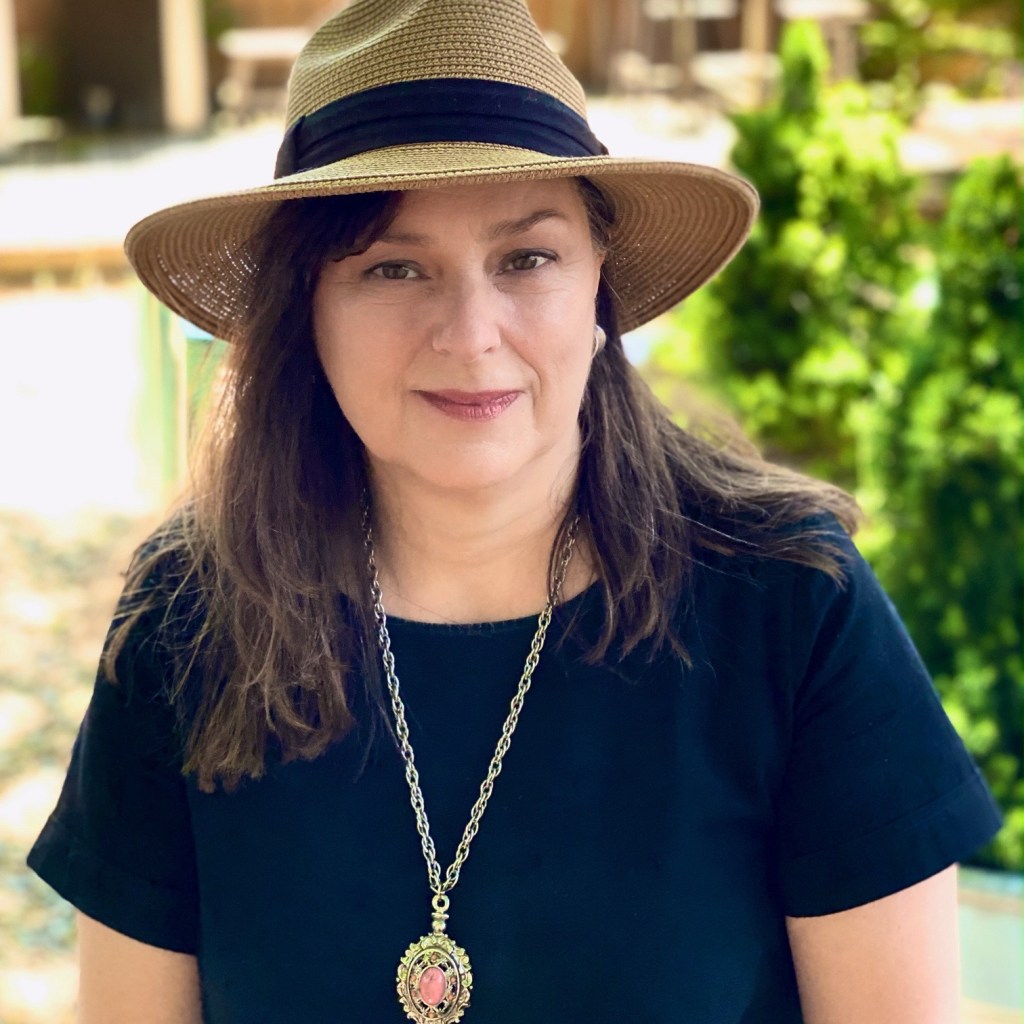
ADELE EVERSHED was born in South Wales and has lived in Hong Kong and Singapore before settling in Connecticut. Her prose and poetry have been published in over a hundred journals and anthologies such as Every Day Fiction, Grey Sparrow Journal, Anti Heroin Chic, Reflex Fiction, Gyroscope, and Hole in the Head Review. Adele has been nominated for the Pushcart Prize and Best of the Net for poetry, and the
Pushcart and Staunch Prize for fiction. Finishing Line Press published her first
poetry chapbook, Turbulence in Small Places. Her second collection, The Brink of Silence is available from Bottlecap Press and her novella-in-flash, Wannabe, was published by Alien Buddha Press in May.
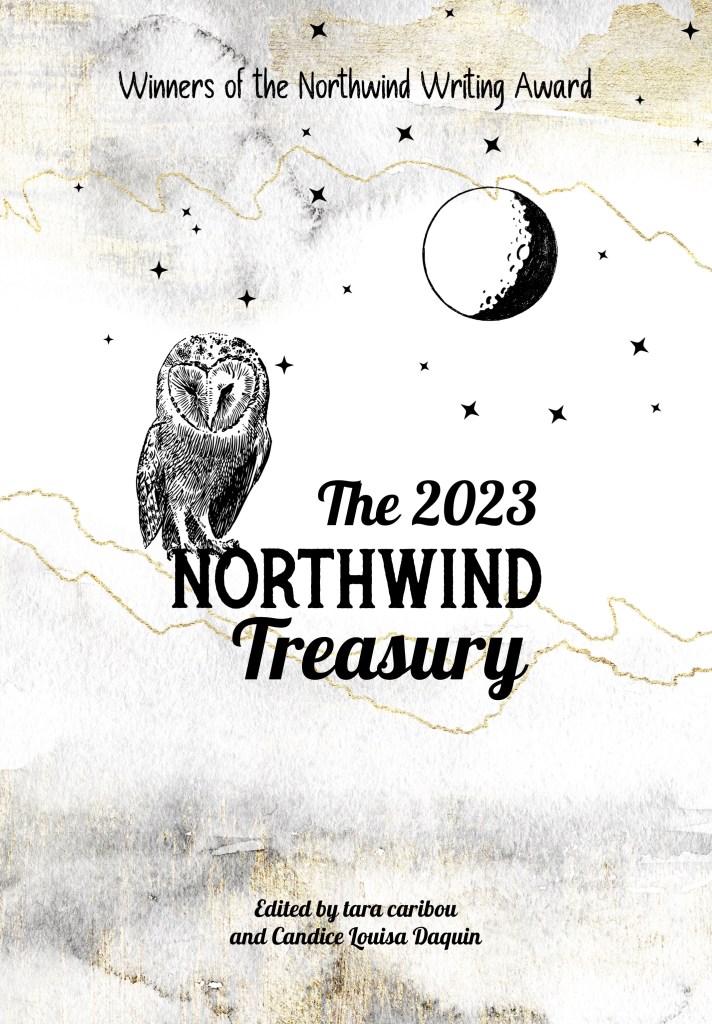
To read The 2023 Northwind Treasury, including Adele’s winning piece, you can purchase it (come December) in paperback on Lulu, Barnes & Noble, or Amazon or as an eBook on Lulu, Nook, Kobo, or Kindle. To see the list of contents and winners, visit our winner’s page.
 Raw Earth Ink