Raw Earth Ink
Spit mixed with dirt – Muddy words flow
Author Spotlight: Joe Labriola
Joe Labriola won 3rd prize in Non-Fiction in the Northwind Writing Award 2024 for his piece “Beach Cleaned Eyes”. It is an honor to feature his Q&A here on Raw Earth Ink as part of our promotion of truly exceptional authors.
Q & A
Candice: Joe, firstly thank you so much for your beautiful submission. What stood out to all six judges of the non-fiction award was the emotive strength of your storytelling and the uniqueness of Beach Cleaned Eyes. What inspired this story to be written?
Joe: First of all, a huge thank you to the judges and everyone involved with this amazing award. The purpose of writing—in my opinion—is to share important messages with the world, and so being given the platform to do this is the greatest honor one can hope for.
I would describe the inspiration for this piece as a culmination of my beach cleaning experiences, which stems from my love of the ocean, having grown up always close to the water. What started as innocently noticing and then picking up some trash evolved over the years into ongoing advocacy—from working with students at my university’s Environmental Club, to hosting local events, to journeying cross country and sharing the stories of what I clean up along the way on social media. I think this piece is my way of contextualizing many of these experiences in how they illuminate humanity’s relationship with itself—and, of course, nature.
CD: The story has several themes, obviously a main one being COMPASSION, the other being what we do to the natural world, and then the alienation with that world and the connection with nature. Ultimately is it ever enough? There are questions of existence in this short piece. Did it start out that way – did you always see the parallels between the situations?
Joe: A piece like this is so strange to describe from a “craft” standpoint. The initial version looked very different from the final product, as there’s certainly a lot of “weaving” here of different situations that parallel each other in terms of relating to and building upon themes like you point out. And so I think that there was a lot of “trial and error” in the sense of writing out beach cleaning scenes that have stuck out in my mind over the years. There are many more experiences than those that made it into the final version, but I think starting with a pretty strong sense of some of the core themes (garnered from these very experiences)—even if I didn’t quite know their full commentary yet—was a huge point of guidance. It’s kind of like having a wobbly compass: maybe it’s not pointing directly north, but it’s close enough to get you to a broad ocean shore that you can then specifically find what you’re looking for.
CD: What I gained from this piece most of all was a renewed faith that we should do better (as humans) both to each other and respecting others, and then to nature. You manage to provoke this thought in a relatively short non-fiction piece, that at times reads like fiction but has the intensity of a first-person account. What was your goal in writing it?
Joe: That’s amazing to hear, as that was very much my intention! I think there’s lots of instances in this piece of exactly what you say. It’s almost like we sometimes overwhelm ourselves by thinking that since so many issues are so big, that small actions don’t mean anything. But it’s quite the opposite—just ask a lone horseshoe crab stuck on its back!
It’s interesting that you mention how it “at times reads like fiction,” as I consider myself a fiction writer by trade, so maybe it’s as simple as that, in how I work elements together with sentimentality toward that form. But I’m also a huge believer that forms like fiction and nonfiction exist for a reason: some content just works better in a given space. I think that was my feeling in how I decided to take these experiences from over several years and express them as a composite day, reflecting these themes of humanity’s relationship with itself and nature.
CD: How important is being completely original to you as a writer? How do you achieve this? Given that this piece had many moving-parts it felt very original from the start.
Joe: I think that originality is vital. One way I tell my creative writing students how to improve is to follow these three simple rules: read more, write more, and live more. The latter is essentially why this piece was possible. The experiences here probably ranged over the course of at least four or five years. I certainly think in a writerly way while I’m out beach cleaning, but at no point was I doing this work to gain content. Rather, I was doing the work to do the work, while simultaneously reflecting in my mind, building the connections that manifested the themes that ultimately appear here. You have to take note of that progress as you progress through life, even if the bigger puzzle picture isn’t initially clear. Every connection you make in your mind (no matter how small) that you add to your repository of context, is now there as source material in tandem with other deposited experience. You just have to trust the process. The puzzle picture will come if you’re patient and persistent.
CD: We all thought it was remarkable you could write so much in less than four pages. When did you begin to write in the non-fiction genre? How does it distinguish itself for you as a genre? Why are you comfortable with it?
Joe: I love the “honesty” of nonfiction, if that makes sense. And I think it’s why I take so long to publish nonfiction work too. Again, I love writing short fiction, but that has the advantage of going off in any number of imagined directions. But nonfiction is often all about the contextualization of the direct resource content (my experiences in this piece’s case). And so I think that’s why it sometimes takes me longer to publish in this form, but also why it’s so impactful when I do. It’s like how a great biographer spends years researching their subject, but only maybe 10 percent of their gathered content makes it into the published book. You need to do all that work to find that 10 percent, which doesn’t negate the other 90. On the contrary, the latter is necessary to yield the former.
CD: Do you think people go ‘unnoticed’ and if so, why does that matter to you? (It matters to me too, I just want to hear your perspective on this).
Joe: Oh yes, definitely. It’s an immensely complicated answer, but in general, I think what really goes unnoticed is who, what, and why people are the way they are, if that makes sense. Like, there’s a subtext in this piece about that, and one that I believe is so important to highlight. I see this particularly in the “lack of trust” of other groups, or what I sometimes call “strangerization.” Perhaps the most salient example of this comes with the fishing families’ dynamics with local homeowners. It’s easy for the latter to strangerize the former as infringing upon their property rights (as also seen via the no trespassing signs for anyone else).
But I don’t think either group fully understands the stories of the other (returning to the point of how certain groups can go so “unnoticed” in terms of their true motivations). Nor have I ever actually seen them interact—which is not to say that such exchanges don’t happen. But in a best case scenario, I imagine it ends up being parallel to me being confronted for seeming to collect shells, or just outsourcing any confrontation by calling the cops. People are busy and think they deserve what is rightfully “theirs.” But nature knows none of this. It just reacts and continues.
CD: How is Beach Cleaned Eyes different from a fictional piece? I mean, it could be considered fictional as much as non-fictional in some ways. How do you distinguish it?
Joe: It’s a really interesting question. I’ve definitely written fictional works that build upon some of these core experiences (or at least their corresponding themes). I think, in this case, the distinction can pretty much be boiled down to the fact that my fiction takes an idea and imagines new characters, scenarios, and circumstances (often more extreme versions) to manifest themes; while nonfiction is all about contextualizing whatever experiences I have to work with through choosing the most appropriate material.
But this returns to my previous point of why it takes me longer to publish a nonfiction work. There’s no opportunity to invent new or extreme characters, scenarios, and circumstances; I have to wait for them to actually show up. But the raw reality of these experiences ends up equally (if not more, in some cases) impactful if you’re just patient.
CD: You talk of beach trash and the notions of respecting the land versus people thinking someone volunteering to clear up, has no worth. If this is a personal account, what did that make you feel at the time?
Joe: That’s interesting because I think you might be touching upon a subtle theme but a powerful one that I’ve noticed in my years of beach cleaning. There’s this weird sense of “merit” or “creditization” of work in contemporary society—even (and perhaps sometimes especially) advocacy work. Who’s mandating it? Who’s signing off on volunteer hours? Who’s paying you to exchange your time for a public good?
Reducing ocean waste seems like such a daunting global challenge, that I often have (even well-meaning people) ask me, “Yeah, but does it really make a difference if the beach is just more trashed again tomorrow?” And this is such a bizarrely pseudo-nihilistic perspective to me. It’s tantamount in my opinion to arguing, “Why do you waste your time Saturday mornings volunteering at the local soup kitchen? Aren’t the homeless just going to be hungry again tomorrow? It’s not going to solve food insecurity.” I think this fatalism comes from how huge and abstract the issue of environmental degradation sometimes feels. A person can thank you for feeding them breakfast—a horseshoe crab can’t thank you for flipping them back over, or removing man made waste from cluttering their home and choking their water.
CD: Do you see non-fiction as being an opportunity to write about our experiences and relate them to bigger experiences and then reflect that back to the reader, or is non-fiction something else in your opinion?
Joe: I think this is definitely a big part of it. Obviously, nonfiction can be used in all sorts of ways with different effects in mind. But for me, there’s something really powerful about sharing experiences as truths that work to highlight certain themes that palpably connect to larger experiences and emotions that readers may themselves relate with.
CD: The judges were attracted to the way you were able to talk about a universal subject of alienation without being obvious about it. It fits really well into the person’s subjective experience. We weren’t sure if it was your direct experience or an amalgamation of a story of someone else’s experience. Put us out of our misery!
Joe: Thank you! I think, as I mentioned earlier, I extend this idea of “alienation” to “strangerization,” which I suppose is relatively synonymous. But there’s definitely a lot going on here about where this phenomenon is happening at all levels. The local homeowners alienate/strangerize the fisher families; they alienate/strangerize anyone who is on or near their “property.” But nature doesn’t abide by such constructs. It just is, and it just reacts to what we’ve decided seems to be. I’ve seen this all firsthand, and the conversations in this piece are pretty close to verbatim exchanges. It’s all not something that’s immediately obvious, but as you speak more and more with these types of people over the years, and you notice these trends, you start to be able to sense that there’s something specific going on under the surface here that’s reflective of our collective societal values, actions, and of course inactions.
CD: Are there some quieter sub-texts here? I don’t want to assume, but I think I can see some. Share any you want to.
Joe: Yes! I think we can simply go back to the opening’s gym bros who lament how “it’s nevah enough.” They’re talking about money, of course, but really their conversation is representative of late stage capitalism and what society deems as “life values/goals.” They’ve been told what matters in terms of wealth, success, family, etc.—and part of that is ever-striving for “more. ” But in many cases, they’re like rats in a wheel, pumping weights, never feeling like they’re “getting anywhere,” and not really even knowing where or why they’re headed anyways.
I try to drive this point home with the trope of “traffic, heat, and water,” which is a metaphor for modern American life. It’s a sense of frustration, but also a sense of feeling “trapped” as the world literally warms around us via just continuing to go about our business as if everything is normal. We like to think that we’ve “figured this planet out,” but I think it’s the opposite. Instead we’ve largely sort of “dug into” this sense of how to exploit our world to prop up what matters to us via status, wealth, and even family, as mentioned—without pausing to reassess the bigger picture: what we’ve lost and what we’re losing on our presently unadapting and unsustainable path.
CD: Who are your influences in the genre of non-fiction? If they are not non-fictional, such as the natural world, or a painter, muse, or other, please explain.
Joe: I think poetry in general is definitely a genre that I appreciate in terms of expressing the nuance of how nature impacts us. I also love fiction authors who’ve been able to manifest these themes in unique ways. Ursula K. Le Guin always comes to mind in how she was using environment to explore themes like race and gender all the way back in the 1960s as a female science fiction author. Really anyone who can do this through any creative medium is a rockstar worthy of musing in my opinion.
CD: Do you think non-fiction writers are very different to fiction writers in terms of what matters to them? Is their objective different?
Joe: That’s a really interesting question. I think from a craft standpoint, it comes down to one’s level of “comfort” writing within any form. I think many of the goals are the same in terms of highlighting what matters to us, but the pathways to get there are just different avenues for exploring and relating content.
CD: You talk a lot about longing. You want to go, the day is still young, you are still young. Are they part of who you are right now, the world ahead of you, wanting to get out there and make a difference? Do something that has worth rather than purely status?
Joe: That’s exactly right! There’s a subtler message here about challenging what we value as a society: wealth, success, family, etc. Throughout much of history, and even still to this day in many cultures, it’s a bit of an outcast thing to not be married with children by a certain age. Not that this is inherently always a bad thing or wrong, but as a monolith value it’s absurd to judge everyone’s “success” solely by these metrics. I say all this because I think this ties into this idea of “longing,” that is, longing to find a path that’s original, genuine, and truly meaningful to each of us in terms of what we ourselves value as success. It should be okay to take time to figure things out; you’re probably not as old as you might think—or at least as what society pressures you into thinking. I think we’re collectively getting better at this self-reflection, but it’s also an ongoing process.
CD: Aside from other writers, what else gets your blood pumping when you feel engaged to write on subjects? What are those subjects and why do they appeal to you?
Joe: I think this is the exact reason why I love beach cleaning. It’s kind of like writing in the sense of exploring new content; you never know what you’re going to find, or where it might lead (if you can think of an object, I’ve probably cleaned it up from the beach). Whether informing my nonfiction or giving me broader or key considerations for ideas to explore via fiction, actually going out and doing the work of doing something meaningful is inherently a great way to develop my writerly ideas.
CD: Can you talk to us about writing this short non-fiction piece and how you began writing in this style and what your objective was in writing this and submitting it to an award?
Joe: It’s interesting that you ask about submitting this piece to an award. I honestly don’t do this often, but I just thought that the universality and importance of these themes would shine through with the idea of potentially several judges as the initial audience. Audience consideration is always such an interesting concept in writing. I guess I just felt like these were messages that very different readers might be able to relate to—and I’m thrilled to see that they did!
CD: What power does writing in the non-fiction genre play in the translation of life?
Joe: That’s a great question too. I think that great first person nonfiction often has this underlying premise that the reader is not alone. My beach cleaning work is an outlet towards realization—and self-realization—of our relationships with ourselves, with each other, and with the world around us. I love the idea of this piece “raising questions” more so than “prescribing answers” for the reader. But I think one answer it does suggest is that even as one person, you’re not alone. At any point you can change your habits and make a difference; it can be beach cleaning, but it doesn’t need to be. It could be any other advocacy, just being kinder to those around you, or trying to be more honest with yourself.
CD: How important is age in writing? Do you find you have more to say at a younger age, than say, some who are older? What about gender? Do these things matter or is it just the story that matters?
Joe: I think there definitely is something to be said by being more “liberated” as a younger writer. That is, you’re not fenced in by an entrenched point of view, although you’re also limited in this sense. Contrastingly, as I’ve gotten older, I just feel like I have so much more perspective (both my own and that of others) to draw upon. I think the key here is to sort of remain open to the diversity of (and reasons for) different perspectives, even as yours develops with time.
Gender is an even more interesting consideration in some ways in how it can vastly influence a narrator or character’s perspective. And as perspective is how you can see and relate to the world, I think it has a huge impact in what details work to elicit certain themes in any given piece.
CD: When you write, do you sometimes try to write outside of yourself where there is no personal element and if so, is that why you are drawn to the non-fiction genre? Or do you find non-fiction enables you to write about personal things without needing to generate fiction around it? In other words, cut to the chase?
Joe: One of my favorite things about writing nonfiction where I’m the main character is the fact that I know (or so I hope) that character better than anyone. The same goes for settings, scenes, and even other characters. You can tangibly observe all of these, and think about how you could write about them. And that’s exactly what I do. Even when I’m out beach cleaning, I’ll think to myself, “Wow, that would be an interesting way to describe how [insert observation].” It could be about a piece of trash, the weather, or how someone is dressed. Sometimes you just have to enjoy the experience, but I’m also often processing how and why different ways of describing these elements and emphasizing certain details can work to be representative of different themes.
CD: As a reader of nonfiction, what do you like and dislike about the non-fiction you read, and why?
Joe: I think I particularly enjoy nonfiction writing that isn’t too “showy,” which of course is a very subjective distinction in many cases. What I mean more specifically is writing that is specific in both the themes and details, but not “showing off.” Subtle themes sometimes stand out more strongly to me for some reason. I even would go as far as to say that I like asking questions more than prescribing answers as mentioned earlier—which I like to think this piece does in its own way.
CD: As a writer, was there a time when you were unable to write and how did that affect you?
Joe: All the time! In fact, I think it’s a really important and underrated part of the process. Funny enough, a student just asked me yesterday, “What do you do when you get writer’s block?” I told him that it was a complicated answer, as there were actually several, depending upon the nature of the blockage. Sometimes it’s better to go around a wall rather than trying to bash through it. Or to work on another part of the puzzle rather than staying stuck looking for that one piece among a mammoth pile.
I always go back to my three pronged rule for writers: read more, write more, live more. If one isn’t working, just go to another. For me (and in regards to this piece) if I “got stuck” I could simply read similar works, or write other work, or go out and beach clean.
CD: Please share any other aspects to your piece Beach Cleaned Eyes and what brought you to submit it to the Northwind Writing Award, that you believe readers would benefit from knowing about?
Joe: It’s such a joy to see the Northwind Writing Award interested in this type of work—and so important too. Being able to translate any sort of advocacy into artistic form is truly a gift, and so having the platform to share that work is the greatest honor. I hope that readers feel even just a sprinkle of inspiration from this piece. That is the whole point after all: small changes, actions, and even just realizations can make huge differences—especially when added up. Progress starts with seeds—and seeds have the potential to bloom into forests if nurtured.
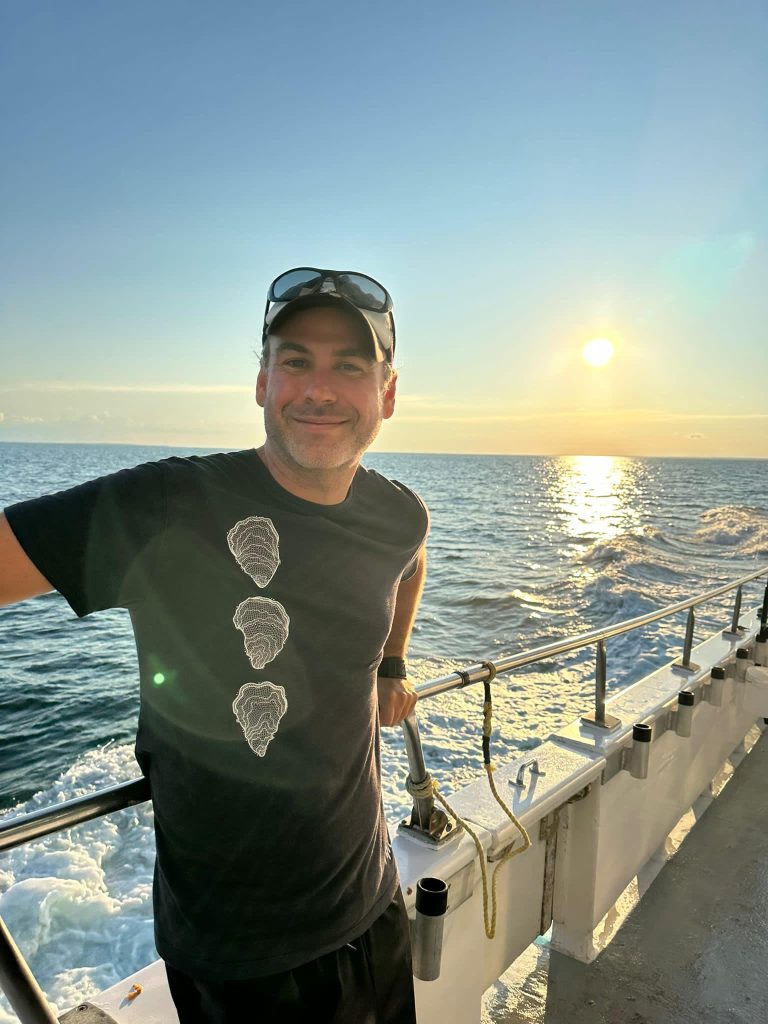
Author bio: Joe Labriola is a writing professor at Stony Brook University in New York, where he also serves as the Environmental Club’s Faculty Advisor. His fiction and nonfiction usually focuses on issues relating to nature and the environment as he is an avid beach cleaner and sustainability advocate, hosting cleanup events, lectures, and even a TEDx Talk. When he is not writing, you can most often find him scouring his local beach for litter—and then taking a swim once it is clean.
Previous publications:
- Dark Yonder, print (fiction): “Beach House”, 2023
- Twenty-two Twenty-eight, online (fiction): “Vegelante”, 2023
- Elsewhere: A Journal of Place, online (fiction): “Blowout Tide”, 2022
- After Dinner Conversation, print and online (fiction): “The Room Above”, 2021
- Amazon, print and eBook (non-fiction): “Beach Cleaner’s Guide”, 2019
- Garo Station, online (fiction): “Coloring In”, 2018
- Eastern Iowa Review, print (non-fiction): “And You Realize You Wander With Glasses”, 2017
- BlazeVOX, online (fiction): “Golden Delicious”, 2012
Socials:
https://www.instagram.com/professor_labs/
Linkedin.com/in/joelabriola
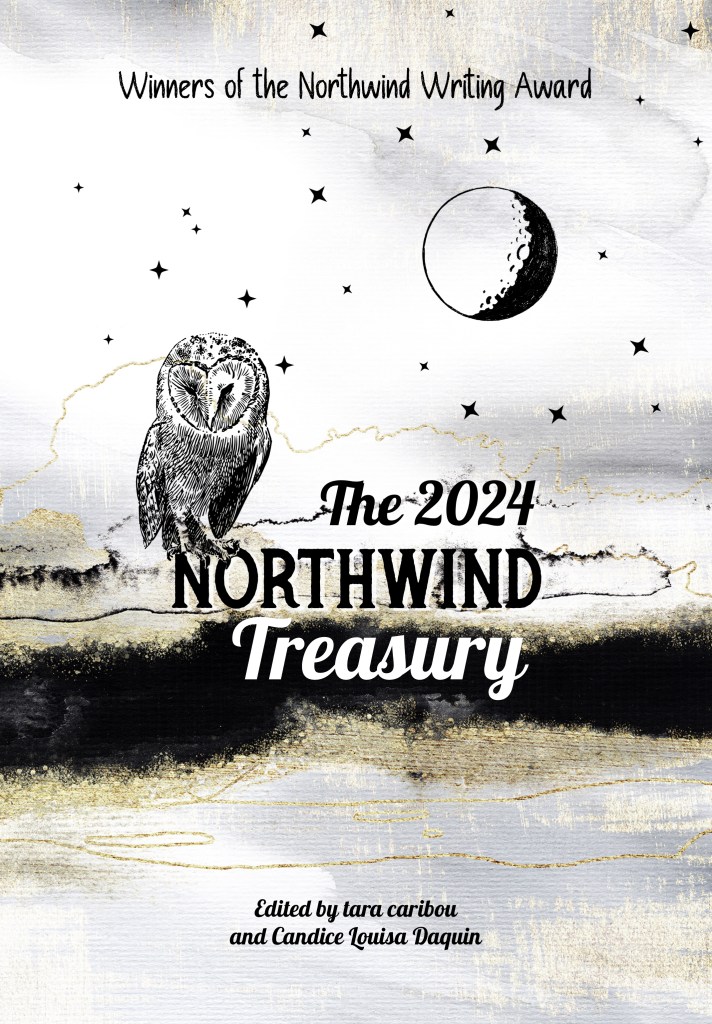
To read The 2024 Northwind Treasury, including Joe’s winning piece, you can purchase it in paperback on Lulu, Barnes & Noble, or Amazon, or as an eBook on Kindle. To see the list of contents and winners, visit our winner’s page.
 Raw Earth Ink