Raw Earth Ink
Spit mixed with dirt – Muddy words flow
Author Spotlight: Summer Chambley
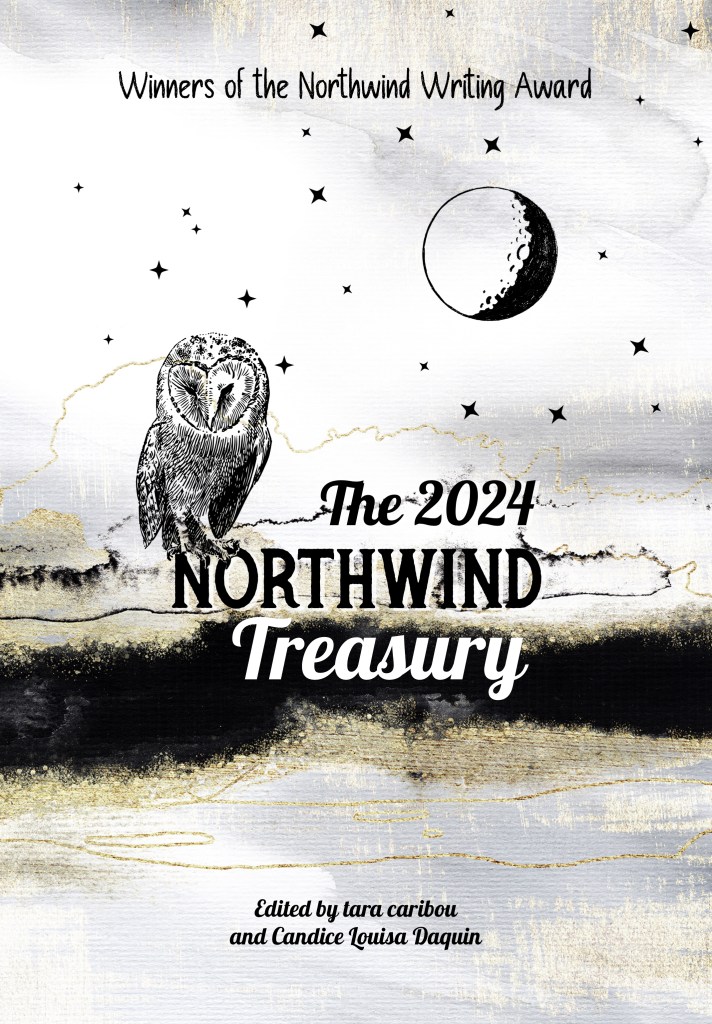
Summer Chambley won 1st prize in Prose Poetry in the Northwind Writing Award 2024 for her poem “Gray Baby Hairs.” It is an honor to feature her Q&A here on Raw Earth Ink as part of our promotion of truly exceptional authors.
Q & A
Candice: Summer, thank you so much for your beautiful submission. What stood out to the judges was the enduring strength of your storytelling and the vividity of the scenes in “Gray Baby Hairs.” What inspired this poem?
Summer: Loss is not always singular. Loss is not always linear. Mostly this was my way of exploring this and other themes through that lens.
Thank you so much for such high praise.
CD: We all thought it was remarkable you could write so much in less than two pages. The poetry is throughout the prose, so it’s a wrap between the two genres. When did you begin to write prose-poetry? How does it distinguish itself for you as a genre? Why are you comfortable with it?
Summer: I don’t know that I’m comfortable with prose-poetry, but thank you for the compliment!
I wrote the piece and then decided which category it best fit in. For me, the genres are secondary to whatever it is that I am trying to achieve. I do think that while I haven’t written creatively (up until recently) in quite some time, I have spent most of my career writing and being rewarded for efficiency and for economy of language. I can see how that has impacted my writing now.
I think of every word as a chance to advance the narrative or world build. But perhaps, what’s just as important, is the choice of omission. What do I leave out? What do I allow the reader to fill in for themselves? How can I give the reader enough to draw emotional inferences? It’s something that I still am working through in my work.
CD: “Gray Baby Hairs” is incredibly visceral and the emotion is raw. It is incredibly hard to handle this subject so well, in this genre. There are multiple themes throughout. What is the key theme for you in this?
Summer: I think both grief and miscarriage are not topics that are really allowed in our public lives. Many people can likely relate to the experience of suffering a loss and receiving pseudo-support for a week or so, only to be expected to dust themselves off and move on.
Miscarriage, in particular, is very common—10 to 20% of known pregnancies end this way—yet it remains taboo. In this piece, you see two losses: one sort of more socially acceptable and one not. The narrator even struggles with discussing the pregnancy itself with her father. Life, death, birth, and miscarriage are universal aspects of humanity, yet they remain a no-go zone.
The work might feel universal because it reflects undeniable suffering and the ways we try to contain it. Grief can feel like something you can cut with a knife, yet it’s also incredibly restrained. That quiet, pervasive nature of grief is perhaps the most apparent theme.
A second theme, which I think is equally important, is how grief and profound love can coexist in the same person. It’s like the unluckiest amongst us can also be the luckiest—experiencing devastating losses yet being profoundly loved through them
CD: Is it hard to write a short prose-poetry story with so many moving parts, how do you decide what to keep, and what to trim?
Summer: I typically trim things that are somehow distracting, that don’t move the narrative forward or deepen the emotional experience for the reader. I realize that might sound odd considering the moving parts, however the parts are all moving in the same direction, if that makes sense. If one of the parts isn’t moving in the right direction, it typically doesn’t belong in that piece.
CD: The judges were attracted to the way you were able to achieve feeling so quickly and intensely in this medium. Love is a universal theme, but you manage to talk about greater subjects like life/death. What was ultimately your final word on this?
Summer: Last night, as I walked past a pool, the smell of chlorine brought back a memory. When I was three, I forgot my goggles, and the chlorine burned my eyes. I tried swimming with my eyes tightly shut, only to slam my head into the side of the pool. I had a scar on my forehead for years—a scar I’d completely forgotten until that moment.
A big scar in the middle of my forehead for a big chunk of my childhood, that had just vanished from my memory. It’s strange how something so visible can disappear from your mind, yet it still shaped who you were for a time.
I wish I had a final word on life and death. As I mentioned, I intentionally try to leave enough space in my writing for the reader to have their own emotional experience or to relate in a way that allows them to draw their own conclusions.
But probably, that’s because I feel like I really don’t have any answers about anything. It’s like the older I get, the more questions I have and the less I understand. The only thing that feels right to me is the idea that all of our experiences are absolutely amazing, ridiculous, tragic and maybe lucky? Regular life is just so beyond belief if you think about all the billions of things that had to happen for us to be in any particular moment. We are all walking miracles.
So maybe that’s why I like writing about regular degular life and regular degular people. I humbly hope people see their own lives differently through my work. I hope they can see all of the wonder that is intrinsically there even in the crap parts.
CD: Are there some sub-texts here? Share any you want to.
Summer: Yes, there are lots of sub-texts. There are likely some that I am not even fully aware of. One that comes to mind is in the title. “Gray Baby Hairs.” These are words that most of us will never have seen together, and many of us might find the idea to be unsettling.
Or the seven gray hairs of the father and how it becomes almost a meditation. A person with seven gray hairs shouldn’t be dead just as babies shouldn’t have gray hairs. But here we are, with no solution for such things that shouldn’t happen but do (both “bad” and “good”).
The piece ends on an almost positive note. That this bad thing allowed this very good thing that wouldn’t have otherwise been possible.
CD: Who are your influences in poetry or fiction? If they are not poetry/fictional, such as the natural world, or a painter, muse, or other, please explain.
Summer: I love and admire Robert Hayden, Arundhati Roy, Bernice McFadden, Louise Erdrich, Alice Walker, Toni Morrison, and James Baldwin. Their work inspires me deeply, particularly in their ability to contribute meaningfully to literature and humanity. But I don’t know how much they directly influence my work—I think my writing is shaped more by the ordinary people I’ve known, people with extraordinary characteristics.
It’s a cliché, but I believe authenticity lends itself to greater art. I only really know how to be myself, and the more I’m able to tap into that, the more fulfilled I feel.
This also influences how I write. I prioritize accessibility over literary conventions for their own sake. I layer my work so that anyone can find meaning on a first pass and then discover more with each subsequent reading. I write for the people who inspire me—people who might not see themselves in other writing but who, perhaps, will recognize themselves in mine.
CD: Aside from other poets/writers, what else gets your blood pumping when you feel engaged to write on subjects? What are those subjects and why do they appeal to you?
Summer: I write for different reasons. Sometimes it is an intellectual topic that I’m really interested in and I find myself just wanting to work out some things on paper. Sometimes I am just trying to quiet my brain and it’s almost a meditation. Sometimes I am trying to communicate or leave a record of the world as I know it.
But sometimes, I find myself missing certain time periods. Missing the lime tree that was in our backyard as a kid. Missing my sadness when they came and cut it down because of “citrus canker” and my mother planted an ice cream mango instead.
Or missing people. Missing my great-aunt, who was a diplomat, and just always was not only extremely self-assured and brilliant but she stood up for herself. She sued the government multiple times. She didn’t live long enough to see me really do anything, but she always seemed so sure that I was special already.
I am sure that writing about these things, these places, these people fires the same neural connections in my brain or something because it feels very similar to visiting.
CD: Tell us a little about what brought you to becoming a poet/writer, what your story is there, and how it evolved from the time you began writing, until now?
Summer: When I was in middle school, an English teacher accused me of plagiarism. We had a weekly journal assignment, and I’d write these weird little entries that I fancied to be the beginnings of novels. I wrote them on the bus on the way to school—not at home, like the proper student he surely expected me to be.
One day, I was held back after class. I assumed I was in trouble, and technically, I was. The teacher started questioning me about where I was copying my entries from. I was amazed—and a little thrilled. He thought I was stealing from a published adult author! At the time, it felt like objective validation of my writing.
I went home and told my father, excited and maybe gloating a bit. My father, however, was not impressed. The next day, he left work to defend my honor at school. At the time, I was disappointed he couldn’t see how flattering the whole thing was, but now I understand us both better.
Looking back, I realize writing has always been central to who I am. I grew up reading constantly, journaling daily, and excelling at academic writing. As a teenager, I discovered I could make money from my writing and started entering competitions to supplement my allowance.
Bizarrely, writing has shown me that I am still the same person. Beneath all the layers of adulthood is the same girl who wrote those weird stories on the school bus. She’s still here, scribbling away, excited by the power of words.
CD: You took some risks with this piece, as it’s untraditional. Did you think your writing would be received with as much love as it has been, when you submitted? Or did you fear the readers wouldn’t get what you were trying to say?
Summer: In general, I have lived a very controlled, rational, and private life. I think when I decided that I was going to write seriously a few months ago, I was very worried about what it would mean to have my work out in the world indefinitely. You can’t unring the bell so to speak.
I knew I would be putting out things that were less than perfect and perhaps laying out just how not perfect I am for the world to see.
I wasn’t afraid of taking risks or being misunderstood because it didn’t occur to me that it would do well!
CD: Can you talk to us about writing this poem and how you began writing in this style and what your objective was in writing this and submitting it to an award?
Summer: I submitted pieces I was unsure of because, as a writer, you’re often in a bubble. I was hoping for feedback and comments, and I’ve certainly gotten more than that. Northwind felt like a safe place to share my work—your mission and philosophy really resonated with me, and I hoped to get a sense of how I was doing. So you can imagine my shock when I found out the news.
You’ve all helped me tremendously, and I’m so grateful for this opportunity.
That being said, you’ll have to stay tuned to hear more about my writing style—and to see more like it!
CD: In your lifetime thus far, have you observed a shift in how people read in terms of whether they do or not, and how this influences their ability to be, say, empathetic or aware of things that poetry was often a good medium for?
Summer: Oh definitely, it’s far less usual to be a voracious reader in my generation than it is in say my grandparents’. I think people still love a good story but the way we consume them has just changed dramatically. I think writing for a current audience has to take that into account, people are just used to watching TV and film more so their general tastes would have evolved differently than a reader who started reading before the widespread adoption of the television.
I try to focus on ambiance, visuals and keeping things moving fast enough that I don’t lose a reader that is used to watching their entertainment and short form.
CD: As a reader of fiction, what do you like and dislike about the fiction you read, and why?
Summer: I think we’re at a point where you have to fit a certain profile to be a sure bet in many industries. This culture of staying in your “lane” often discourages people with unique perspectives from even trying, while those who do try often struggle to break through.
Because of this, I don’t often see certain aspects of myself reflected in literature. That’s why Northwind resonated so much with me—it felt like a space where individuality and fresh perspectives are welcomed. Submitting for the first time post-school was nerve-wracking, but their mission made it feel like the right fit.
I like disruptors!
CD: As a writer, was there a time when you were unable to write and how did that affect you?
Summer: Oh yeah. I couldn’t write creatively for a long time. I think it was just a function of just being overwhelmed professionally and having to be good at sort of the opposite kind of writing that was something I had to learn to do.
Then my grandfather died and I wrote a poem about him. And me. Here are a couple of lines from it:
His hands were already beginning to curl in
His pace had already began to slow when he stepped in front of me
Who will look at me and see skinned knees and lemon cake
Those few lines were selected almost randomly and yet I see a similar theme. Kind of this existence of both happiness and sadness in the same place.
I think now, having had time and experience, some of my brain is freed up again since I don’t have to work so hard at the professional stuff. But really, I am probably bursting at the seams with all of the stuff I have never written about but is still there brewing under the surface.

Author bio: Summer Chambley is an American writer based in London, UK. Her current work explores the intersections of science, history, and human resilience.
To read The 2024 Northwind Treasury, including Summer’s winning piece, you can purchase it in paperback on Lulu, Barnes & Noble, or Amazon, or as an eBook on Kindle. To see the list of contents and winners, visit our winner’s page.
 Raw Earth Ink