Raw Earth Ink
Spit mixed with dirt – Muddy words flow
Author Spotlight: Joseph William Vass
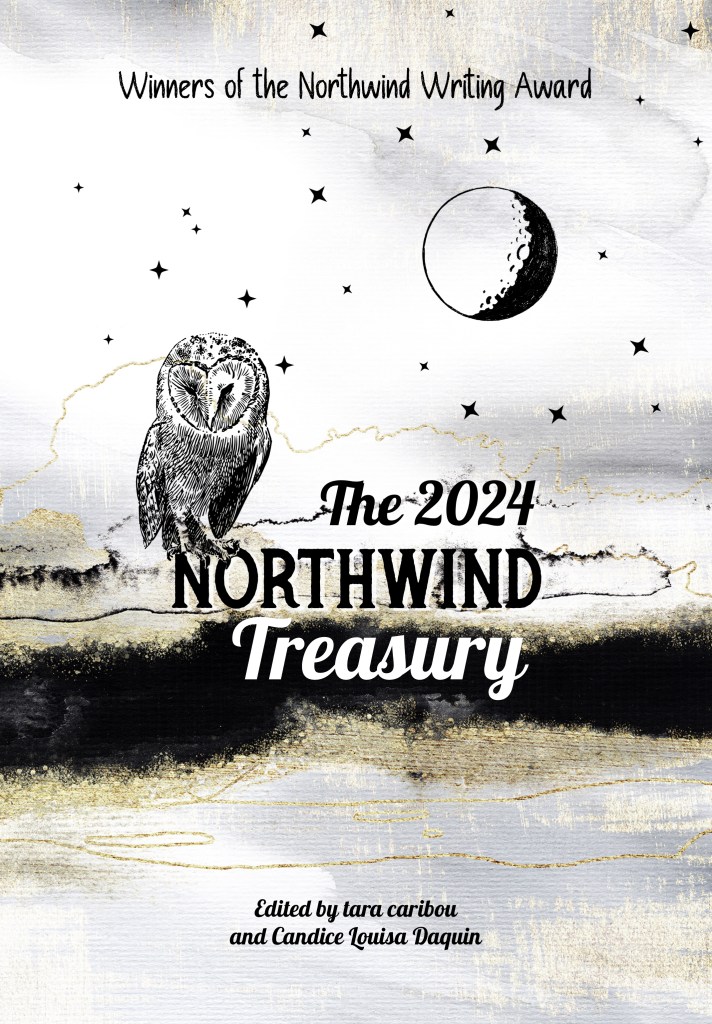
Joseph William Vass won 2nd prize in Poetry in the Northwind Writing Award 2024 for his poem “We Entered Stone’s Dominion.” It is an honor to feature his Q&A here on Raw Earth Ink as part of our promotion of truly exceptional authors.
Q & A
Candice: Joseph, first thank you so much for your beautiful submissions. What stood out to the judges was the absolute raw beauty of your writing. You are a classic poet, not a modern poet, something we really appreciated, because instead of a short ‘trendy’ poem, we received an entire story. Has this always been your preferred style of writing?
Joseph: I feel honored to be considered a “classic” poet, as the language in particular of old time is very rich and appealing to me, so replete with subtleties and expansive vocabulary, stretching the fullness and scope of the literary world. It seems more layered in meaning, its words planted in fertile places that my mind likes to occupy.
CD: Who are your influences poetically? If they are not poetic, such as the natural world, or a painter, muse, or other, please explain.
Joseph: I think I have always been a natural story teller, without intending it to be so reflected in my writing style. Even in my work as a psychotherapist, I convey psychological principles and relational lessons to my clients in the form of stories. It seems a less threatening and more engaging way of bypassing our defenses and appealing to our subconscious process, where the true seed of all learning lies.
CD: Is it abundantly clear you are able to mesh the appreciation and love of the natural world in all your poems, alongside a powerful ‘story’ – is there a story behind this?
Joseph: The early writing of James Dickey still astonishes me every time I read it, but always attaches to the saddest words in the world: What might have been. I met him shortly after “Deliverance”, at the height of his popularity. And discovered a fallen hero, his enormous talent broken like so many others, by the bottle. But his early work, like “Falling” as an example, reminds me of Beethoven: Monumental!
CD: Being familiar with older poets like Tennyson and others who always had a really powerful story in their poems, I found much of that same detailed, engaging storyline in your submissions, especially the winner, and I wondered, do you intentionally do this or is it just how your writing comes out? In other words, what is your writing process?
Joseph: Nature has always been a refuge for me. I came to this country when I was 4 years old, and spent considerable time alone, as my parents worked very long, hard hours to support us. I occupied myself with regular forays into the nearby forest and fields. And my parents both grew up on farms in eastern Europe, so we would often go foraging for mushrooms and berries and other wild food stocks to enrich the pierogies and babkas, and other fabulous meals my mother would prepare. Even now at my advanced age, I still love to climb mountains and explore wild places at every available opportunity. It is my natural element, and I feel connected to the eternal, when I am in the wilderness. How could this not be reflected in my writing?
CD: Aside from other writers, what else gets your blood pumping when you feel engaged to write on subjects? What are those subjects and why do they appeal to you?
Joseph: Great things originate from humble beginnings. Sometimes a word triggers a feeling. The feeling gives birth to a phrase. The phrase takes the scenic route home. And there you have it: a poem. But I am only a conduit. I never plan the route. I’m only along for the ride.
Like good home cooked meals, the common base ingredient for every recipe, as with every successful poem, is love. You have to love whatever it is you’re writing about. And if you do, it will show. And if you also have some talent on top of that, you will do special things.
CD: Tell us a little about what brought you to becoming a writer, what your story is there, and how it evolved from the time you began writing, until now?
Joseph: From the time I first started writing poetry at 15 years of age, I have felt strongly that the greatest human endeavor is to create. I suspect that because I spent such considerable time alone, there was ample opportunity to let my imagination and curiosity roam. And aren’t these exactly the essential ingredients for creative endeavors to flourish? But another factor that was more unique to my situation, was the fact that I was an immigrant. I had to learn a different language, and customs and thought-culture. This had to have expanded and freed up my brain’s way of processing and thinking about concepts and words and ideas. People who encounter me through any significant conversation, all remark that I use language differently, though they can never articulate how. And isn’t that another factor in good writing: learning to use words differently, so you see language and the world in a new way?
CD: Did you think your writing would be received with as much love as it has been, when you submitted? Or did you fear that modern competitions would not appreciate writing that is more classical in style? If you disagree that it’s classical, that’s okay too!
Joseph: Candice, I was stunned when I received the notice of having won second place in your contest. I am well thought of by many people in the several writing groups that I belong to. But even the most well-established writers in my groups say the same thing to me: “Your writing, Joe, is brilliant and beautiful. But it is so out of date! You’ll never get published.” They unfortunately, have been right.
CD: Can you talk to us about writing this poem?
Joseph: This particular poem, “We Entered Stone’s Dominion”, has had several incarnations. It first got started many years ago, when I was hiking through some back country wilderness in Arizona with a friend. We found a cave that had once been inhabited by native Americans hundreds of years earlier. I was struck by the figures of animals leaping and cavorting on the walls of the cave, how the shadows cast from my flashlight seemed to shiver around me, as though trying to animate through time. I was profoundly moved, and thought of the maker who had left a piece of his soul behind through his marvelous creations. And I put my hand to the wall, and touched them. And imagined myself becoming him, the creator. And what his life was like, what he was like, in that moment of his creation. And I realized then, that the most immortal and essential part of ourselves that is left behind after we die, is what we have created, and the love we have given to it. And that can be a work of art, or a poem; or a child or a relationship; and yes, even a pierogi.
CD: Did you find your writing changed over time and if so, how do you see that happening and what were the influencing factors to cause that shift/change?
Joseph: My writing has absolutely changed with time. Not the underlying fascination with magical realism, or story telling; these things have remained a constant. But certainly my writing has matured as I have matured. We’ve polished off the rough edges. We’ve learned a thing or two about life, and that shows in the telling. We love more, and offer it freely, without pretense or gain, other than through the giving. My writing does this more now, as do I.
CD: The imagery is gorgeous in your poetry, where do you get the influence for your images and metaphors?
Joseph: I have always been very visually oriented, and was a professional nature photographer for a time long ago. I suspect my parents and my unique early history first conspired to open my eyes to beauty. And then years ago at a very painful juncture in my life, I decided that I wanted to focus on 2 things in my future: To strive to add goodness to life wherever I go, whatever I do; and also to surround myself with beauty, to walk in beauty every day. In Dante’s Inferno, there is a line that resonates with me: “Damned in the midst of Paradise, I lack the low enjoying power.” I try never to be guilty of that. It drives the images and metaphors that crop up of their own accord in my writing.
CD: What power does poetry play in the translation of life?
Joseph: Poetry can be terrifically powerful, in such a wonderful concept as “the translation of life”. Don’t we all carry at least little snippets of poetry from our early memories, that still linger and delight? “The rain and an umbrella go chatting together.” “Whose woods these are, I think I know…”
They capture a moment, a feeling, that will always attach to that experience wherever and whenever we encounter it joyfully again. It opens our eyes, so we see the Paradise that is ever present around us. That is poetry.
CD: When you write, do you find a catharsis in writing out an experience, even such a painful one? And if so, do you have to speak to that experience directly or can you find catharsis even without directly describing the issue-at-hand by the writing process itself?
Joseph: Poetry has never been cathartic for me personally. For some reason, it is more an uplifting, a celebration of sorts. I find my prose stories, however, to be quite cathartic. And I’m afraid I have no explanation for this distinction, only that it is true to my experience.
CD: In your opinion, how do you think people can benefit from reading poems in general, and in particular in today’s society that convinces itself it’s too busy to read?
Joseph: I’m afraid my current perception of the world at large is jaded and quite sad. I fear we have as a whole cast our lot with schlock sensationalism, and lost our taste for substance. How can people benefit from reading poetry? It is one of many means to save our souls. The passion of our times is a weak tea. But who wants to reach out our hand for that cream and sugar, when it involves effort? Maybe indulging the current craving for a quick fix, would kick start something more enduring. Short but meaningful poems like those of Emily Dickinson, or six-word poems might be a good place to start.
CD: In your lifetime thus far, have you observed a shift in how people read in terms of whether they do or not, and how this influences their ability to be, say, empathetic or aware of things that poetry was often a good medium for?
Joseph: As a psychotherapist of 50 years, I have seen very troubling trends in our children’s mental health. The incidence of depression and suicide has tripled in the last decade, as a direct result of the advent of cellphones, and the growing preference for texting and learning through online visual sites rather than reading or engaging in human contact. This trend is socially isolating, and prevents the development of intimacy, empathy, and sympathy for others. We have also known for decades that children’s I.Q. is directly correlated to how much time they spend watching T.V., playing video games, or engaging with other electronic monitors.
The more time they watch, the lower their I.Q. scores. Consequently, the more time a child spends in reading, the higher their I.Q. scores will be. We are raising a generation of depressed and isolated human beings who are blind to the true beauty of the world and each other. Poetry obviously is not a panacea, but it is one of the many means to a much better end.
CD: Your style is incredibly distinct; it really stands out and demands to be read. You also write quite long form poetry (which I personally love) – have you found it challenging given the modern appetite for shorter, more pithy writings, to stay relevant, or is that unimportant to you?
Joseph: I know that to stay relevant as a writer, we have to be flexible in adjusting our style to current culture and taste trends. I have never been trendy, and I do not aspire to be a popular writer. I fully understand my limitations as a writer in terms of my success quotient. I don’t have it, and never will. Truly, that is all right with me.
CD: As a reader of poetry, what do you like and dislike about the poetry you read, and why?
Joseph: I like poetry that moves me in some way, or captures language or imagery in a way that I never thought of before, or creates a place that I want to inhabit for a long time, and want to return to repeatedly. I dislike poetry that sacrifices substance for structure, and thus feels like the writer is struggling to squeeze a poem into a box, and taking its life away. A poem needs room to breathe its own air.
CD: Do you find ‘modern’ online poetry varies from the more traditional published (print) poetry in terms of length and subject and how do you feel about this?
Joseph: I’m sorry to say that I do not read online poetry, and that is unfair of me. I know I am throwing the baby out with the bath, but I’ve already made clear how corrosive I see the online world as being. I love the smell of an old book, the texture and feel of paper. Have we forgotten it was once alive?
CD: As a writer, was there a time when you were unable to write and how did that affect you?
Joseph: I have always been able to write. There have been times when I have chosen not to. But writing is a bit like stars in the daylight sky. Unseen perhaps. But still there.
CD: I detected a lot of passion in your writing, you really draw the reader in, and pull them to the very edge of their seat. Are you conscious that your writing has this effect on people? What does it make you think?
Joseph: My writing has me on the edge of my own seat. I am always fascinated by what comes out of my head, and wonder what I could have possibly done, to have such a generous gift offered to me. My unconscious mind, that holds in some measure everything that I have ever learned and experienced and thought of. All conniving in a mercurial mix of allusion and suggestion and metaphor to create who knows what miraculous concoction of words and feelings, using just 26 letters to do it all. Poetry: a minimum of words, a maximum of experience.
CD: Specifically considering your gorgeous poem: “We Entered Stone’s Dominion”. Was this a poem that flowed out of you or more one you planned out consciously? In other words, what was the inspiration there?
Joseph: In the poem, “We Entered Stone’s Dominion”, I was shocked at the end point of my journey. I willfully planned nothing. It kept pulling me along, and pulling me along. But every part felt like a natural progression from whatever came before it. And each step taken, like a marvelous bud unfolding for the first time.
CD: As an award-winning poet and writer, do you feel connected to that identity or are you someone who writes without really believing you are a writer per say? In other words, do you have Imposter Syndrome as a writer, or are you quite comfortable with the idea of being a writer? And if so, what does “being a writer” mean to you?
Joseph: I have suffered from the Imposter Syndrome in more ways than just as a writer, and don’t know that I can separate the two. My unique history and family have indulged many eccentricities that have always been evident in my person. The good part of that is that I am incapable of being bored. My lively, quirky brain will make sure of that. For some reason, it was somewhere around page 300 of my recently completed memoir, that I suddenly sat up straight in my chair and had the oddest thought. I said out loud to myself, “Oh, Joseph! You are writing a book. You must be a writer!” That wonderful aha moment then attached itself to my poetry as well, figuring: “Ah, why the hell not.”
Being a writer feels like being burned by a fine silk. It is breathing a rarified air. It is what I want to be and who I want to be. It is all.
CD: Please share any other aspects to your poem“We Entered Stone’s Dominion”, and what brought you to submit it to Northwind, that you believe readers would benefit from knowing about?
Joseph: I would hope readers consider my poem “We Entered Stone’s Dominion”, as an invitation to explore. That wonderful something waiting for us at every turn of the trail. The timeless reach of the infinite. To create something out of nothing, out of love.
CD: I’d love to know personally how you came to title this poem, as it’s an incredibly original title and one that demands reading.
Joseph: Although I am not at all a religious man, I am profoundly spiritual. And have come to my own realization that the world is holy. Every living thing is holy. Even the dead, even the rocks are holy. The title of this poem reflects that reverence, and how art and creativity enjoin us to the spirit of nature, the earth, the holiness of stone.

Author bio: Joseph William Vass was born in Manchester, England in 1951. He emigrated to the United States at an early age, together with his parents and one battered suitcase full of hope and mothballs. He has since then worked as a farmhand, nature photographer, and psychotherapist; though writing has always been his core profession, obsession, and joy.
Mr. Vass has been writing poetry for fifty years, and been published in a number of literary journals. His recently published work, My Seven Deadly Sins, represents a broad retrospective of his poetic works. Another book of his poetry is soon to be released. He also has a memoir, In The Found Embrace of Your Hope, that is in the final stages of completion.
To read The 2024 Northwind Treasury, including Joseph’s winning piece, you can purchase it in paperback on Lulu, Barnes & Noble, or Amazon, or as an eBook on Kindle. To see the list of contents and winners, visit our winner’s page.
 Raw Earth Ink