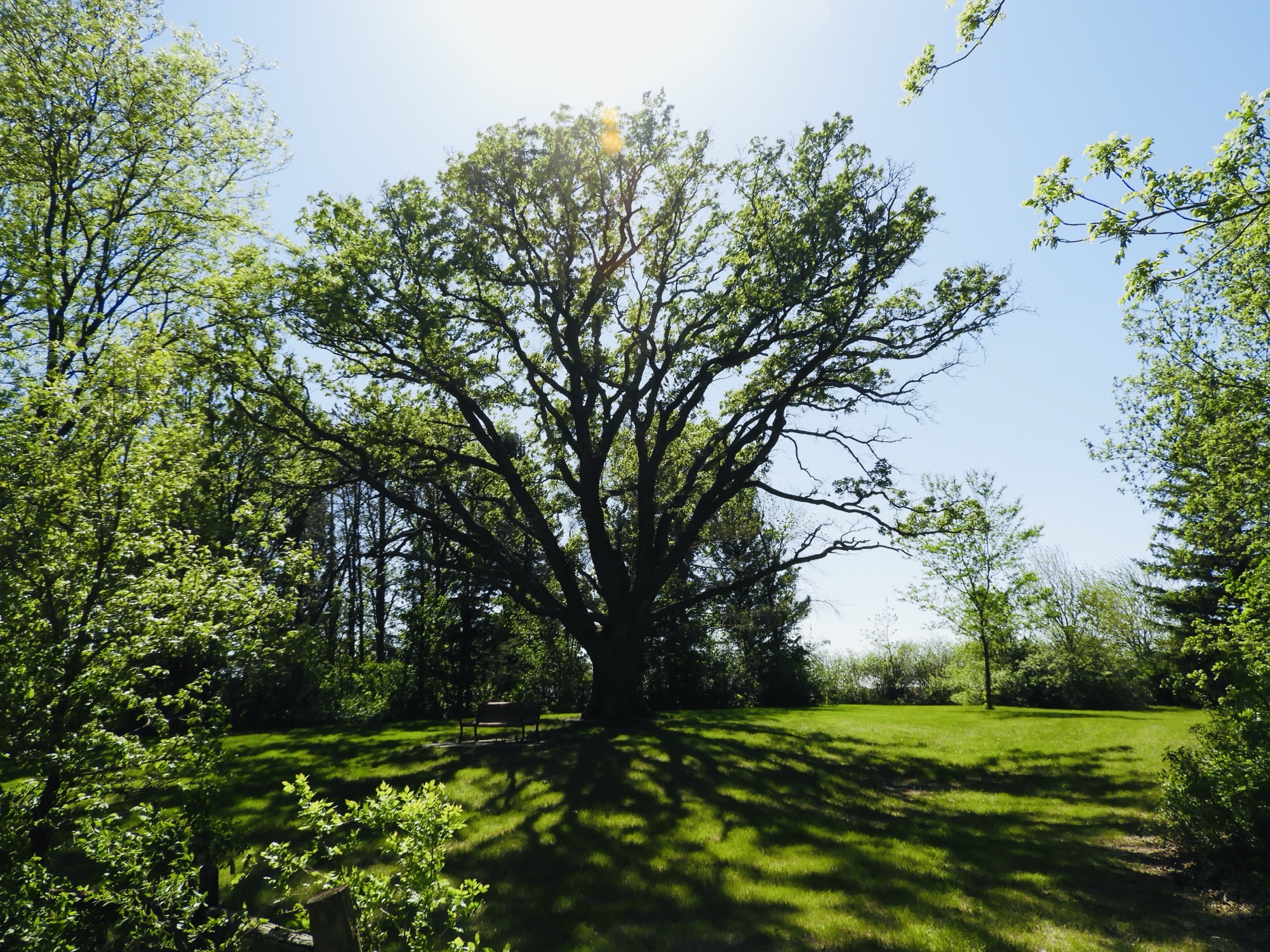
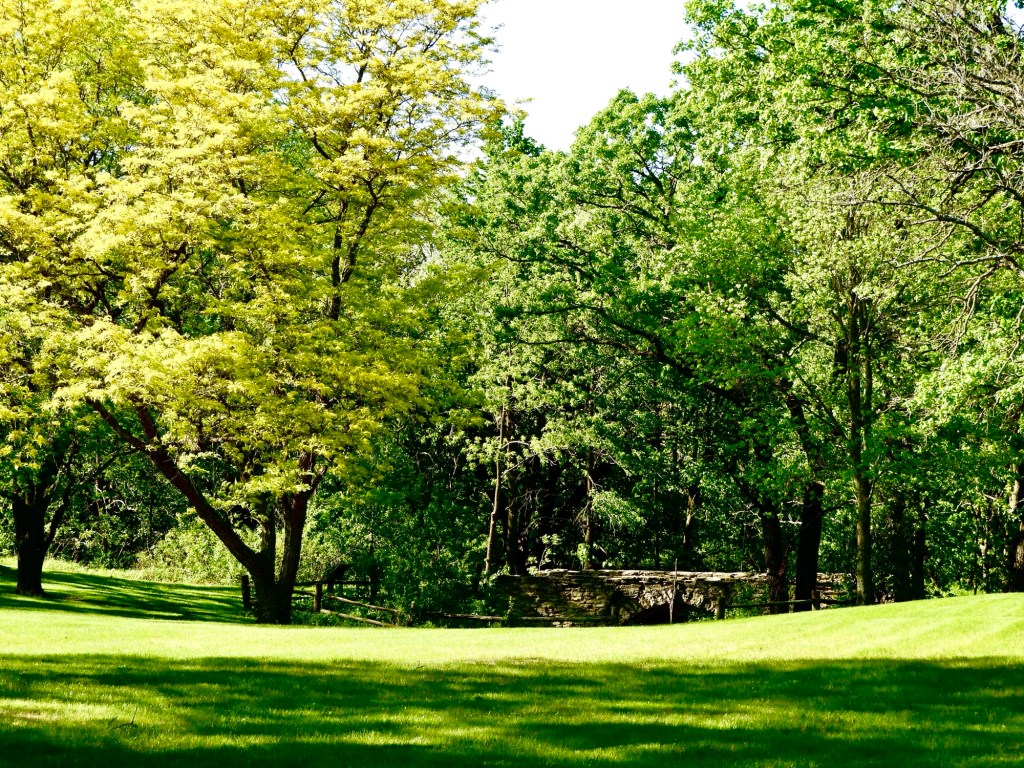
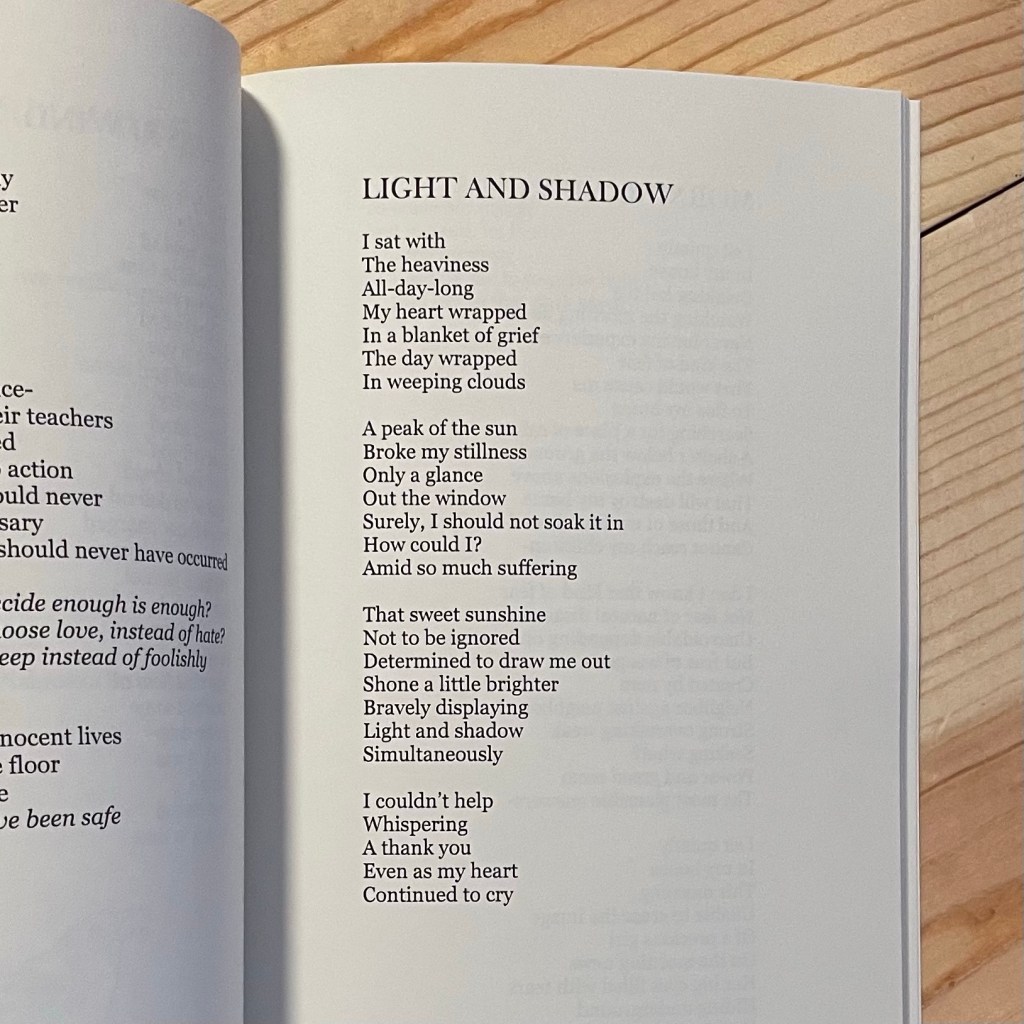
Reflections from Bird Sanctuary Island

Supreme peace and love fill my heart as I listen to dozens of birds warble and chirp and squawk and honk 

A special place, an island across a marsh, aged trees stand tall, some leaning with old age, aching for the changes they’ve seen 

Light and shadow dapple the forest floor, green leaves allowing drops of sunshine through, here, there

A man whistles to his hound, his neck burdened by a huge camera, stares up at the branches, the ground, the dog, up again

I wonder what he’s come here for, perhaps he too seeks the forgiveness and acceptance found on the isle

The trail weaves with the land, unobtrusive, drawing you further in, a squirrel bounds along ahead, inviting me to follow

And I do

Rising above the lake, a platform waits, a narrow view of a wide world, framed by twisted branches and flitting feathered travelers, I spot yellow wings, some black with red spots, unassuming greys and browns

Below, in the young cattails, a splash and a plunk, a frog? a turtle? perhaps a muskrat, I scan for herons but see none, though the geese are plenty, where do they all go in such a hurry, here to there?

It’s quiet, except for the birds, occasionally our conversation, and I’m grateful and filled with peace, yet I feel a longing grow within, a space yawning open, infilling with possibility 

A short walk through a dropped walnut trail leads to a dock, on which I sit and share a sandwich, some for me, some for the birds and fish, no takers

Bubbles rise and I know the sign of a turtle resting on the lakeshore floor, how long has he sat there sleeping? dreaming? Is this a dream, I wonder, I hear the words: I’m real, this is happening

The sun warms my back, my shoulders, my hair, I can’t imagine a more perfect moment, my devotion and tenderness growing, almost to bursting in my chest, healing me from the inside out, I wonder about acceptance and the balm of love

I consider the geese, one chasing off a rival before returning to comfort his mate, the bond renewed, I understand that bond, and sharing this space is a bond of its own

In my mind I form oaths and hope one day you’ll understand and hold them precious

Our quiet conversation drifts in and out, sometimes the breeze says it all, others it’s the birds or you or I, that you’ve shared this space with me speaks volumes and I am grateful, I can’t imagine being here with anyone else

I sigh, but it’s a good sigh, one of contentment and hope and healing


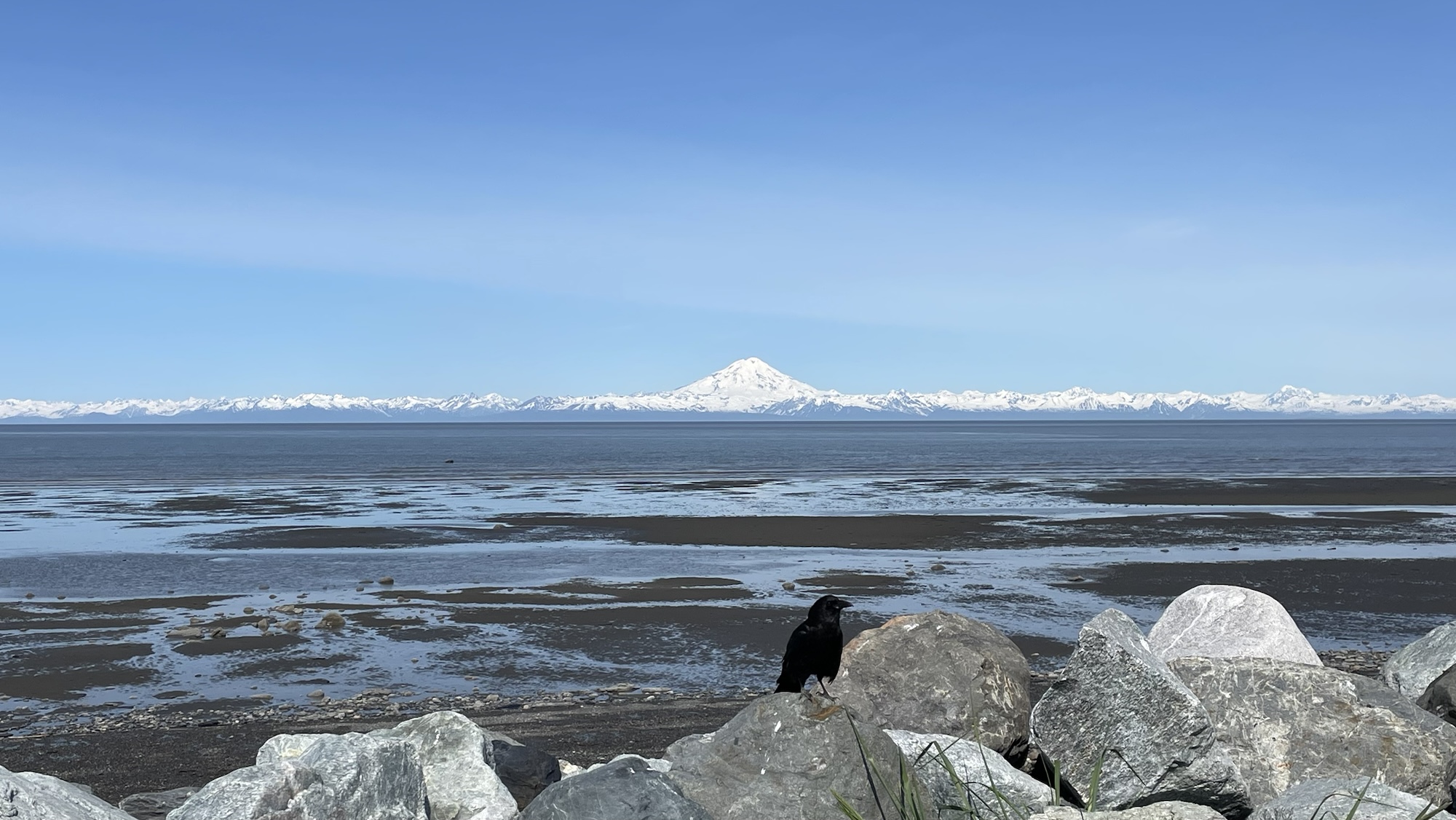
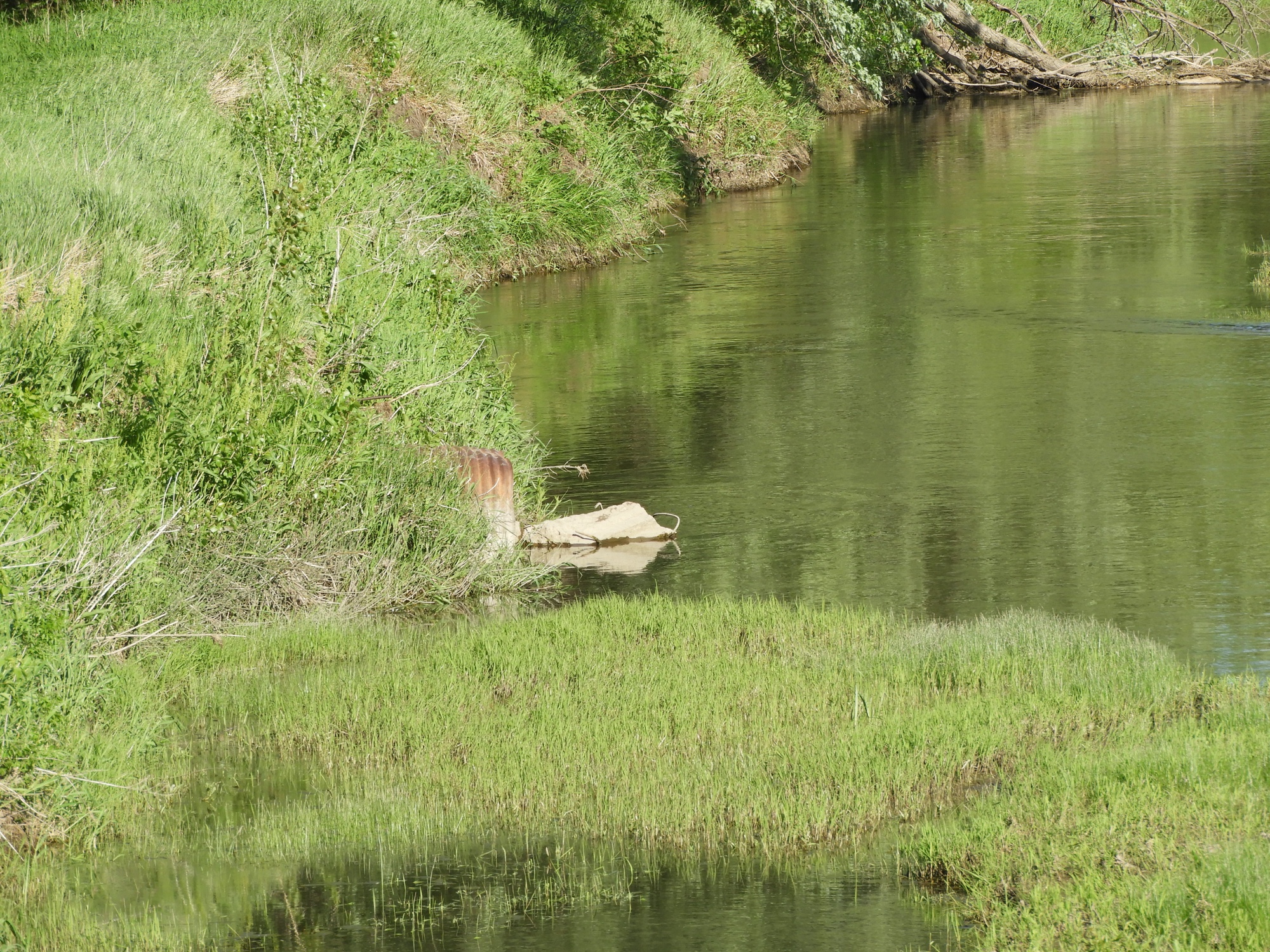
tara caribou | ©️2025 | photo by me

I just got back from a trip to Iowa and my heart is full of gratitude, love, and new experiences.

Let Go

If you let me, I’ll spread wide
Let you bury yourself deep inside
And my voice croons
Let yourself go, free yourself now
Together, we’ll go higher than
Either of us thought was possible
Because, babe, it’s me and you
And together we’re stronger than
Either of us thought was possible
So dip down in, taste my fire
Swallow me whole and we’ll begin again
(Insatiable) flames on flames (on flames)
And if you let me, I’ll hold you close
Let your essence absorb
With my song crying,
Just let yourself go, you can free yourself now
Together, we’ll go higher than
Either of us thought was possible
If you let us, we’ll fly higher than
Either of us thought was possible
If only you’d let yourself go


©️ tara caribou | 2025

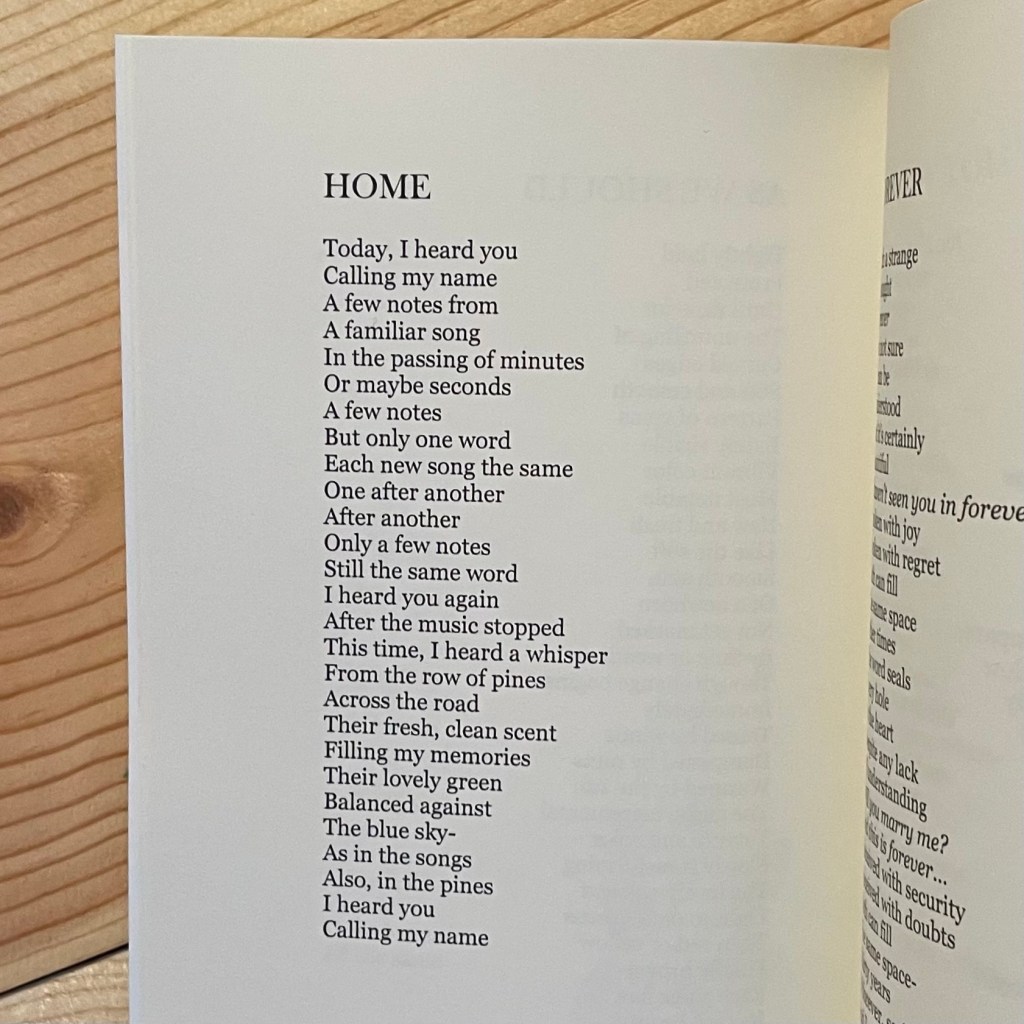
New Book – “When the Glass Breaks” poetry by Kelley Morris

Raw Earth Ink is proud to present Kelley Morris’ re-released collection of poetry, When the Glass Breaks.

From the back: Kelley Morris writes poetry in a way some people breathe. She composes in a natural language, one where the reader come to inhabit her gentle world of living. This is the kind of poetry capable of raising you up, bestowing hopefulness, and adding beauty to a plain day. Employing artful, yet unpretentious language which is expansive but still familiar, we find a place where we discover a piece of ourselves in her acute observations, creating a shared melody of existence.

Kelley’s poetry contains the raw timber of what it means to build up and truly BE in this world. Tenderly evoking emotions in a real, raw-faced way, this collection lingers long after reading, as we grow, change, and transform.
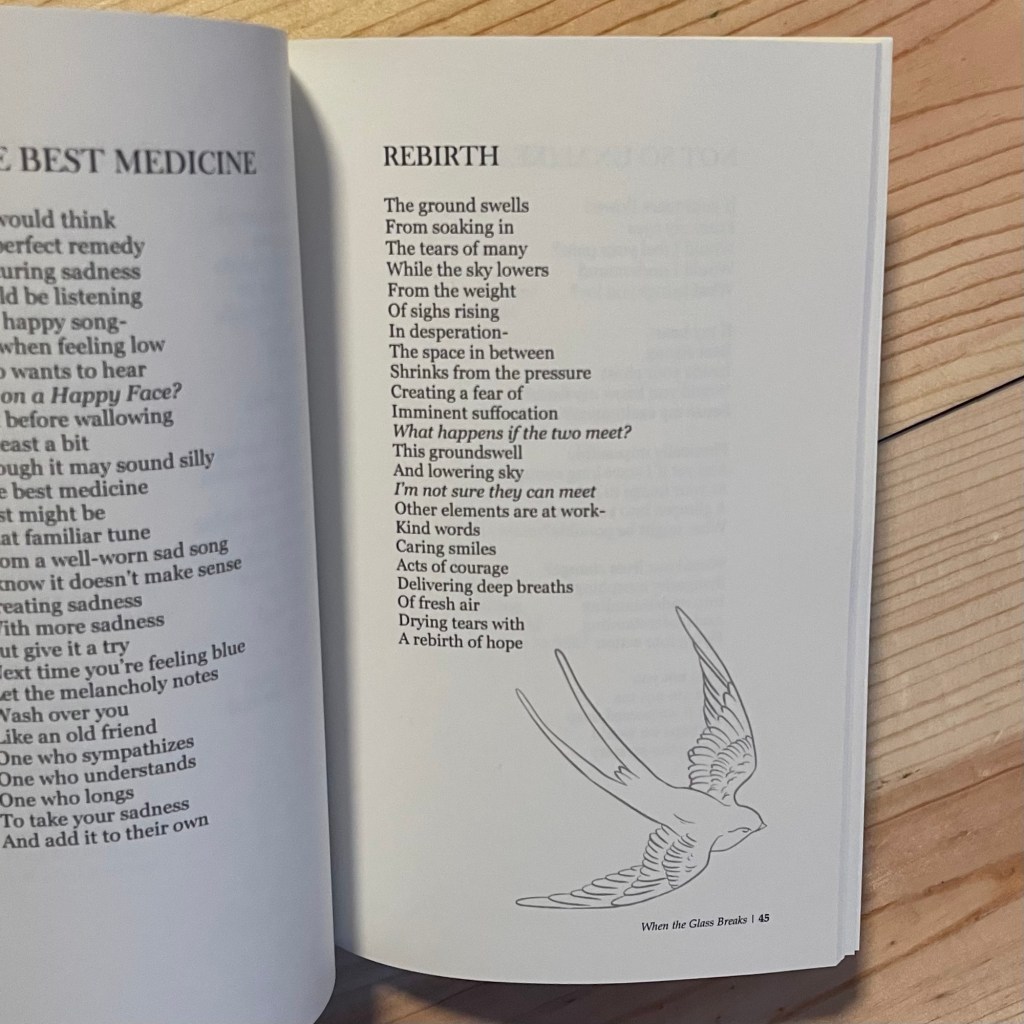
In paperback at: Lulu, Barnes & Noble, or Amazon.

As eBook at: Kindle.

Leave a review on Goodreads.


©️2025 | Kelley Morris

Kelley Morris can be found on Instagram @kmariemorris and her website Piano Girl.
Author Spotlight: Joseph William Vass

Joseph William Vass won 2nd prize in Poetry in the Northwind Writing Award 2024 for his poem We Entered Stone’s Dominion. It is an honor to feature his Q&A here on Raw Earth Ink as part of our promotion of truly exceptional authors.


Q & A

Candice: Joseph, first thank you so much for your beautiful submissions. What stood out to the judges was the absolute raw beauty of your writing. You are a classic poet, not a modern poet, something we really appreciated, because instead of a short ‘trendy’ poem, we received an entire story. Has this always been your preferred style of writing?

Joseph: I feel honored to be considered a “classic” poet, as the language in particular of old time is very rich and appealing to me, so replete with subtleties and expansive vocabulary, stretching the fullness and scope of the literary world. It seems more layered in meaning, its words planted in fertile places that my mind likes to occupy.

CD: Who are your influences poetically? If they are not poetic, such as the natural world, or a painter, muse, or other, please explain.

Joseph: I think I have always been a natural story teller, without intending it to be so reflected in my writing style. Even in my work as a psychotherapist, I convey psychological principles and relational lessons to my clients in the form of stories. It seems a less threatening and more engaging way of bypassing our defenses and appealing to our subconscious process, where the true seed of all learning lies.

CD: Is it abundantly clear you are able to mesh the appreciation and love of the natural world in all your poems, alongside a powerful ‘story’ – is there a story behind this?

Joseph: The early writing of James Dickey still astonishes me every time I read it, but always attaches to the saddest words in the world: What might have been. I met him shortly after “Deliverance”, at the height of his popularity. And discovered a fallen hero, his enormous talent broken like so many others, by the bottle. But his early work, like “Falling” as an example, reminds me of Beethoven: Monumental!

CD: Being familiar with older poets like Tennyson and others who always had a really powerful story in their poems, I found much of that same detailed, engaging storyline in your submissions, especially the winner, and I wondered, do you intentionally do this or is it just how your writing comes out? In other words, what is your writing process?

Joseph: Nature has always been a refuge for me. I came to this country when I was 4 years old, and spent considerable time alone, as my parents worked very long, hard hours to support us. I occupied myself with regular forays into the nearby forest and fields. And my parents both grew up on farms in eastern Europe, so we would often go foraging for mushrooms and berries and other wild food stocks to enrich the pierogies and babkas, and other fabulous meals my mother would prepare. Even now at my advanced age, I still love to climb mountains and explore wild places at every available opportunity. It is my natural element, and I feel connected to the eternal, when I am in the wilderness. How could this not be reflected in my writing?

CD: Aside from other writers, what else gets your blood pumping when you feel engaged to write on subjects? What are those subjects and why do they appeal to you?

Joseph: Great things originate from humble beginnings. Sometimes a word triggers a feeling. The feeling gives birth to a phrase. The phrase takes the scenic route home. And there you have it: a poem. But I am only a conduit. I never plan the route. I’m only along for the ride.

Like good home cooked meals, the common base ingredient for every recipe, as with every successful poem, is love. You have to love whatever it is you’re writing about. And if you do, it will show. And if you also have some talent on top of that, you will do special things.

CD: Tell us a little about what brought you to becoming a writer, what your story is there, and how it evolved from the time you began writing, until now?

Joseph: From the time I first started writing poetry at 15 years of age, I have felt strongly that the greatest human endeavor is to create. I suspect that because I spent such considerable time alone, there was ample opportunity to let my imagination and curiosity roam. And aren’t these exactly the essential ingredients for creative endeavors to flourish? But another factor that was more unique to my situation, was the fact that I was an immigrant. I had to learn a different language, and customs and thought-culture. This had to have expanded and freed up my brain’s way of processing and thinking about concepts and words and ideas. People who encounter me through any significant conversation, all remark that I use language differently, though they can never articulate how. And isn’t that another factor in good writing: learning to use words differently, so you see language and the world in a new way?

CD: Did you think your writing would be received with as much love as it has been, when you submitted? Or did you fear that modern competitions would not appreciate writing that is more classical in style? If you disagree that it’s classical, that’s okay too!

Joseph: Candice, I was stunned when I received the notice of having won second place in your contest. I am well thought of by many people in the several writing groups that I belong to. But even the most well-established writers in my groups say the same thing to me: “Your writing, Joe, is brilliant and beautiful. But it is so out of date! You’ll never get published.” They unfortunately, have been right.

CD: Can you talk to us about writing this poem?

Joseph: This particular poem, “We Entered Stone’s Dominion”, has had several incarnations. It first got started many years ago, when I was hiking through some back country wilderness in Arizona with a friend. We found a cave that had once been inhabited by native Americans hundreds of years earlier. I was struck by the figures of animals leaping and cavorting on the walls of the cave, how the shadows cast from my flashlight seemed to shiver around me, as though trying to animate through time. I was profoundly moved, and thought of the maker who had left a piece of his soul behind through his marvelous creations. And I put my hand to the wall, and touched them. And imagined myself becoming him, the creator. And what his life was like, what he was like, in that moment of his creation. And I realized then, that the most immortal and essential part of ourselves that is left behind after we die, is what we have created, and the love we have given to it. And that can be a work of art, or a poem; or a child or a relationship; and yes, even a pierogi.

CD: Did you find your writing changed over time and if so, how do you see that happening and what were the influencing factors to cause that shift/change?

Joseph: My writing has absolutely changed with time. Not the underlying fascination with magical realism, or story telling; these things have remained a constant. But certainly my writing has matured as I have matured. We’ve polished off the rough edges. We’ve learned a thing or two about life, and that shows in the telling. We love more, and offer it freely, without pretense or gain, other than through the giving. My writing does this more now, as do I.

CD: The imagery is gorgeous in your poetry, where do you get the influence for your images and metaphors?

Joseph: I have always been very visually oriented, and was a professional nature photographer for a time long ago. I suspect my parents and my unique early history first conspired to open my eyes to beauty. And then years ago at a very painful juncture in my life, I decided that I wanted to focus on 2 things in my future: To strive to add goodness to life wherever I go, whatever I do; and also to surround myself with beauty, to walk in beauty every day. In Dante’s Inferno, there is a line that resonates with me: “Damned in the midst of Paradise, I lack the low enjoying power.” I try never to be guilty of that. It drives the images and metaphors that crop up of their own accord in my writing.

CD: What power does poetry play in the translation of life?

Joseph: Poetry can be terrifically powerful, in such a wonderful concept as “the translation of life”. Don’t we all carry at least little snippets of poetry from our early memories, that still linger and delight? “The rain and an umbrella go chatting together.” “Whose woods these are, I think I know…”

They capture a moment, a feeling, that will always attach to that experience wherever and whenever we encounter it joyfully again. It opens our eyes, so we see the Paradise that is ever present around us. That is poetry.

CD: When you write, do you find a catharsis in writing out an experience, even such a painful one? And if so, do you have to speak to that experience directly or can you find catharsis even without directly describing the issue-at-hand by the writing process itself?

Joseph: Poetry has never been cathartic for me personally. For some reason, it is more an uplifting, a celebration of sorts. I find my prose stories, however, to be quite cathartic. And I’m afraid I have no explanation for this distinction, only that it is true to my experience.

CD: In your opinion, how do you think people can benefit from reading poems in general, and in particular in today’s society that convinces itself it’s too busy to read?

Joseph: I’m afraid my current perception of the world at large is jaded and quite sad. I fear we have as a whole cast our lot with schlock sensationalism, and lost our taste for substance. How can people benefit from reading poetry? It is one of many means to save our souls. The passion of our times is a weak tea. But who wants to reach out our hand for that cream and sugar, when it involves effort? Maybe indulging the current craving for a quick fix, would kick start something more enduring. Short but meaningful poems like those of Emily Dickinson, or six-word poems might be a good place to start.

CD: In your lifetime thus far, have you observed a shift in how people read in terms of whether they do or not, and how this influences their ability to be, say, empathetic or aware of things that poetry was often a good medium for?

Joseph: As a psychotherapist of 50 years, I have seen very troubling trends in our children’s mental health. The incidence of depression and suicide has tripled in the last decade, as a direct result of the advent of cellphones, and the growing preference for texting and learning through online visual sites rather than reading or engaging in human contact. This trend is socially isolating, and prevents the development of intimacy, empathy, and sympathy for others. We have also known for decades that children’s I.Q. is directly correlated to how much time they spend watching T.V., playing video games, or engaging with other electronic monitors.

The more time they watch, the lower their I.Q. scores. Consequently, the more time a child spends in reading, the higher their I.Q. scores will be. We are raising a generation of depressed and isolated human beings who are blind to the true beauty of the world and each other. Poetry obviously is not a panacea, but it is one of the many means to a much better end.

CD: Your style is incredibly distinct; it really stands out and demands to be read. You also write quite long form poetry (which I personally love) – have you found it challenging given the modern appetite for shorter, more pithy writings, to stay relevant, or is that unimportant to you?

Joseph: I know that to stay relevant as a writer, we have to be flexible in adjusting our style to current culture and taste trends. I have never been trendy, and I do not aspire to be a popular writer. I fully understand my limitations as a writer in terms of my success quotient. I don’t have it, and never will. Truly, that is all right with me.

CD: As a reader of poetry, what do you like and dislike about the poetry you read, and why?

Joseph: I like poetry that moves me in some way, or captures language or imagery in a way that I never thought of before, or creates a place that I want to inhabit for a long time, and want to return to repeatedly. I dislike poetry that sacrifices substance for structure, and thus feels like the writer is struggling to squeeze a poem into a box, and taking its life away. A poem needs room to breathe its own air.

CD: Do you find ‘modern’ online poetry varies from the more traditional published (print) poetry in terms of length and subject and how do you feel about this?

Joseph: I’m sorry to say that I do not read online poetry, and that is unfair of me. I know I am throwing the baby out with the bath, but I’ve already made clear how corrosive I see the online world as being. I love the smell of an old book, the texture and feel of paper. Have we forgotten it was once alive?

CD: As a writer, was there a time when you were unable to write and how did that affect you?

Joseph: I have always been able to write. There have been times when I have chosen not to. But writing is a bit like stars in the daylight sky. Unseen perhaps. But still there.

CD: I detected a lot of passion in your writing, you really draw the reader in, and pull them to the very edge of their seat. Are you conscious that your writing has this effect on people? What does it make you think?

Joseph: My writing has me on the edge of my own seat. I am always fascinated by what comes out of my head, and wonder what I could have possibly done, to have such a generous gift offered to me. My unconscious mind, that holds in some measure everything that I have ever learned and experienced and thought of. All conniving in a mercurial mix of allusion and suggestion and metaphor to create who knows what miraculous concoction of words and feelings, using just 26 letters to do it all. Poetry: a minimum of words, a maximum of experience.

CD: Specifically considering your gorgeous poem: “We Entered Stone’s Dominion”. Was this a poem that flowed out of you or more one you planned out consciously? In other words, what was the inspiration there?

Joseph: In the poem, “We Entered Stone’s Dominion”, I was shocked at the end point of my journey. I willfully planned nothing. It kept pulling me along, and pulling me along. But every part felt like a natural progression from whatever came before it. And each step taken, like a marvelous bud unfolding for the first time.

CD: As an award-winning poet and writer, do you feel connected to that identity or are you someone who writes without really believing you are a writer per say? In other words, do you have Imposter Syndrome as a writer, or are you quite comfortable with the idea of being a writer? And if so, what does “being a writer” mean to you?

Joseph: I have suffered from the Imposter Syndrome in more ways than just as a writer, and don’t know that I can separate the two. My unique history and family have indulged many eccentricities that have always been evident in my person. The good part of that is that I am incapable of being bored. My lively, quirky brain will make sure of that. For some reason, it was somewhere around page 300 of my recently completed memoir, that I suddenly sat up straight in my chair and had the oddest thought. I said out loud to myself, “Oh, Joseph! You are writing a book. You must be a writer!” That wonderful aha moment then attached itself to my poetry as well, figuring: “Ah, why the hell not.”

Being a writer feels like being burned by a fine silk. It is breathing a rarified air. It is what I want to be and who I want to be. It is all.

CD: Please share any other aspects to your poem“We Entered Stone’s Dominion”, and what brought you to submit it to Northwind, that you believe readers would benefit from knowing about?

Joseph: I would hope readers consider my poem “We Entered Stone’s Dominion”, as an invitation to explore. That wonderful something waiting for us at every turn of the trail. The timeless reach of the infinite. To create something out of nothing, out of love.

CD: I’d love to know personally how you came to title this poem, as it’s an incredibly original title and one that demands reading.

Joseph: Although I am not at all a religious man, I am profoundly spiritual. And have come to my own realization that the world is holy. Every living thing is holy. Even the dead, even the rocks are holy. The title of this poem reflects that reverence, and how art and creativity enjoin us to the spirit of nature, the earth, the holiness of stone.


Author bio: Joseph William Vass was born in Manchester, England in 1951. He emigrated to the United States at an early age, together with his parents and one battered suitcase full of hope and mothballs. He has since then worked as a farmhand, nature photographer, and psychotherapist; though writing has always been his core profession, obsession, and joy.

Mr. Vass has been writing poetry for fifty years, and been published in a number of literary journals. His recently published work, My Seven Deadly Sins, represents a broad retrospective of his poetic works. Another book of his poetry is soon to be released. He also has a memoir, In The Found Embrace of Your Hope, that is in the final stages of completion.


To read The 2024 Northwind Treasury, including Joseph’s winning piece, you can purchase it in paperback on Lulu, Barnes & Noble, or Amazon, or as an eBook on Kindle. To see the list of contents and winners, visit our winner’s page.

Author Spotlight: Mei Davis

Mei Davis won 1st prize in Fiction in the Northwind Writing Award 2024 for her short story Like A Pearl. It is an honor to feature her Q&A here on Raw Earth Ink as part of our promotion of truly exceptional authors.


Q & A

Candice: Mei, thank you so much for your submission. What stood out to the judges was the raw beauty of your writing, from the title, to the gradual revealing of your incredible story. “Like a Pearl” has stayed with me long after reading. Can you describe to us your process of writing this story and what it means to you?

Mei: Usually I don’t recall the particulars of writing a story, but in this case I remember very vividly the process. The idea had been stewing for some time in my mind, and I finally got a crack at it during a weekend getaway with my husband at a local beach town. While my writing is usually a trickle, this story was more like a flood, and poured out in a couple of days.

CD: Who are your influences in terms of writing if any? If they are not fiction writers, what influences you in your writing process?

Mei: Anything I read bears some influence on my writing. I read very broadly and whatever the genre, whether humor or science fiction or mystery or non-fiction, I am constantly on the prowl for effective means of conveying emotion, tone, subtlety, action, etc. My favorite writers include Jane Austen, Laura Hillenbrand, Suzanne Collins, and Agatha Christie.

CD: I have read stories of immigration and people coming to countries through all means of transport, and the horrors they encounter. Was there a personal aspect to your story? As a fellow immigrant I am interested if this was purely fictional or there was some lived-or-second-hand experience that influenced you in some way? 

Mei: I grew up immersed in the Asian-American community of Southern California, and while I don’t have direct familial connection with the Vietnamese “boat people,” I have several friends and in-laws whose families were forced to flee post-war and experienced many of the traumas described in the story. Their accounts, and my own research on the topic, were highly influential.

CD: As an immigrant, I was especially moved by the rendition of this experience and particularly felt the story was carried even further by your selection of the narrator and that narrator being a child. Did you intend from the outset to do this? What was your purpose in choosing a child narrator? 

Mei: Through parenthood, I was able to observe firsthand the viewpoint of (three!) children, and how often outside influences are buffered by their profoundly singular focus. This was the perspective of Thi. She didn’t necessarily understand why things were happening, only what was happening, and how those happenings affected her personal bubble. The broader socio-political conflicts, symbolized by the sound-bytes of the adults around her, were simply babble that had no bearing on what was most troubling in her insulated world: the fact her mother wouldn’t hold her like she used to.

And yet, is the inward struggle with feeling displaced as a second child less compelling than being displaced from a home over political conflict? In some ways, it is even more compelling, for while the latter has more far-reaching consequences, the former speaks to a more universal emotion: loss. And so, with the political baggage swept away, we are immersed in the raw emotion of the child, which in many ways makes the more nuanced emotions of the adults, with whom we might share no similarities or experiences, all the more relatable.

CD: People can read such experiences from the safety of their armchair and say they are moved, but do you think fiction can change people’s minds or opinions about big subjects like immigration and cruelty? 

Mei: Narratives often have an advantage over non-fiction because they are designed to be entertaining. For many, it is easier to pick up a novel than a newspaper, and in that way I do believe fiction can be a starting point for understanding. But I think true and effective change doesn’t live in fiction, but in doing the hard work of going out and talking to different people, listening to different viewpoints, hearing the real stories from those who have lived them.

CD: I felt there were many influences here, not least the idea of sewing all you owned into a toy, and yet, it was not obvious from the start that this would be the ‘sacrifice’ to save the little girl’s mother from more abuse. In your opinion, what is the significance of this? 

Mei: Again, this touches on the dichotomy between the perspective of Thi vs the adults around her, namely her father. A child giving up her doll is no less compelling than a man giving up his fortune. In their respective perspectives, the stakes are the same. Thi had no concept of the worth of the “marbles” inside of Chau doll. But to her, Chau doll had immeasurable worth. To her, Chau doll was priceless, its value eclipsed only by one thing, the most valuable thing, in her eyes. Once again, the perspective of the child brings a certain clarity to the emotions, to the concept of sacrifice, that might otherwise be clouded with the anxieties and pragmatism of adulthood. Thi gave up her most precious things without a second thought. Would we have done the same?

CD: Do you write in one style or play with varied styles and genres? 

Mei: Like my reading habits, my writing is very broad and spans almost every genre. I ascribe to the idea that it is harder to make someone laugh than it is to make them cry, and make occasional forays into humor. I’ve also written a fair number of speculative stories. As a carryover from my fanfic days, I also enjoy writing adaptations of folk tales and myths.

CD: Tell us a little about what brought you to becoming a writer, what your story is there, and how it evolved from the time you began writing, until now? 

Mei: I wrote on and off from a young age, but really only began writing extensively as a young adult. Like a lot of writers, I cut my teeth in the fanfic world, playing around with various points of view, tenses, genres, styles. It was a great training ground to practice the fundamentals of writing without getting bogged down with the painstaking process of plotting and originating ideas. Once I had grown sufficient skills as a writer in general, I moved on to original fiction.

CD: What were the crux messages you were conveying in your story? Do you feel there was anything you’d have liked to say more about, but didn’t because of length restrictions or other reasons? 

Mei: In the last line of the story the boat is heading towards the coastline, and it is there, in the hope of a new horizon, where an uncomfortable truth lives.

As descendants of immigrants, my brothers, my in-laws, my friends, myself and many others like us, would not exist without the upheavals and traumas that launched our antecedents from home countries. Our lives have risen out of the ashes of their broken pasts, a bittersweet reminder for me to be compassionate, to be humble, and above all, to be thankful.


Author bio: A former Angeleno, Mei Davis currently resides in the cold wilds of Metro Detroit with her husband, children, and an oft-neglected laptop. She has previously been published by prairiefire, Translunar Traveler’s Lounge, Sans Press, Parsec Ink, and has an upcoming publication with Kinsman Quarterly.


To read The 2024 Northwind Treasury, including Mei’s winning piece, you can purchase it in paperback on Lulu, Barnes & Noble, or Amazon, or as an eBook on Kindle. To see the list of contents and winners, visit our winner’s page.

The 2024 Northwind Treasury front cover and link to purchase

Author Spotlight: Summer Chambley

Summer Chambley won 1st prize in Prose Poetry in the Northwind Writing Award 2024 for her poem Gray Baby Hairs. It is an honor to feature her Q&A here on Raw Earth Ink as part of our promotion of truly exceptional authors.


Q & A

Candice: Summer, thank you so much for your beautiful submission. What stood out to the judges was the enduring strength of your storytelling and the vividity of the scenes in “Gray Baby Hairs.” What inspired this poem?

Summer: Loss is not always singular. Loss is not always linear. Mostly this was my way of exploring this and other themes through that lens. 

Thank you so much for such high praise. 

CD: We all thought it was remarkable you could write so much in less than two pages. The poetry is throughout the prose, so it’s a wrap between the two genres. When did you begin to write prose-poetry? How does it distinguish itself for you as a genre? Why are you comfortable with it?

Summer: I don’t know that I’m comfortable with prose-poetry, but thank you for the compliment! 

I wrote the piece and then decided which category it best fit in. For me, the genres are secondary to whatever it is that I am trying to achieve. I do think that while I haven’t written creatively (up until recently) in quite some time, I have spent most of my career writing and being rewarded for efficiency and for economy of language. I can see how that has impacted my writing now. 

I think of every word as a chance to advance the narrative or world build. But perhaps, what’s just as important, is the choice of omission. What do I leave out? What do I allow the reader to fill in for themselves? How can I give the reader enough to draw emotional inferences? It’s something that I still am working through in my work. 

CD: “Gray Baby Hairs” is incredibly visceral and the emotion is raw. It is incredibly hard to handle this subject so well, in this genre. There are multiple themes throughout. What is the key theme for you in this? 

Summer: I think both grief and miscarriage are not topics that are really allowed in our public lives. Many people can likely relate to the experience of suffering a loss and receiving pseudo-support for a week or so, only to be expected to dust themselves off and move on.

Miscarriage, in particular, is very common—10 to 20% of known pregnancies end this way—yet it remains taboo. In this piece, you see two losses: one sort of more socially acceptable and one not. The narrator even struggles with discussing the pregnancy itself with her father. Life, death, birth, and miscarriage are universal aspects of humanity, yet they remain a no-go zone.

The work might feel universal because it reflects undeniable suffering and the ways we try to contain it. Grief can feel like something you can cut with a knife, yet it’s also incredibly restrained. That quiet, pervasive nature of grief is perhaps the most apparent theme.

A second theme, which I think is equally important, is how grief and profound love can coexist in the same person. It’s like the unluckiest amongst us can also be the luckiest—experiencing devastating losses yet being profoundly loved through them

CD: Is it hard to write a short prose-poetry story with so many moving parts, how do you decide what to keep, and what to trim? 

Summer: I typically trim things that are somehow distracting, that don’t move the narrative forward or deepen the emotional experience for the reader. I realize that might sound odd considering the moving parts, however the parts are all moving in the same direction, if that makes sense. If one of the parts isn’t moving in the right direction, it typically doesn’t belong in that piece. 

CD: The judges were attracted to the way you were able to achieve feeling so quickly and intensely in this medium. Love is a universal theme, but you manage to talk about greater subjects like life/death. What was ultimately your final word on this?

Summer: Last night, as I walked past a pool, the smell of chlorine brought back a memory. When I was three, I forgot my goggles, and the chlorine burned my eyes. I tried swimming with my eyes tightly shut, only to slam my head into the side of the pool. I had a scar on my forehead for years—a scar I’d completely forgotten until that moment.

A big scar in the middle of my forehead for a big chunk of my childhood, that had just vanished from my memory. It’s strange how something so visible can disappear from your mind, yet it still shaped who you were for a time.

I wish I had a final word on life and death. As I mentioned, I intentionally try to leave enough space in my writing for the reader to have their own emotional experience or to relate in a way that allows them to draw their own conclusions. 

But probably, that’s because I feel like I really don’t have any answers about anything. It’s like the older I get, the more questions I have and the less I understand. The only thing that feels right to me is the idea that all of our experiences are absolutely amazing, ridiculous, tragic and maybe lucky? Regular life is just so beyond belief if you think about all the billions of things that had to happen for us to be in any particular moment. We are all walking miracles. 

So maybe that’s why I like writing about regular degular life and regular degular people. I humbly hope people see their own lives differently through my work. I hope they can see all of the wonder that is intrinsically there even in the crap parts.   

CD: Are there some sub-texts here? Share any you want to. 

Summer: Yes, there are lots of sub-texts. There are likely some that I am not even fully aware of. One that comes to mind is in the title. “Gray Baby Hairs.” These are words that most of us will never have seen together, and many of us might find the idea to be unsettling. 

Or the seven gray hairs of the father and how it becomes almost a meditation. A person with seven gray hairs shouldn’t be dead just as babies shouldn’t have gray hairs. But here we are, with no solution for such things that shouldn’t happen but do (both “bad” and “good”). 

The piece ends on an almost positive note. That this bad thing allowed this very good thing that wouldn’t have otherwise been possible. 

CD: Who are your influences in poetry or fiction? If they are not poetry/fictional, such as the natural world, or a painter, muse, or other, please explain. 

Summer: I love and admire Robert Hayden, Arundhati Roy, Bernice McFadden, Louise Erdrich, Alice Walker, Toni Morrison, and James Baldwin. Their work inspires me deeply, particularly in their ability to contribute meaningfully to literature and humanity. But I don’t know how much they directly influence my work—I think my writing is shaped more by the ordinary people I’ve known, people with extraordinary characteristics.

It’s a cliché, but I believe authenticity lends itself to greater art. I only really know how to be myself, and the more I’m able to tap into that, the more fulfilled I feel.

This also influences how I write. I prioritize accessibility over literary conventions for their own sake. I layer my work so that anyone can find meaning on a first pass and then discover more with each subsequent reading. I write for the people who inspire me—people who might not see themselves in other writing but who, perhaps, will recognize themselves in mine.

CD: Aside from other poets/writers, what else gets your blood pumping when you feel engaged to write on subjects? What are those subjects and why do they appeal to you? 

Summer: I write for different reasons. Sometimes it is an intellectual topic that I’m really interested in and I find myself just wanting to work out some things on paper. Sometimes I am just trying to quiet my brain and it’s almost a meditation. Sometimes I am trying to communicate or leave a record of the world as I know it. 

But sometimes, I find myself missing certain time periods. Missing the lime tree that was in our backyard as a kid. Missing my sadness when they came and cut it down because of “citrus canker” and my mother planted an ice cream mango instead. 

Or missing people. Missing my great-aunt, who was a diplomat, and just always was not only extremely self-assured and brilliant but she stood up for herself. She sued the government multiple times. She didn’t live long enough to see me really do anything, but she always seemed so sure that I was special already.  

I am sure that writing about these things, these places, these people fires the same neural connections in my brain or something because it feels very similar to visiting. 

CD: Tell us a little about what brought you to becoming a poet/writer, what your story is there, and how it evolved from the time you began writing, until now? 

Summer: When I was in middle school, an English teacher accused me of plagiarism. We had a weekly journal assignment, and I’d write these weird little entries that I fancied to be the beginnings of novels. I wrote them on the bus on the way to school—not at home, like the proper student he surely expected me to be.

One day, I was held back after class. I assumed I was in trouble, and technically, I was. The teacher started questioning me about where I was copying my entries from. I was amazed—and a little thrilled. He thought I was stealing from a published adult author! At the time, it felt like objective validation of my writing.

I went home and told my father, excited and maybe gloating a bit. My father, however, was not impressed. The next day, he left work to defend my honor at school. At the time, I was disappointed he couldn’t see how flattering the whole thing was, but now I understand us both better.

Looking back, I realize writing has always been central to who I am. I grew up reading constantly, journaling daily, and excelling at academic writing. As a teenager, I discovered I could make money from my writing and started entering competitions to supplement my allowance.

Bizarrely, writing has shown me that I am still the same person. Beneath all the layers of adulthood is the same girl who wrote those weird stories on the school bus. She’s still here, scribbling away, excited by the power of words.

CD: You took some risks with this piece, as it’s untraditional. Did you think your writing would be received with as much love as it has been, when you submitted? Or did you fear the readers wouldn’t get what you were trying to say? 

Summer: In general, I have lived a very controlled, rational, and private life. I think when I decided that I was going to write seriously a few months ago, I was very worried about what it would mean to have my work out in the world indefinitely. You can’t unring the bell so to speak. 

I knew I would be putting out things that were less than perfect and perhaps laying out just how not perfect I am for the world to see. 

I wasn’t afraid of taking risks or being misunderstood because it didn’t occur to me that it would do well! 

CD: Can you talk to us about writing this poem and how you began writing in this style and what your objective was in writing this and submitting it to an award?  

Summer: I submitted pieces I was unsure of because, as a writer, you’re often in a bubble. I was hoping for feedback and comments, and I’ve certainly gotten more than that. Northwind felt like a safe place to share my work—your mission and philosophy really resonated with me, and I hoped to get a sense of how I was doing. So you can imagine my shock when I found out the news.

You’ve all helped me tremendously, and I’m so grateful for this opportunity.

That being said, you’ll have to stay tuned to hear more about my writing style—and to see more like it! 

CD: In your lifetime thus far, have you observed a shift in how people read in terms of whether they do or not, and how this influences their ability to be, say, empathetic or aware of things that poetry was often a good medium for? 

Summer: Oh definitely, it’s far less usual to be a voracious reader in my generation than it is in say my grandparents’. I think people still love a good story but the way we consume them has just changed dramatically. I think writing for a current audience has to take that into account, people are just used to watching TV and film more so their general tastes would have evolved differently than a reader who started reading before the widespread adoption of the television.  

I try to focus on ambiance, visuals and keeping things moving fast enough that I don’t lose a reader that is used to watching their entertainment and short form. 

CD: As a reader of fiction, what do you like and dislike about the fiction you read, and why? 

Summer: I think we’re at a point where you have to fit a certain profile to be a sure bet in many industries. This culture of staying in your “lane” often discourages people with unique perspectives from even trying, while those who do try often struggle to break through.

Because of this, I don’t often see certain aspects of myself reflected in literature. That’s why Northwind resonated so much with me—it felt like a space where individuality and fresh perspectives are welcomed. Submitting for the first time post-school was nerve-wracking, but their mission made it feel like the right fit.

I like disruptors!

CD: As a writer, was there a time when you were unable to write and how did that affect you? 

Summer: Oh yeah. I couldn’t write creatively for a long time. I think it was just a function of just being overwhelmed professionally and having to be good at sort of the opposite kind of writing that was something I had to learn to do. 

Then my grandfather died and I wrote a poem about him. And me. Here are a couple of lines from it: 

His hands were already beginning to curl in
His pace had already began to slow when he stepped in front of me
Who will look at me and see skinned knees and lemon cake 

Those few lines were selected almost randomly and yet I see a similar theme. Kind of this existence of both happiness and sadness in the same place. 

I think now, having had time and experience, some of my brain is freed up again since I don’t have to work so hard at the professional stuff. But really, I am probably bursting at the seams with all of the stuff I have never written about but is still there brewing under the surface. 


Author bio: Summer Chambley is an American writer based in London, UK. Her current work explores the intersections of science, history, and human resilience.


To read The 2024 Northwind Treasury, including Summer’s winning piece, you can purchase it in paperback on Lulu, Barnes & Noble, or Amazon, or as an eBook on Kindle. To see the list of contents and winners, visit our winner’s page.

New Book – “North of Autumn” a novel by Patrick Gillespie

Raw Earth Ink is proud to present Patrick Gillespie’s newest book, North of Autumn, a novel taking place in the same setting as his first book (Tiny House, Big Mountain).

From the back: Following the loss of both her adopted mother and then grandmother, teen Zoē embarks on a new life with her uncle Sean, moving from Maine to Michigan, where Sean plans to begin a business partnership with an old friend. Along the way, they become sidetracked when a mountain storm causes a breakdown of their car just outside rural Brookway, Vermont.

The eccentric widowed Fiona and her teenage daughter give refuge to the stranded travelers, allowing them to stay as long as is needed to repair the car. But what starts as a couple days, turns into weeks, as Sean seeks to repay their kindness by fixing up the rental home and Zoē’s reluctance to leave.

With Sean and Fiona slowly falling for one another, Zoē navigates her increasing obsessive-compulsive tendencies and new friendships, coming to terms with her loves and losses through visions, dreams, and poetic storytelling, at times unable to distinguish fantasy from reality.

NORTH OF AUTUMN, set in the same fictional town as Patrick Gillespie’s first novel TINY HOUSE, BIG MOUNTAIN, blends magical realism with acceptance, emotional balance, and love through the eyes of family and friendship.

In paperback at: Lulu, Barnes & Noble, or Amazon.

As an eBook at: Kindle.

Leave a review on Goodreads.


©️2025 | Patrick Gillespie

Patrick Gillespie can be found on his website PoemShape.

Author Spotlight: Dominik Slusarczyk

Dominik Slusarczyk won 3rd prize in Fiction in the Northwind Writing Award 2024 for his story Erase Every Plate. It is an honor to feature his Q&A here on Raw Earth Ink as part of our promotion of truly exceptional authors.


Q & A

Candice: Who are your influences in fiction? If they are not fictional, such as the natural world, or a painter, muse, or other, please explain. 

Dominik: I started out as a painter so my biggest influence in getting into art was Vincent Van Gogh. As far as writing goes, I am a big fan of poetry so my biggest influences in getting into writing were Carol Ann Duffy and T.S. Eliot.

CD: This is not a children’s story but it also could be a children’s story because of the moral, fable-like quality it possesses. That’s a compliment. Was there an element of awareness that it could have that children’s story power to “Erase Every Plate”?

Dominik: I think all writing should be appropriate to people of all ages. I take great care to not include adult themes in my work because that would exclude younger people.

CD: Aside from other writers, what else gets your blood pumping when you feel engaged to write on subjects? What are those subjects and why do they appeal to you? 

Dominik: I am always trying to experiment and try new things. The greatest subjects only appear after extensive work on a particular style.

CD: Tell us a little about what brought you to becoming a writer, what your story is there, and how it evolved from the time you began writing, until now? 

Dominik: I became a writer because I wanted to make longer films. Paintings are small so you can’t say much with a painting. I started by writing poetry and then started writing fiction about a year later. I have recently started writing strange films with odd structures.

CD: You took some risks with this piece, as it’s untraditional. Did you think your writing would be received with as much love as it has been, when you submitted? Or did you fear the readers wouldn’t get what you were trying to say? 

Dominik: I think this style is interesting. I was expecting people to want to publish some of it but I probably wasn’t expecting to place in competitions.

CD: Can you talk to us about writing this short story and how you began writing in this style and what your objective was in writing this and submitting it to an award?  

Dominik: The idea came to me one day while I was writing other things. I wanted to write about objects because they are regularly ignored in favour of people.

CD: Did you find your writing changed over time and if so, how do you see that happening and what were the influencing factors to cause that shift/change? 

Dominik: This style definitely changed over time. It is important to let what you are doing naturally change as new ideas come to you as you write.

CD: Your style is incredibly distinct. Did you deliberately create a niche in your writing that enabled your work to stand out and be noticed? 

Dominik: I was trying to do something different because I think it is important to be constantly experimenting.

CD: As a reader of fiction, what do you like and dislike about the fiction you read, and why? 

Dominik: My favourite part of writing is endings so I enjoy fiction that has a good ending.

CD: Was this a piece of fiction that flowed out of you or more one you planned out consciously? In other words, what was the inspiration there? 

Dominik: I do not plan fiction at all. I was writing in this particular style but none of the elements of the story were planned beforehand.


Author bio: Dominik Slusarczyk is an artist who makes everything from music to painting. He was educated at The University of Nottingham where he got a degree in biochemistry. His fiction has been published in various literary magazines including moonShine Review and SHiFT – A Journal of Literary Oddities. His fiction came 1st in The Cranked Anvil Short Story Competition, 2nd in The Streetlight Magazine Flash Fiction Contest, and was a finalist in a number of other competitions. He is on Instagram and Twitter as @dom_slusarczyk.


To read The 2024 Northwind Treasury, including Dominik’s winning piece, you can purchase it in paperback on Lulu, Barnes & Noble, or Amazon, or as an eBook on Kindle. To see the list of contents and winners, visit our winner’s page.

MATTLR.COM

3AM Questions that cut back

ravensweald

wode natterings

thiskeptache

undone in spectacle

Prog2Goal

A weight loss journey

Driftwood Imagery

Photography and Visual Art by Adam Shurte

A Thought In A Billion

Our thoughts define us, so let's focus on a few.

Jeffrey S. Markovitz

Our lives are the words of this book

Letters For Anna

Our story made the last page of the newspaper. Witnesses said they'd seen a "madwoman with two paint-bombs suddenly appear."

Christopher Hoggins Artist

Art, random musings and the occasional inflammatory viewpoint of autistic artist Christopher Hoggins

The Heart of Juliet Jones Fan Fiction

The Official Podcast of Author Dave A. Gardener