Raw Earth Ink
Spit mixed with dirt – Muddy words flow
“Revolution Calling” a novel by Ray Van Horn, Jr.
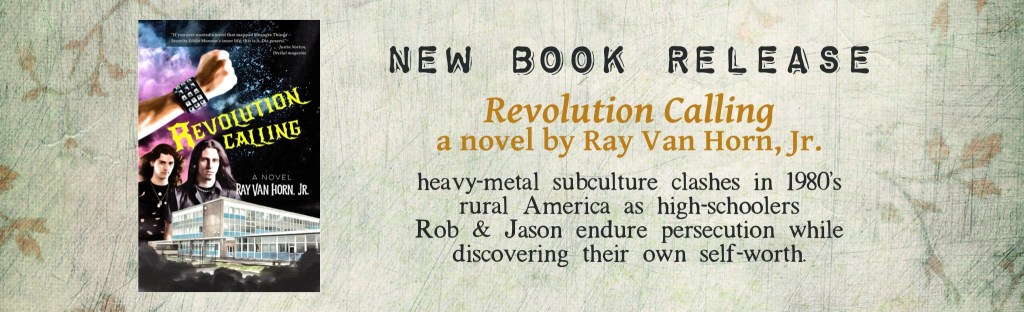
Raw Earth Ink is proud to present Ray Van Horn, Jr.’s semi-autobiographical novel, Revolution Calling.

From the back: Every generation faces inevitable trials in the great proving ground of high school. The polarizing definition of ‘cool’ from a teenager’s world sets its own parameters, often hotly contested amongst a school body’s diverse subdivisions.
REVOLUTION CALLING, from veteran music and film journalist Ray Van Horn, Jr., is a retrospective look at high school as he knew it from the alienating stance of heavy-metal subculture in the late 1980’s. As a semi-autobiography, REVOLUTION CALLING is an outsider’s tale for Generation X, an examination of the will to belong on one’s own terms, even when the stakes turn violent.
This is a story of inner and outer turmoil where persecution leads to comeuppance. The path to acceptance in one’s life often takes turbulent paths. For Jason Hamlin and Rob Martino, this is a call-to-arms for their own self-worth and moreover, their self-preservation.

In paperback at: lulu, Barnes & Noble, and Amazon.
As eBook at: lulu, Nook, Kobo, Kindle.
Leave a review on Goodreads.
©️2023 | Ray Van Horn, Jr.
You can catch a great interview with Ray on horrortree.com here.
Author Spotlight: Adele Evershed
Adele Evershed won 3rd prize in Poetry in the Northwind Writing Award 2023 for her poem “What Does Water Become?” It is an honor to feature her Q&A here on Raw Earth Ink as part of our promotion of truly exceptional authors.
Q & A
Candice: In What Does Water Become? there are many messages within this single poem, not least the power of the layout and ultimate message. Regarding poetry, is this a genre you feel really speaks for you more than any other? If so, why? How do you feel it differs from other forms?
Adele: I think of poetry as an attempt to find answers in a world where the questions keep changing. This is true whether it’s on an individual level, like looking for answers about love or loss, or on a macro level, looking to shed light on injustice or, in the case of my poem about climate change. Poetry does not necessarily have the answers, but by appealing to a reader’s feelings, it can stir a response and change the way we view aspects of the world. Of course, other genres can do this, but because of poetry’s compactness, rhythm, use of metaphor, and appeal to our senses, it has an immediacy that other genres don’t offer. How language is used demands you listen, you can’t skim, you have to be present. And the one thing that marks poetry out from other forms is the way it looks on the page. What Does Water Become is a concrete poem, so I was aware of the shape of the words on the page and how the shorter lines speed your reading to give an impression of water rushing away.
Finally, to quote Emily Dickenson’s poem, “I Dwell in Possibilities,” her house is poetry, and she says it’s “A fairer House than Prose—More numerous of Windows—Superior—for doors.”
I also write flash fiction, but poetry opens more windows and doors; it makes me pay more attention to the words, but equally, it makes me think about the pauses and what might happen in that space.
C: How did the writing of poetry come to appeal to you and start your journey? Why not prose or other forms, what was it about poetry?
A: As I mentioned, I also write flash fiction, a story of 1000 words or under. I think these forms are closely connected, and some flash fiction reads like a long-form poem. Both genres rely heavily on metaphors, making language work hard with a limited word count. If there is a difference it is probably flash fiction has a story arc but having said that I do have prose poems that have a narrative. Sometimes, I’ve started a piece of writing thinking it will be a poem, and it morphs into a flash or vice versa. I have written a novella in flash, Wannabe, published by Alien Buddha Press, and that is a collection of different-length flashes and poems, so it is a hybrid. Each story/poem can are complete pieces in themselves but when you read the collection you can discern a bigger story. Over the last few years, I have noticed more calls for hybrid submissions, mainly by indie presses. I think we are seeing more blurring around the edges and experimental writing in what was once considered traditional genres, and that’s exciting.
I also write haiku, which I find meditative and it helps me hone my language. There is a very active haiku community on line and it has been one of the joys of the last two years for me to meet and interact with some wonderful haiku poets. I write a daily haiku from a prompt on X and tweet it @AdLibby1.
C: You marry description alongside life in a seamless way and actually bring the reader into the room with your presentation of the subject-matter. The poem feels female, is that something you are conscious of or would you refute the necessity of putting a gender on it? In other words, is there a palpable difference in your mind when it comes to the gender of a poet?
A: This is such an interesting question. I’ve never really considered the gender of a poem, but I can see how What Does Water Become feels female. In many of my other poems, I write about issues that overwhelmingly affect women: domestic abuse, misogyny, abortion rights, menopause, and coming to terms with aging as a woman. I had written another poem about rape which starts with ‘It’s always the women that carry the water’ and that was the catalyst for What Does Water Become. I couldn’t get rid of an image I had in my mind of a woman walking miles to a well only to find it empty. So, I suppose I was coming at the subject matter from a gendered view, but when I read a poem, I don’t consider the gender of the poet; I’m more looking for recognition of something I’ve felt or a new way of seeing that I’d never considered. In other words, I’m looking for a connection.
C: When you compare how you wrote when you began and now, what are the most palpable differences you observe in how that writing has shifted?
A: I’ve always loved words. When I was younger, I wanted to grow up to be a librarian or an author, and then life got in the way. I studied psychology at University and then trained to be a teacher; I got married, had four children, moved to Singapore because of my husband’s job, and finally landed in Connecticut and started teaching preschool. That is a long-winded way of saying I only started writing four years ago. My first effort was a horrible poem about missing Wales. Then Covid hit, and I was out of the classroom for seven months. Everybody in my house worked online, so I started taking online courses. I did a poetry appreciation course on Emily Dickinson, which I adored, and one on Walt Whitman, which I didn’t, but I learned a lot. So, my writing has definitely shifted and is still changing. What I love about modern poetry is the freedom to experiment. Recently, I wrote an erasure poem from one of my rejection letters, which I discovered is a great cathartic exercise that I highly recommend.
C: You have some killer lines in this poem, like: “the bog thickened with bones of our ancestors or other cattle.” Where do those lines come from? Lived experience? What you have read? What you have witnessed? Or your imagination?
A: Thank you. I’m from a working-class background; I’ve worked since I was thirteen and was the first in my family to attend university. I was never deprived, but there were always more vegetables on our plates (one of my grandfathers had an allotment) than meat, as the meat was expensive. My father qualified as an accountant by attending night school, and then we moved house and class! Whenever I’ve found myself doing something like having a cocktail in Raffles when I lived in Singapore or attending a charity gala, I always think, ‘What would my Nan think if she could see me now?’ So, the answer to your question is that, in part, it was my lived experience, stories handed down through the family, and a hefty dose of imagination.
C: What do you get out of other writers and how? Meaning, when you read a book, you absolutely love, what is it specifically that really pulls you in?
A: Eudora Welty, an American short story writer, novelist, and photographer, said, “Great fiction shows us not how to conduct our behavior but how to feel. Eventually, it may show us how to face our feelings and face our actions and to have new inklings about what they mean.” And that, in a nutshell, is what I get from reading other writers. The thing that initially pulls me into a novel is a good story, but the thing that keeps me on the hook is how the writing makes me feel. In poetry, it is a clever turn of phrase or something that makes me consider a different point of view or something I relate to through my own experience. The first time I read Warning by Jenny Jones made me smile, but it also made me consider the folly of not being true to yourself in the present. Why wait until you are old to wear purple or go out in your slippers in the rain? Do it now because you might not live to be an old woman!
C: Your line: “and a new universe found in a rock pool by a child” Is very memorable and clever. Do you feel that children have an intuition that is often lost in adulthood?
A: I am a preschool teacher, and I’m always amazed by the capacity of young children to be in the now. Whatever is happening to them is the most important thing; no looking forward or backward. They are totally absorbed in their play. Just yesterday, one of the three-year-old girls I teach found a ladybug. She was so excited. We popped it into an insect catcher and got magnifying glasses, and she spent twenty minutes just watching the bug. As adults, we can get caught up living in the past or worrying about the future rather than paying attention to what is in front of us, and I feel fortunate to be reminded to be in the present every time I’m in my classroom.
C: How do you envision your writing journey in say, five years’ time, what do you hope in terms of where you will find yourself?
A: Very simply, I would lie to have published a full poetry collection. Even writing that makes me smile. At the start of 2023, I thought I’d only ever publish one book. I’d signed a contract with Finishing Line Press for my chapbook Turbulence in Small Spaces, and it took almost two years from acceptance to holding the physical book. Now, at the end of the year, I have published a second poetry chapbook, The Brink of Silence, through Bottlecap Press and a Novella in Flash, Wannabe, through Alien Buddha Press. I have also signed a contract with Unsolicited Press for another Novella in Flash to be published in September 2025 and won the Open Contract Challenge. So, Dark Myth Publications will publish my short story collection, Suffer/Rage, next year. Sometimes, I have to reread the acceptances to convince myself this has all happened. My message for all those reading this is that it’s never too late. I started writing in 2019 at 55, so in five years, I will be 65 and retired with more time to write-fingers crossed.
C: In this moment as you read this, name one novel that blew your socks off and describe why it did?
A: Just one? Okay, in this moment, it would be The Handmaiden’s Tale by Margaret Atwood. I read it when it was first published in the 1980s and living in Britain. It made a real impression on me. At the start of the book, the reader is unsure what is going on. Where is this place, Gilead? It seems familiar yet foreign at the same time. Who is the narrator? Why doesn’t she tell us her name? And then you realize it’s a future America, and you are shocked. When I read it, I thought this could never happen in modern-day Britain, and I still think that’s true, but in a very diluted form, it is happening in modern-day America, and I find that chilling.
This novel also gave me a taste for dystopian/sci-fi writing like Kazuo Ishiguro’s Never Let Me Go. It has the same way of giving the reader a sense of familiarity, but then you realize that the characters you have come to care about are clones bred for their organs. It’s the horror lurking in the everyday that I find fascinating.
Finally, I must give a shout out to Olivia Butler’s short story, “Blood Child”–it’s about a human boy being groomed by an alien race to become pregnant. If you haven’t read it, you should. In fact, read anything by Olivia Butler. I told you I couldn’t pick just one, and on reflection, they are all dystopian; I’m not sure what that says about me. So I’ll add everything by Tana French, especially her first Into the Woods. The plot is clever, and I love as a woman the way she portrays Rob, her narrator.
C: What do you make of writers who do MFA programs versus those who do not? This can include courses and workshops also. In other words, do you think a writer needs a degree of ‘education’ or do you believe a writer is born able to write or becomes able to write through lived experience primarily?
A: This question comes up a lot among writers. Unless you can get a scholarship, the cost of an MFA is prohibitive for many. I am British, and our Master’s degrees are much cheaper and take a year, much more obtainable. On a slight tangent regarding education, the requirement for teachers to obtain a Master’s in Education is ridiculous, given how much teachers are paid.
If someone wants to take an MFA, that’s great, but not having one doesn’t stop you from becoming a writer. I have done several online courses, many of them free or very reasonably priced. I’ve done a number run by Sage Turtle and the Crow Collective and the free workshops from the International Woman’s Writing Guild. Another great resource has been local libraries. I do a weekly fiction writing class over Zoom, which has been invaluable in my writing development. As a group, we all write to the same prompt, and it’s always so interesting to see where each writer goes.
I do think a writer needs, to quote the question, ‘a degree of education’ but not necessarily a formal education. I’ve always read a lot and consider that the most valuable education I have received. I was very lucky, my mother always encouraged me to read. She gave me The Diary of Anne Frank when I was a teenager, and I think it was that book that birthed empathy in me. And I genuinely believe that is one of the most important tools for a writer: put yourself in another’s shoes and walk around a bit; if we all did this, the world would be a better place.
C: Not in relation to writing per say (although everything is related if you’re a writer) what makes you really furious these days? And what makes you really happy?
A: It will be no surprise when I say so many things are making me furious. Climate change and the unwillingness of Governments around the world to do more. The attack on women’s autonomy over their own bodies by the repeal of Roe v Wade in the USA. But there are glimmers people are fighting back; each time abortion has been put on the ballot, abortion rights have one, the latest in Ohio. In the UK, the Conservative Party is trying to follow Trump’s rule book, waging a culture war to try and win the next election. They have been attempting to stir up hatred against immigrants, people experiencing homelessness, and legitimate protests. During the pandemic, they even tried to take away free lunches from children whose families were struggling financially. Of course, as I type this, the terrible suffering in Israel and Gaza is at the forefront of my mind.
All of this makes me very grateful that I have no spare mental space to be anything but in the moment with the kids when I’m teaching.
I love writing, winning competitions, and getting published is a dopamine rush, but I am happiest when spending time with my family. Yesterday, one of my sons had the day off, and he asked me if I wanted to do something with him- pure joy!
C: What role do you think mental health plays in our role as writers? Can you be entirely balanced as a writer? Does it tend to attract people who struggle in some way? Has it no bearing? How does it play into a writer’s output if at all?
A: I’m not sure anyone is truly balanced; it might be that’s what we are all striving for, and some do that by drinking or drugs, others by pouring everything into romantic relationships or parenthood, and still others by finding a cause. Writers utilize this frisson in their work so it becomes more apparent. I’m going to quote Eudora Welty again, “I am a writer who came from a sheltered life. A sheltered life can be a daring life as well. For all serious daring starts from within.”
There is no doubt that writing can help maintain your mental health. The benefits of expressive writing helping with anxiety, depression, and other mental health issues are well documented. And many writers use poetry as a way of working through their trauma. My Mum passed away from ovarian cancer when I was 21, and I never really processed my loss. I’ve reconnected with her by writing poems about our time together–not so much the cancer, although I did write about that too at the beginning. I now recognize how her influence has shaped my beliefs and how I’ve lived my life. For example, beyond the consequence of always thinking every health scan is going to be bad news, I celebrate aging. Next year, I’ll be 60, and I’m happy to shout that from the rooftops.
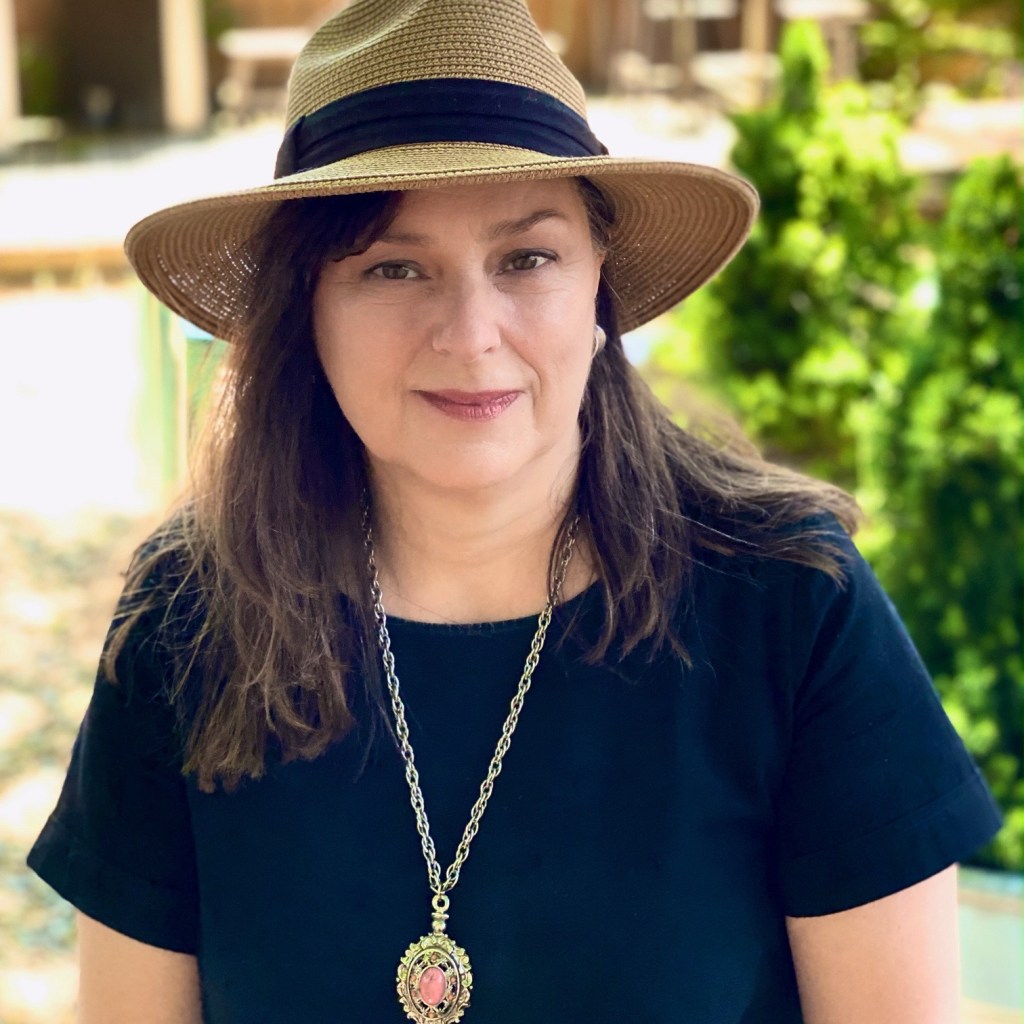
ADELE EVERSHED was born in South Wales and has lived in Hong Kong and Singapore before settling in Connecticut. Her prose and poetry have been published in over a hundred journals and anthologies such as Every Day Fiction, Grey Sparrow Journal, Anti Heroin Chic, Reflex Fiction, Gyroscope, and Hole in the Head Review. Adele has been nominated for the Pushcart Prize and Best of the Net for poetry, and the
Pushcart and Staunch Prize for fiction. Finishing Line Press published her first
poetry chapbook, Turbulence in Small Places. Her second collection, The Brink of Silence is available from Bottlecap Press and her novella-in-flash, Wannabe, was published by Alien Buddha Press in May.
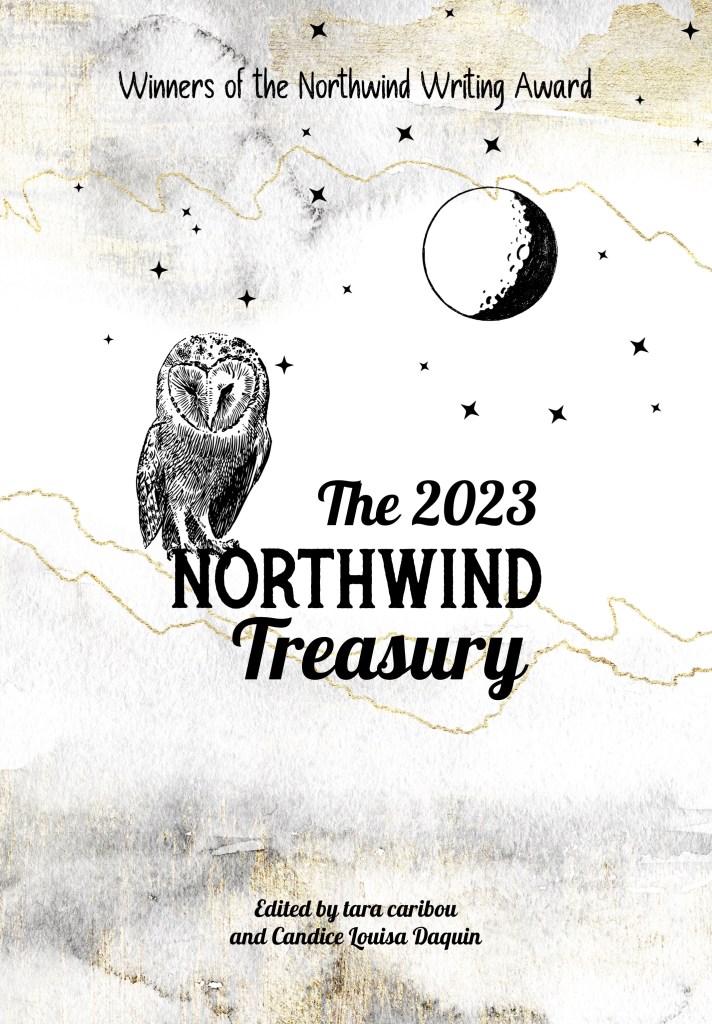
To read The 2023 Northwind Treasury, including Adele’s winning piece, you can purchase it (come December) in paperback on Lulu, Barnes & Noble, or Amazon or as an eBook on Lulu, Nook, Kobo, or Kindle. To see the list of contents and winners, visit our winner’s page.
Author Spotlight: Rachael Ikins
Rachael Ikins won 2nd prize in Prose Poetry in the Northwind Writing Award 2023 for her poem “Ars Poetica, The Skin of this Poem.” It is an honor to feature her Q&A here on Raw Earth Ink as part of our promotion of truly exceptional authors.
Q & A
Candice: In Ars poetica, the skin of this poem you seem to master the genre of vivid and visceral is this a genre you feel speaks for you more than any other? If so, why how do you feel it different from other forms?
Rachael: I gravitate toward vivid 3-D sensory language that incorporates all five senses, and the detail—detail brings the reader into the poem, showing not telling, and that allows a reader to be a participant.
C: How did writing Poetry come to appeal to you and start your journey? Why not prose or other forms? What is it about poetry?
R: my father was dyslexic before that term was used. He had to take a speed reading course to finish college. When it was his turn to read me bedtime stories, as soon as I could read, he had me read him poems from an anthology all soldiers were given during the war, so I think it was that. I also write Prose— short stories novels, essays, reviews, but my heart lives in Poetry. In eighth grade I had a gifted English teacher also a poet who spent a lot of time on poetry and the creating of it, and that was when it really took off for me. She submitted two poems of mine that summer and they were accepted by British Journal. I was 14.
C: What form of writing really speaks to you in terms of your own output and how do you see your writing evolving? In terms of defining the genre you write or do you resist definition when I say form, I mean, defining the style of your writing, if at all.
R: since I began classes during lockdown with Craig Czury, I learned that there are as many types or schools of poetry as there are of art. I discovered that I gravitate towards surrealism and abstract expressionism something I never would’ve thought.
C: As an artist, how important is written word versus painted illustration do they complement each other or are they distinctly different to you?
R: Poetry is something I can’t live without and that has saved my life many times. I love to draw and paint too, but aside from photography which to me is a visual form of a poem I can live without making visual art—there’s too much to learn and I feel the lack of education in both arts.
C: In a doorway, guarded by two crows your description is so vividly written it has so much in such a short piece with so many allusions and references, which really distinguishes your writing. Is this intentional, a style you are drawn toward?
R: I take from even the tiniest, personal experience, memory or observation, and I have an almost eidetic memory. I saw those crows years ago on a vacation on Sanibel Island. The pink barrette I found last year while out walking my dogs. I’m very visual as they say it’s all in the details. Every detail should clarify the poem for the reader. The details are the flesh of the poem.
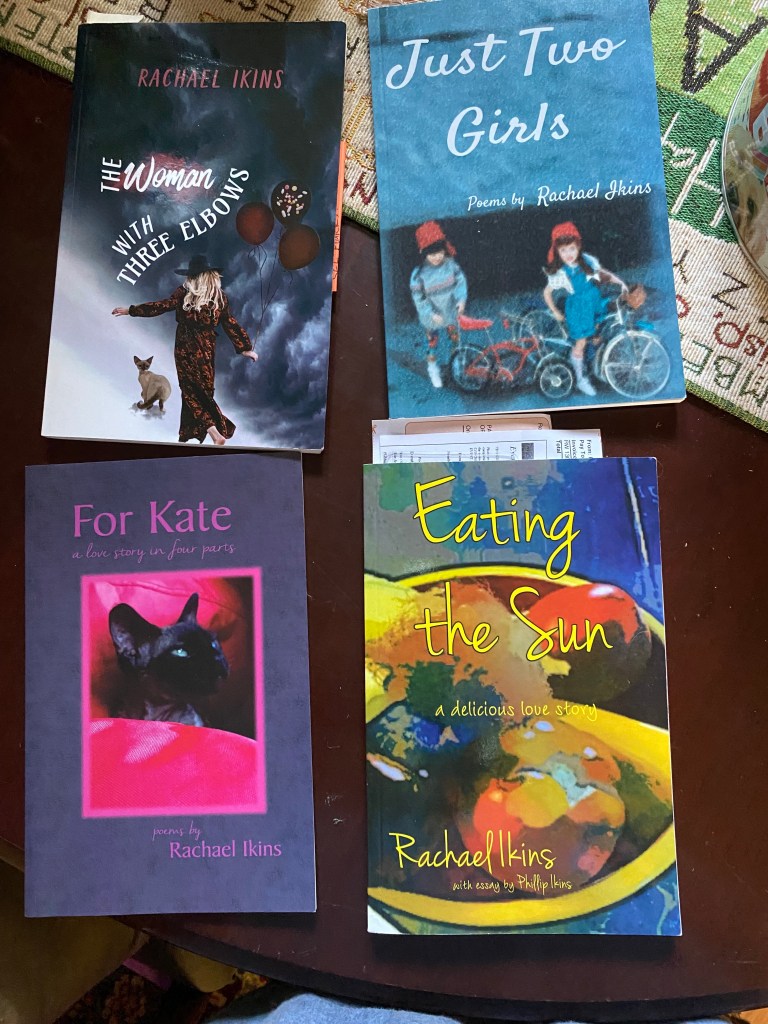
C: You have published with Raw Earth Ink and built a reputation for yourself in many ways, not least because you have a prodigious output, and push yourself time, and again, particularly in your title with The Woman with Three Elbows, you marry description with metaphor and real life in a seamless way, and actually bring the reader into the room with your uncanny ability to illustrate your experiences. That direct but very well crafted approach is very distinctive I find when employed by a writer is often very female. Do you see your writing as having a gender? If not, how do you feel your writing evolves in terms of the way it approaches the reader?
R: I never have thought of my writing as having gender. I have written persona poems from the male point of view. As a matter fact, my Novella, two main characters/protagonist are male. I think authenticity is what counts. One teacher I had recommended eavesdropping when out and about to learn authentic dialogue. Research matters to even in Poetry, a reader wants to be respected and a well-read reader is going to find where you cheated if you didn’t do the proper research.
C: When you compare how you wrote when you began versus now, what are the most palpable differences you observe, and how has that writing shifted?
R: when I began, much of my writing was narrative and like journaling, poetry is not that. Poetry is art. As my current teacher would ask do you want to be a journalist or to make art? I would say my more contemporary poetry has much more, is much more art.
C: What wakes you up in the night gets you up in the morning and demands you write?
R: sometimes I dream or something I was working on in class the day before sparked by something that I saw on the news or while out walking.
C: Where do you feel you struggle the most as a writer, in terms of any aspect of the writing experience to you personally?
R: Keeping that narrator out of the poems and letting the magic in. I was introduced to this concept of magic years ago that at a certain point the poem takes flight into magic, but I didn’t grasp it until last year in a conceptual way. You have observations/details, you ask a question and then there’s magic.
C: What do you get out of other writers, meaning when you read a book you absolutely love, what is it specifically that really pulls you in?
R: character development, a good story that is unexpected and surprises me. I have gotten to a place where I will start a book and have to read the whole thing in one sitting if I am hooked.
C: Which writers have cultivated, and urged to write as well as them, even if differently, and what was it about their writing or stories that encouraged you to begin your journey as a writer?
R: Ann Sexton, Sylvia Plath, Stephen King too many to list here, Jane Smiley, Patricia Smith, Marge Piercy
C: How much does the physicality of your existence influence your writing and what else do you believe drives you as a writer in terms of influence and or tools that you utilize consciously or subconsciously to craft your storytelling?
R: a lot. All five senses. You need those to make it authentic and relatable. I’m a very visual writer.
C: How is the story when it’s with a poem versus prose and why?
R: Prose is narrative like journalism even with flashbacks and other devices. Poetry lays out the detail, engages the senses, then it takes flight into that other realm that is unique to itself. Piercy used to say a poem has a life of its own and has a right to exist outside of you, to live its own life. You tell stories. You inhabit poems. Then you release them. Although I have been told many times my prose is very poetic.
C: When you considered entering the Northwind Writing Award, did this consideration influence what you ended up submitting and why did you choose the pieces you chose?
R: I chose pieces about the poetic process or the nature of poetry a.k.a. Ars poetica, and I chose pieces that included a lot to do with a natural world, which is where my poems most often like to live. I really tried to submit art. I was conscious of the taste of Raw Earth Ink.
C: Is there anything you really despise about writing, a pet peeve or something that disgusts you when you read it?
R: Yes, the politics that can happen. There is enough pie for everyone. It’s just that some don’t see that.
C: How do you envision your writing journey in say five years time what do you hope in terms of where you will find yourself?
R: I hope I have a novel out there and an agent by then, as well as other well-accepted books of poetry and awards.

C: If you weren’t a writer, what do you think you’ve like to do with your life and why?
R: All I ever wanted to be was a writer. I wish I’d had early support, and I wish I had fought for it so I would’ve had a job that sustained me, to free me up to do the writing. In another life I would’ve had human children.
C: Do you think film and plays and theater and dance and all those other art forms, influence writers as much as novels and writing do?
R: definitely. I danced for 15 years. Also exercise makes a difference and is an essential part of my process.
C: What do you make of writers who do MFA programs versus those who do not. This can include courses and workshops also, in other words do you think a writer needs a degree of education or do you believe a writer is born, able to write and becomes able to write through lived experience primarily?
R: I think you are born with talent or gifted. Or not. Undisciplined and under-educated talent can be directionless, so I have always valued learning and improving, and I always strive to better myself. Writing is hard work make no mistake. It is work. The majority of the process is quite unromantic. It is a fantasy that writing of any genre just drops out of you perfect from the get-go.
C: In relation to writing per se, what makes you really really furious these days and what makes you really happy?
R: The current political situation in our country, and in the world and the disregard for the health of the planet. I think, disregarding the health of the planet, which is the only home we have makes me more furious than anything else. We are the only species that continues living in the house that we are burning down and I just don’t understand it. ** What makes me happy? finding bees, toads, bunnies in my garden, harvesting food I grew, that makes me happy, sheltering other living things and making my space a haven for them.
C: Do you consider yourself an Indie writer?
R: I am a professional writer. I dislike that term Indie. To me too many think that is less-than.
C: Your animal family plays an important role in your body of writing. How do they encourage you? Would you be the person you are today if they were not in your life?
R: definitely not. They are everything to me. They are the reason I get up, they are the reason that I push on and they are partly the reason that I write. They inspire me, they make me laugh. They love me unconditionally and in a field that is by nature solitary and lonely, that of the writer, it’s very important to have that validation and that love.

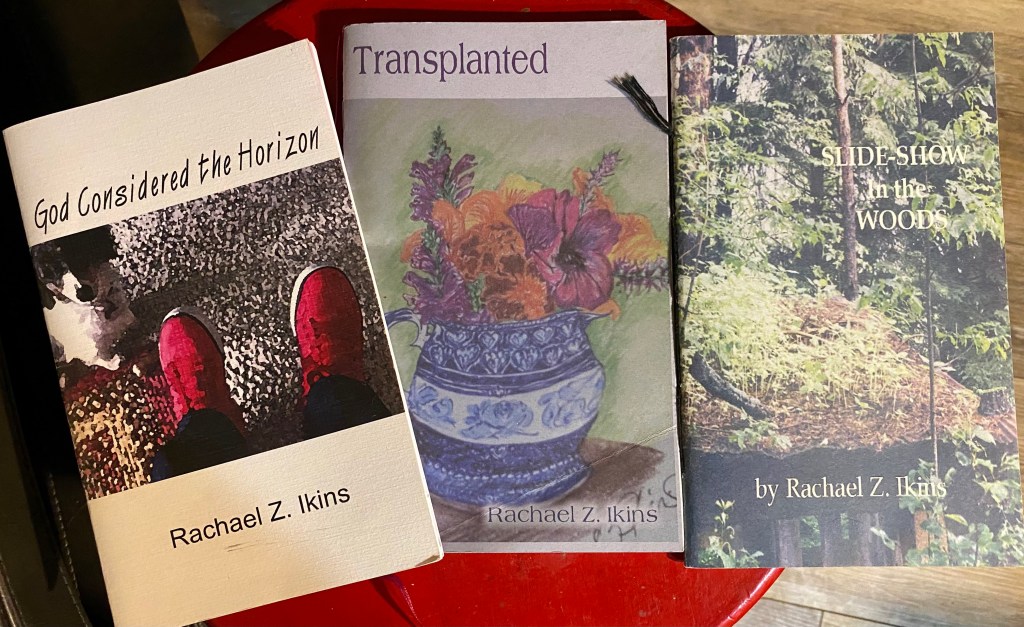
RACHAEL IKINS is a 2016/18 Pushcart, 2013/18 CNY Book Award nominee, 2018 Independent Book Award winner, & 2019 Vinnie Ream & 2019/2021 Faulkner finalist. A 2021 Best of the Net nominee, 2023 Editors Choice Award from Studio B. October 2023 2nd prize and an HM from Northwind Writing Award sponsored by Raw Earth Ink, Alaska.
A graduate of Syracuse University with a degree in Child and Family Studies Ikins worked as a sign language interpreter for deaf students ages K-12 and also as a veterinary technician before devoting herself full time to writing.
Fellowships: Colgate Writers Conferences for poetry (3) and young adult literature.
She founded and moderated the feature/open mic event bimonthly Monday Night Poetry at a sushi Blues 2008-2011.
Honorarium from Finishing Line Press for a week long workshop in Lismore Castle, Lismore, Ireland 2014. While there she worked with Patricia Smith, Jane Smiley, Ethel Rohan and others.
June 2014 she juried into Marge Piercy’s Poetry Intensive workshop, Cape Cod.
Ikins is a Fingerlakes born author/illustrator of multiple books in multiple genres. Her work appears in journals such as the Muddy River Poetry Review, Owl Light, Literary Turning Points,The Mason Street Review, Broadkill Review, Fly on the Wall Press UK, Synkroniciti, the Red Wheelbarrow, S/tick, Dragon Poet Review, Indigo Blue online UK, Cider Press Review, Syracuse Poster Project, The Healing Muse, The Pen Woman Magazine, Avocet, Moonstone Press, anthologies from IndieBlu(e) Press, The Brave (Clare Songbirds Publishing House), Spontaneity Review, Ireland, and many others.
Her visual art and photography have won prizes and have hung in galleries from CNY to Washington DC and appeared on local television stations and on many journal covers. She is a former member of NLAPW and currently of Just Poets. She works as associate/contributing editor at Clare Songbirds Publishing House.
Ikins also spends significant time mentoring emerging poets and helping them achieve published works. She has appeared on the New York Parrot Literary Review YouTube and in other interviews.
Instagram: @rzikins.author.artist
Facebook: Rachael Ikins Books and Poetry
To read The 2023 Northwind Treasury, including Rachael’s winning piece, you can purchase it (come December) in paperback on Lulu, Barnes & Noble, or Amazon or as an eBook on Lulu, Nook, Kobo, or Kindle. To see the list of contents and winners, visit our winner’s page.
Author Spotlight: Braeden Michaels
Braeden Michaels won 1st prize in Prose Poetry in the Northwind Writing Award 2023 for his poem “Echoes of Stale Air.” It is an honor to feature his Q&A here on Raw Earth Ink as part of our promotion of truly exceptional authors.
Q & A
Candice: In Echoes of Stale Air, you seem to master the genre of prose poetry, is this a genre you feel very attached to? If so, why? How do you feel it differs from poetry or prose alone?
Braeden: That is quite a compliment. I actually have not published much prose. I think prose for me is a bit more challenging because there is more structure than verse. Overall, I challenge myself as a writer to separate myself from others. I take a lot of pride in my craft in a few specific areas; creative title, imagery, and language. Prose for me tends to be a bit more challenging to incorporate imagery and to make the piece flow. I don’t see myself as a master but always looking to improve. I will say though I am very confident. There are pieces that I have finished and see that I have accomplished my goal after reading it.
C: In I Am the Color Black, your description is so vividly written, it has such an unapologetic blunt approach that distinguishes your writing. Is this intentional? If a style you are drawn toward, how did this come to be?
B: As a writer, I want all of the senses to be felt within my work. Yes, I want the majority of my pieces to grab you by the throat. Is this intentional? Absolutely. I create conspicuous phrases and compelling lines to make you reread it again. To me it’s a recipe, a pinch of this and a pinch of that but never too much of one ingredient to consume you. As far as this particular piece I will turn into a book. This project will be layered meaning I will take a phrase from each piece and be the title of the next poem. Each of my books have a different feel and objective to them.
C: What wakes you up in the night and gets you writing?
B: Actually, I get my best ideas from a good night sleep. I tend to wake up with titles or phrases in my head.
C: Where do you feel you struggle the most as a writer, in terms of any aspect of the writing experience to you personally?
B: I started to write between 8 and 10 years old. I spent my youth hiding it and didn’t realize I was writing poetry until high school. My mother was constantly sick growing up and she was the only one who saw that I had a gift. Most of the pieces I wrote were dark and just felt misunderstood. My first book “The Raven’s Poison” is the only book where a reader will read pieces that reflect some of my personal experiences. I struggle to put myself into my work because I don’t want my work to be repetitive. My focus as a poet is to be a storyteller and tend to see the world from a different perspective so my work is gravitational.
C: What do you get out of other writers and how? Meaning, when you read a book, you absolutely love, what is it specifically that really pulls you in?
B: I am generally pulled in by the details and intelligence of the writing. If I see holes in a plot, I stop reading. Dialogue has to feel realistic. I tend to analyze everything I read and watch.
C: Which writers have cultivated in you an urge to write as well as them, even if differently and what was it about their writing or story that encouraged you to begin your journey as a writer?
B: The poem that inspired me to write and say I want to be a poet was “Howl” by Allen Ginsberg. I am a huge fan of the Beat Generation. It was first time you read poetry with curse words. The poetry from this group was unhinged, poetry that spoke the truth. I have read “Howl” a dozen times and wanted to do something similar but with my voice. COVID hit and the world begin to change. It inspired me to write “Growl from the Sun.” My approach to this poem wasn’t about sides but about humanity. If I had to pick a few pieces that someone should read, this poem would be one.
C: If you were describing yourself to someone else, anonymously and they did not know you, what would you want them to know about you?
B: This is a great question. I don’t like to describe or advertise who I am. I want people to ask the right questions and let them decide who I am. Many of us advertise who we are, and our actions don’t often reflect who we are. I tend to speak the truth and people generally don’t want to hear it.
C: What do you make of writers who do MFA programs versus those who do not? In other words, do you think a writer needs a degree of ‘education’ or do you believe a writer is born able to write or becomes able to write through lived experience primarily?
B: Education is subjective and there are different types of writing. I think most creative writing can be a combination of experience, natural ability, and some form of education. It depends on what you want to do as well. I seek out poets that I don’t know and try to read them to improve my craft. Reading and writing go hand in hand to improve.
C: What role do you think mental health plays in our role as writers? Can you be entirely balanced as a writer? Does it tend to attract people who struggle in some way? Has it no bearing? How does it play into a writer’s output if at all?
B: I get the impression from society’s point of view that a writer is different, unique, eccentric, and a little off beat. The view of a poet is somewhat similar but add “broken” to that definition. A poet is writing to tell their story, heal, maybe help others. I think as a poet we attract those who can relate to it. I think writing is very therapeutic and again for me it is challenging because I need it to be. The day it’s not I will stop writing. I think we all write for different reasons and sure it helps our mental health.
C: Share something random with me…
B: Most of us would rather be right and lose someone than admitting they are wrong and have someone.
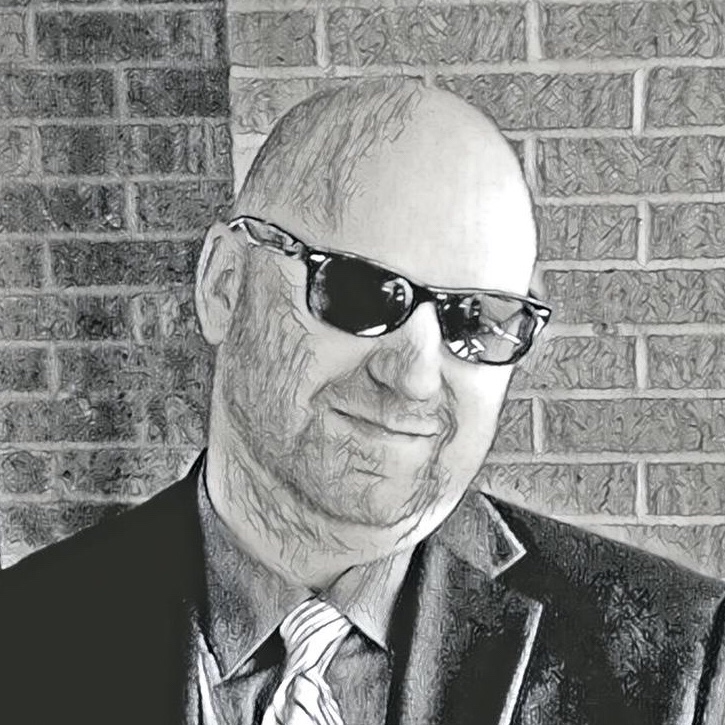
BRAEDEN MICHAELS is an American author living in beautiful Georgia with his family and his own unique creativity. Within his analytical mind dwell the many passages and corners of a world built by observation, investigative perception, and penetrating rationale. He’s been published in several anthologies as well as his own books of poetry, written in the method of Deconstructive Literature, in which he pulls apart nuances within human nature then organizes and restores it in poetic style. You can read more from him on his website.
Blog: braedenmichaels.com
Instagram: @braeden.michaels.author
To read The 2023 Northwind Treasury, including Braeden’s winning piece, you can purchase it (come December) in paperback on Lulu, Barnes & Noble, or Amazon or as an eBook on Lulu, Nook, Kobo, or Kindle. To see the list of contents and winners, visit our winner’s page.
Author Spotlight: Wren Oldham
Wren Oldham won 2nd prize in Fiction in the Northwind Writing Award 2023 for the story “Never Seen or Heard from Again” It is an honor to feature they’re Q&A here on Raw Earth Ink as part of our promotion of truly exceptional authors.
Q & A
Candice: In Never Seen Or Heard From Again there is a fluid and natural mastery of the genre of the short story, is this a genre you feel very attached to? If so, why?
W: I’ve always enjoyed a good short story. Sometimes an idea, no matter how engaging, just, doesn’t have enough meat to it to become a full-length novel or novella on its own, while still being worth putting to paper. Additionally, I’ve always felt little bite-size pieces of fiction can be a very engaging format, and with say, an anthology, if one story doesn’t land for a particular reader, well, just get through the next few pages and we’ll be on to the next one. It can be a nice contrast to reading say, an 800-page fantasy epic or something.
C: The premise of your short story is incredibly clever because you unfold the purpose with tremendous subtlety and involve the reader from the beginning. I particularly liked how you set it in a definite period in time and I felt it was very visual. Do you feel short stories need that level of placement (in time, with visual emphasis) to do well and draw the reader in?
W: I’m personally of the opinion that giving any hard-and-fast rules for what makes any kind of fiction work is a bit of a fool’s endeavor. The basics are, of course, helpful guide posts, plot structure and trope-savviness and all that, but in the end, for every little thing I can recall reading that a good story “needs”, I can think of examples that break that mold but are nonetheless engaging and enjoyable. That said, my intentions in setting this particular story in the time period I did and in writing in a more visual style had more to do with my own ‘vision’ so to speak than anything else. Originally, the idea came to me in the form of a sort of ‘short film’ in my head, and my challenge was to transform this very visual idea into a textual format while maintaining the original tone and feel I had envisioned.
C: In Never Seen or Heard from Again, there is a definite homage to the challenges in the past regarding individuals born identifying as the opposite gender. Not much has historically been written about this and yet, humans across time must have grappled with this in societies that did not accept it. Your gentle recognition of this quiet suffering was very moving; is this a subject you feel passionately about? How so?
W: As a nonbinary person, I feel it’s very important to portray the full spectrum of gender and sexuality, as well as to acknowledge that this spectrum existed even before the people on it had terms with which to describe themselves. On a more personal note, I did base some of the emotions in the text on experiences I had myself when I was younger, namely the experience of dysphoria.
C: Those readers who may not be interested or supportive of the struggles of LGBTQ+ might be turned off this story because of its potential ‘woke’ elements, but you transcend their bias by the mastery of your writing – whereby you can tell a story regardless of subject and bring home a lot of sympathy and emotion for the subject. I would say this is the true gift of a writer, to proffer a controversial subject that some may typically reject, and for those people to warm to the subject because of the quality of storytelling. As you wrote this, did you wonder how it would be received and what some readers might think, given there is still prejudice out there? How did that impact your direction and narrative?
W: I suppose I write my queer stories with a certain level of subtlety, though I’ll be honest, re-reading the story, the trans reveal feels very obvious to me. Granted, I’m the one who wrote it, so I suppose that makes sense, but I do feel like a trans reader would pick up on it a bit quicker than many cisgender audiences might. Apologies for being such a rambler, but to get to your main question, no, I try not to worry about others’ biases when I’m writing. I’m far more concerned with my own biases, as in, ensuring I’m portraying marginalized people as respectfully as I can, both for groups I belong to as well as ones I do not. If a reader puts my story down, or if someone refuses to publish my work on the basis of my inclusion of LGBT+ themes, that would hurt, but in my mind it would speak more to that individual and the way they relate to these themes as opposed to any flaw on my part as a writer.
C: How does autism influence your writing if at all? In terms of your perception or how you believe you are perceived and how you communicate?
W: I feel being an autistic person does influence my writing in that I’m not as rigidly married to traditional ideas of structure or the ‘rules’ of storytelling as a neurotypical writer of the same skill level might be. Additionally, as my communication style can be a bit difficult for neurotypicals to jive with, I tend to over explain myself, hence why all these answers are so long, haha.
Frankly, though, this one is a bit hard to answer. Feel free to leave this bit out if it comes off as too confrontational, but to demonstrate why, I’ll fire back.
How does being allistic (Not autistic) impact other peoples’ work and passions? How do you describe the way your brain works in opposition to others’ when you can’t see or experience how their minds work? Is that even possible to answer? Maybe, but personally, I find the prospect a bit daunting.
tara’s response: I found this a really great response, because it’s not always easy to put ourselves in other’s shoes. So what is normal for me is not for you and vice versa. And that’s okay!
C: I found the description of your couple was immaculately portrayed, whereby I was left wanting to know (what became of them) but glad you ended it where you did (without us ever knowing) which tied so well to the title of this piece. Do you consider all those things as you write or do, they just come out that way, almost intentional without being?
W: I do enjoy keeping things vague in my writing; it’s just more fun to me that way. And I mean, I think the answer is a bit of both? I definitely intended to be a bit vague as I was in the process of writing, but also, when I first envisioned the story in my head, that final line was always in there. The double-meaning of the phrase just sort of, appealed to me, once I’d thought of it.
C: Why do you think autistic people are more likely to be gender-fluid than those who are not on the spectrum, is there a relationship in your opinion?
W: I don’t necessarily think autistic people are MORE likely to be LGBT than the general population. Rather, I am of the opinion that autistic people are more likely to consider that they might be LGBT and to explore that idea than others, if that makes sense.
For instance, a neurotypical might write off any non-standard ideas about their own gender and sexuality for the sake of keeping the status quo intact. Meanwhile, a non-diagnosed autistic person who’s repeatedly heard LGBT people describe their experiences of “Knowing they’re different, but not knowing why” and find that that resonates, thereby enticing them to consider whether they, themselves, may be part of that group.
I hope that makes sense, my thoughts on the subject can be a bit difficult to explain properly.
C: As a ghostwriter do you find you approach the genre of storytelling differently to writing your own fiction, and how does your experience of being a writer, assist you in ghostwriting others works?
W: Ghostwriting is a very different beast indeed; more like, say, doing a creative writing project in school than to writing something on my own time. I have some creative freedom, yes, but I’m also limited in the topics I can cover and the language and formatting I’m allowed to use.
C: When you write your own material, are you aware how incredibly clever and insightful your subtle awareness of human nature is to the reader? Do you get a lot of feedback on your subjects given they are very ‘now’ in terms of their relevance to modern society and our shifts in what matters to us?
W: You’re seriously going to make me blush, haha. Frankly, I don’t tend to get much feedback at all; WordPress users don’t seem big on leaving comments, and I admittedly don’t have much experience of having my own work published. Frankly, I don’t feel the subject matter to be especially ‘now’, given the sorts of things I tend to read. For instance, did you know Octavia Butler, an author who died in 2005, included topics such as bisexuality and even characters who could be interpreted as gender fluid in her Patternist series, which ran from 1976-1980? You have to dig sometimes to find it, but people have been writing about this stuff for a while now.
C: Does your own personal gender-fluidity impact the subjects you choose? Do you have an aim to speak for people who have similar experiences, outlooks and life stories to your own?
W: My identity as a queer person definitely impacts the subjects I choose, namely that I often find myself a bit bored when reading say, a cis straight romance novel or something of the like. Not that I can’t write a cis straight character, just that a world feels more fleshed out and real to me when it’s acknowledged that queer and trans people exist within it.
I’m not sure I can say I intend to “speak for” the groups I belong to, because they’re incredibly diverse. My experiences and those of any other gender fluid person can vary wildly, and the same goes for other autistic people.
That said, I do intend to speak for myself, for my experiences, and to write things and include topics that I would enjoy reading. I can only hope that my work might resonate with others; to me, hearing “your work spoke to me on a deeper level” would be among the highest praise I could receive.
C: Many writers claim they do not need to read to be a writer. You mention your appreciation of other writers, how has being a reader impacted your ability and desire to write? Is it hard to avoid comparison? Or can it be beneficial?
W: Writers say that? Huh, that’s wild to me, but to each their own I suppose. Having been an avid reader for most of my life is probably the only reason I ever stuck with writing; as a kid, I had to be dragged out of the library by my dad once a week, usually holding a stack of books that rose to the top of my head. I feel like reading so much gave me a lot of the tools I needed to be a successful writer despite not having much formal education on the topic.
As for the point about comparison, oh God, yes, it is so hard sometimes to avoid comparing myself to other writers I enjoy. I often have to remind myself that the likes of Neil Gaiman and George RR Martin have been doing this for decades and that I don’t need to feel I’m immediately on their level for my work to be ‘good enough’ or what have you. Still, all in all, I do feel like my love of reading has benefited my skill, though it can be a bit of a double-edged sword at times, haha.
C: Whilst being gender-fluid rejects notions of determined gender, do you ever find that your writing has a gender? Or do you consciously try to avoid such labels and confines? How does gender impact authors in general? Do you think it holds them back? Restricts them? Makes them predictable or limits them? What does a gender-fluid writer bring to the table in that regard?
W: I think that gender is a social construct, though one that can definitely be limiting to some writers. For instance, I’m sure there’s probably some cis woman author out there who’s writing bodice-ripping romance when if she stopped to consider it, she might be more drawn to writing swashbuckling adventures or horror stories. I also feel like some authors can be limited by their perceptions of what they consider the “opposite” gender to be; ie, a male author who writes every female character to strongly desire motherhood and constantly compare themselves to every woman around them.
Still, I think a skillful writer with a good well of empathy and understanding can overcome these challenges, regardless of gender. Having an idea of gender as more of a role people can choose to play or not play than as who they intrinsically are I do think helps avoid these pitfalls somewhat.
C: When you compare how you wrote when you began and now, what are the most palpable differences you observe in how that writing has shifted?
W: The stuff I write now embarrasses me less to re-read, haha. Granted, when I began I was twelve and mostly wrote stuff that was either extremely depressing or bordering on edgelord territory. Also fanfiction, though I wasn’t as good at that. As for things I wrote as an adult, I feel the biggest difference is my growing confidence in my own abilities. Initially, when I got started again, I mostly wrote very short flash fiction or else, just let my brain vomit out whatever came to mind in an effort to get something onto a page. Nowadays, my writing is a lot more structured, and I try to put real intent behind it.
C: What wakes you up in the night and gets you writing? Or conversely, wakes you up early in the morning.
W: It’s been a while since I’ve done this since I don’t want to wake my partner, but as a youngster I would definitely get out of bed and find myself quickly scribbling down a poem or idea for a story. My motivation is mostly that I know the idea will be gone by the time I wake up in the morning and I don’t want to lose that spark of inspiration.
C: Where do you feel you struggle the most as a writer, in terms of any aspect of the writing experience to you personally?
W: Definitely procrastination. You see, I write on this magic box that’s full of video games and I can tab over and start watching Netflix whenever I feel like. I’ve actually started using a Pomodoro timer just because it helps me force myself to focus. Really makes one understand why George RR Martin writes on a PC from the ‘80s with no internet access.
C: What do you get out of other writers and how? Meaning, when you read a book, you absolutely love, what is it specifically that really pulls you in?
W: This is difficult because there are so many books I absolutely love, and it’s difficult to boil them all down into a single quality or set of qualities. Still, if I had to, I suppose I’d say that a good book to me needs to have some sense of emotional truth to it. For my very favorite authors, once I’ve read all their books, I often feel like I almost know the person on some level, if that makes sense. Not that everyone writes from literal experience, but that sense of emotional experience has to come from somewhere, and I think that tends to be what most resonates with me.
C: Which writers have cultivated in you, an urge to write as well as them, even if differently and what was it about their writing or story that encouraged you to begin your journey as a writer?
W: I know I’ve brought both up before, but Neil Gaiman and Octavia Butler, though I’m also partial to Effie Calvin, who writes queer-centric fantasy romances that I just adore. For Gaiman, in particular, I was exposed to his writing at a very young age, both his children’s literature as well as stuff I was definitely too young to be reading at the time. His rather poetic sensibilities and hints of magical realism that he inserts, even into very dark stories, has always really spoken to me, and I hope to one day be halfway as good a writer as I feel he is.
C: When you considered entering the Northwind Writing Award, did this consideration influence what you ended up submitting and why did you choose the pieces you chose?
W: I’ll be honest with you, I don’t remember. In between ghostwriting assignments I just sort of submit to contests as a way to hopefully boost my independent career, though as your press does appear willing to elevate marginalized voices I did feel more comfortable submitting this particular story.
C: Is there anything you really despise about writing or writers, a pet peeve or something that disgusts you when you read it?
W: I really don’t like allegories. I feel like authors will sometimes get so wrapped up in their story being an allegory for something else that they forget to make it make sense or be enjoyable to read. Yes, I got forced to read Lord of the Flies in high school, why do you ask? I jest, though that one in particular was one of my least favorite of the ‘classics’.
C: How do you envision your writing journey in say, five years’ time, what do you hope in terms of where you will find yourself?
W: With a movie deal that makes me fabulously wealthy enough to never have to worry about marketability in my writing again. I joke, but only partially. Realistically, in five years, I’d like to be making enough income off my own writing that I am reasonably comfortable and can be more selective about what freelance jobs I take on.
C: If you were describing yourself to someone else, anonymously and they did not know you, what would you want them to know about you?
W: That while I’m a bit long-winded and have a tendency to put my foot in my mouth at times, I really do mean well.
C: If you weren’t a writer, what do you think you’d have liked to do with your life and why?
W: Well, I’ve actually already done some political advocacy work with a group called Young Invincibles and found the atmosphere to be very comfortable, so I’d probably try to stay in an advocacy-centered space.
C: In this moment as you read this, name one novel that blew your socks off and describe why it did?
W: Picking just one is really difficult, since there are so many I love. I think in this case, though, I’ll go with The Chosen and the Beautiful, by Nghi Vo. It’s a magical realist reimagining of The Great Gatsby from the point of view of an Asian-American bisexual version of Jordan Baker. I’ve always loved The Great Gatsby despite its flaws, and I very much enjoyed reading a story that brought the original’s inherent queerness out of the realm of subtext and placed it front and center. I also enjoyed the fantastical elements, and how the entire thing was written in such a dreamlike fashion as to make readers unsure at times of what was really happening. I definitely enjoy a writer who can take on a more poetic style, and Vo does so beautifully.
C: Not in relation to writing per say (although everything is related if you’re a writer) what makes you really furious these days? And what makes you really happy?
W: Lots of things make me furious these days; we live in contentious times, and it only takes a glance through any given newsfeed to find some injustice or other going on in the world around us. Still, for the sake of my own wellbeing, I try to give myself space.
What makes me happy are simple things, finding a good book or a good game to play, spending a day working on a new sculpture while my partner and I take in a good show, that sort of thing.
Granted, none of that compares to the ecstatic glee I felt when I got you guys’s first email- reading “Congratulations!” when, as a writer, you learn to expect rejection letters nine times out of ten, was a high in its own right.
C: What role do you think mental health plays in our role as writer? Can you be entirely balanced as a writer? Does it tend to attract people who struggle in some way? Has it no bearing? How does it play into a writer’s output if at all?
W: I don’t think you have to be mentally ill to be a writer, though most writers I know of are. I do think writing does tend to attract struggling people, because everyone wants to have their feelings validated, to know that they have been heard. Writing can be a great way to get what are often messy complicated emotions out in a coherent way. Still, I do feel like it can negatively impact output. When I’m feeling depressed, for instance, I might be able to pump out a sad poem or two, or I might do some stream-of-consciousness journaling to get the emotions out, but it completely saps my motivation to say, actually get my ghostwriting assignments done on time.
I can write about depression in a coherent, thoughtful way, yes, but not while I’m at my lowest point; I think you have to have a bit of distance from which to look upon your feelings in that state in order to fully understand them, if that makes sense.

Wren Oldham is an autistic gender-fluid poet, originally from Oklahoma, though they now reside in Colorado Springs, Colorado with their cat and partner.. They have been writing on a hobbyist basis for 14 years now, and in 2022 took up freelance writing. They’re currently in the process of ghostwriting a series of novellas.
They previously had a poem featured in the online publication ‘The Creative Zine’, as well as being a finalist in Globe Soup’s 7-Day Story Writing Challenge. Their hobbies include reading and sculpting, and they’re a big fan of authors Neil Gaiman and Octavia Butler.
They currently run a WordPress blog, a Linkedin profile, as well as one on Upwork, the latter of which is how they have found the majority of their clients.
To read The 2023 Northwind Treasury, including Wren’s winning piece, you can purchase it (come December) in paperback on Lulu, Barnes & Noble, or Amazon or as an eBook on Lulu, Nook, Kobo, or Kindle. To see the list of contents and winners, visit our winner’s page.
Author Spotlight: Logan Medland
Logan Medland won 1st prize in Fiction in the Northwind Writing Award 2023 for his short story “Start a Religion – Stay Out of Jail.” It is an honor to feature his Q&A here on Raw Earth Ink as part of our promotion of truly exceptional authors.
Q & A
Candice: In Start a Religion – Stay out of Jail, you seem to master the genre of the short story, is this a genre you feel very attached to? If so, why? How do you feel it differs from poetry or prose alone? Is it challenging given you have also written novels, to put everything together with the restrictions of a short-story.
Logan: Short story writing was always my first love. The form seems to me as simple as a piece of music. An idea that begins, perhaps with a phrase, and then grows into its own completion, anywhere from a page to twenty pages. To me a short story feels like one idea, or one riff, worked out. When I started to work on longer forms: novels, plays, musicals, the difficult lesson that I had to learn was how to understand form and structure in a larger piece. This involved getting very lost in the forest at times. Short stories have always felt like a single journey and often, when I get an idea for one I already have a glimpse of the ending.
C: As a musician, how do you compare musical scores with the written word, if that’s possible? How are they alike or different in your experience with both?
L: To me music and writing come from essentially the same place, which has to do with a movement of ideas through time. Sentences have rhythm, tone, color, accents, cadences, pauses and dissonance, just like music. In music, like in writing, a central theme connects everything.
C: A favorite line from Start A Religion – Stay Out Of Jail is: “One morning a man from a rival religion came to our door. He told me he was a member of CROC, The Church for the Removal of Obstinate Cults. It was his duty to stop the pagan activities that have been taking place under the cover of our religion. I told him the media had misrepresented us; that we were merely goat farmers with a flair for theatricality.” You’re incredibly funny, are you like that in life as well as the written word? How important is humor to you? Especially when dealing with potentially serious subject matter.
L: I’d like to think I’m incredibly funny in real life, but I think I’m more the type that thinks of the funny thing to say while in the car on the way home from the party. I do live very much for a certain sense of absurdity. It seems like we live in a crazy world, and having a strong sense of the absurd protects me surrendering to some of the madness in which we live.
C: Is writing in Canada and writing in New York City two different experiences for you and how? In other words, is there a big city voice and a smaller city voice? Countryside voice? Are there distinctions you’re aware of that differentiate Canadian writers from American? Or do you see it as more an age/race/gender/location issue, than nationality?
L: I feel like there are definitely national differences for writing. Canadian writers tend more toward the poetic and personal I feel, Americans more towards big issues. While in Canada I lived for many years in a very rural area. I think it influences setting and characters, you have to write about what’s around you of course. Ultimately I think a writer’s voice is an individual thing, definitely all of age/race/gender etc play a part, but for me it comes down in the end to personal life experiences: we all draw from the subconscious, so the way your pysche was formed is the well that you draw from. This effects which writers first spark your imagination and what you want to write about.
C: Start a Religion – Stay Out of Jail – was a judges favorite because it possesses a rare combination of being both humorous and incredibly clever, whilst also telling and insightful as to cults, people and human nature. Not easy to do, it could have fallen flat but it didn’t. I found myself laughing out loud, nodding and also feeling anger and sorrow. How do you fit all of this into one short story!
L: This story came about from the first sentence and flowed quickly from there. At the time I was living in the country and we were pretty isolated, so the idea of actually starting a cult seemed kind of plausible in a ridiculous kind of way. People I knew were starting yoga schools, life-coaching businesses etc. so this seemed to me only one more step. To me absurdism is so close to real life, you only have to shift a few things for it to become comedic and sad at the same time.
C: You are a pianist and composer and director of musicals; why are you writing short stories? Is there an impetus that isn’t met in music? Or do they compliment each other as invariable facets of the same thing; the creative impulse?
L: Oddly enough for me, my early music career was in classical music, which gave me a huge amount of discipline, but not a lot of creative outlet because you are only interpreting the works of others. I tried writing classical music at one time, but found that I was very restricted, I guess with too much reverence for the masters and didn’t find my voice there. As an avid reader from a very early age, words came easier, and with less self-judgement. At present I’m working a lot on writing new musicals: writing in a more popular vein: musicals as opposed to classical music is liberating, and writing for theatre enables me to play with words and music at the same time. Oddly enough I don’t really feel there’s a strong distinction between “commercial” and “artistic” writing, the only differences are really in terms of genre.
C: In Hurricanes in the South, your description is so vividly written, it has such an unapologetic blunt approach that distinguishes your writing. Is this intentional? If a style you are drawn toward, how did this come to be? You focus on the real but using extreme events to illustrate some of the metaphor around the chosen subject. Here there is a seeming zombie-apocalypse but I get a sense this is much more about the modern world underneath the obvious. As if the speaker is seeing people as dead because they feel dead (to them) not literally but figuratively.
L: The style of this story I think came about as a way to contrast the the catastrophe surrounding the narrator. In a way it felt like this character had to be detached and almost unemotional to talk about this. Like they were a hollowed out person. And of course, yes, this is definitely all a metaphor, but hopefully not one that’s too specific ie it really could be about any kind of wasteland and loss: spiritual, cultural, physical, or simply the death of hope or faith.
C: Be honest, you don’t sleep do you? I say this because who can do everything you do and still have time to write award-winning short-story-fiction? What’s your secret? Or what’s in your coffee?
L: Haha, I do like to sleep, but sometimes I get caught between being a night owl, and an early riser. Being a freelance artist is both a blessing and a curse. When I have time away from music directing and professional music gigs, I keep myself sane by writing. Sometimes I have several months free, and if I didn’t create, I’d probably get very stressed about work. There’s something satisfying about creating your own work that gives me strength. In all honesty, there’s a certain restlessness that gets me up in the morning, and an awareness that time is always fleeting that gets me motivated when I get lazy.
C: In Hurricanes In The South, one favorite line is; “I wait for what must be years. Days at least. Minutes or hours, seconds, millenniums. It’s a long time anyway, if time is the right word. An elongated moment that stretches and stretches and simply cannot be snipped off. I give up hope; I get up and run around the house in a frenzy. I stick my fingers in an electric socket; I take a knife to my arms.” I read this several times and it felt to me very much like you were writing about a universal experience most of us can tap into. How important is it for your work to speak to people about their own experiences, even if not direct? To indirectly demand they consider things that are hard and potentially painful?
L: I’m so glad you like this moment! To me it’s the culmination of the story. It’s a moment that is very despairing for the narrator, and yet also is not quite real, the electricity doesn’t work and the knives are dull, in this strange dystopia in which he is living, even suicide does not seem real. But I think it gets to the heart of the alienation this person is feeling and I’m glad it came through. I genuinely hope that writing, and reading other’s writing is an effective way to deal with some of the worst things in life. I think the thing that comes to me now, rereading this story, is how little the narrator is able to feel anything.
C: The direct writing approach is very distinctive, and when employed by a writer of short fiction often seen as a more masculine way of writing. If you didn’t know better, would you say your writing has a gender? If not, how do you feel your writing evolves in terms of the way it approaches the reader?
L: I have written a lot of stories in first person. I feel like there’s something very immediate about the voice, and the character is immediately more intimate with the reader. I’m not sure there’s a gender to my writing voice, ideally each character would have somewhat of a different voice, some more masculine or feminine, along a spectrum. Being a writer and assuming the voice of a character allows one to explore other tonalities within oneself.
C: When you compare how you wrote when you began and now, what are the most palpable differences you observe in how that writing has shifted?
L: The biggest difference in my writing now is knowing more of what to leave out. Often when I go back and rework old work, it’s ninety percent cutting things out. Sometimes you cut what you once thought were some of the best lines, which now seem overwritten.
C: What wakes you up in the night and gets you writing? Or conversely, wakes you up early in the morning.
L: There’s nothing more exciting than a new good idea. I used to carry around a pad in the old days before cell phones, but now the memo page is full of stuff tapped out at various times, and every once in a while I go through and reread old memos and discover some wonderfully odd things. For me, it’s really just the pursuit of a really strong unusual idea, and then the problem solving that takes place when you work out that idea over the longer term.
C: Where do you feel you struggle the most as a writer, in terms of any aspect of the writing experience to you personally?
L: The biggest challenge is simply keeping the faith. Trying to make a living as an artist has been a long journey with many highs and lows, and the struggle to find any kind of publication or readership makes one doubt one’s abilities and want to give up.
C: What do you get out of other writers and how? Meaning, when you read a book, you absolutely love, what is it specifically that really pulls you in?
L: That’s a big question. I think it has to do with – for example, taking cooking as a metaphor. Reading a great book is like seeing a dish really well made, first in the process – I always have a huge respect for that – but then also the way it all comes together in a soulful or emotional experience, the way a great meal moves you emotionally, and then there’s the third aspect of it, the realizations that come with great literature: that you can read something and be forever changed by it.
C: Which writers have cultivated in you an urge to write as well as them, even if differently and what was it about their writing or story that encouraged you to begin your journey as a writer?
L: So many: Initially Dostoevsky (Notes from the Underground) gave me a love of perverse characters and unique voice, Chekov, for his clarity and playfulness and then later Calvino and Barthelme. From Bartheleme, I loved the notion that many of his stories seemed like extended riffs. Take an idea and keep pushing it. I have a huge respect for Kurt Vonnegut: his ability to combine a colloquial style with very large philosophical questions. I think all of these writers have a sense of playfulness that I connected with.
C: How much does the physicality of your existence influence your writing? And what else do you believe really drives you as a writer in terms of influence and/or tools that you utilize consciously or subconsciously to craft your storytelling?
L: This is a challenging question I’ve never thought of. I do think there are writers who live an entirely different life in their literature: people with lifelong illnesses who can be someone else in their writing, and that it is therefore an escape. I think the things that influence a writer have to do with how they process the world. For me, I think wit, irony, philosophizing are coping mechanisms.
C: Is there anything you really despise about writing or writers, a pet peeve or something that disgusts you when you read it?
L: I’m not a big fan of didactic writing. I don’t care about a writer’s politics, I don’t want to see an echo of myself in someone else’s writing, and I want to see flawed human beings as characters in writing, not “good” or “bad” people. I don’t think writing should be about “teachable moments”, it should be about exploring the breadth of the human soul and human experience, from the glorious to the perverse.
C: How do you envision your writing journey in say, five years’ time, what do you hope in terms of where you will find yourself?
L: Well wishfully thinking … there’s a lot I’d like to have happen. But realistically, what I want in five years time is more opportunities to write, both for theatre and for fiction, and to get the opportunity to use my skills to share my work more widely.
C: If you were describing yourself to someone else, anonymously and they did not know you, what would you want them to know about you?
L: I’m like the duck that looks like they are sitting very serenely on the pond, but underneath there’s a whole lot of furious paddling going on.
C: If you weren’t a writer, what do you think you’d have liked to do with your life and why?
L: At one time, I really wanted to be a painter.
C: In this moment as you read this, name one novel that blew your socks off and describe why it did?
L: Italo Calvino’s “If on a Winter’s Night a Traveller” was one book that really blew me away on first read.
C: Do you think film and plays and theater, music and dance and all those other forms of art, and entertainment, influence a writer as much as novels and writing do?
L: I would hope they do. I think fiction benefits from having outside influences. I love writer’s with a sense of theatricality, musicality etc.
C: What do you make of writers who do MFA programs versus those who do not? In other words, do you think a writer needs a degree of ‘education’ or do you believe a writer is born able to write or becomes able to write through lived experience primarily?
L: I never did an MFA program, though I did a classical music degree. I feel like the biggest danger in the “higher eduction” of artistic fields is that it risks homogenizing writing, and an individual voice is harder to find. I think an artist should struggle, find mentors, copy their betters and write until they’ve gotten written of all their bad writing. We have had centuries of great literature without MFA programs.
C: Not in relation to writing per say (although everything is related if you’re a writer) what makes you really furious these days? And what makes you really happy?
L: Well …. I could get into politics here, but … in all honesty there aren’t a lot of things that make me furious except online customer “service” and airline travel. Aside from this there are a few things that make me despair, the biggest being how with only a little more effort and intelligence and kindness we could make this world a lot better and yet we don’t.
C: What role do you think mental health plays in our role as writers? Can you be entirely balanced as a writer? Does it tend to attract people who struggle in some way? Has it no bearing? How does it play into a writer’s output if at all?
L: Great question! Writing in my youth was definitely a way to process mental health issues. Poems in my teens were ways to deal with depression and anxiety and to try and process a world I didn’t understand. The arts in general are a form of meditation for me, which has been a great mental health tool. Yes artists do tend to be crazy, but I’m not sure if they are drawn to the arts because they are, or because a life in the arts makes you unstable. I think people who are off-kilter have a lot to offer the world, and I also think certain types recognize they can’t live a typical “normal” life and give themselves permission to fly their own “freak flag”.
C: Do you consider yourself an indie writer? What do indie writers bring to the table that other kinds of writers such as large-publisher-writers or journalists do not possess or utilize?
L: I guess I’m an indie writer yes. I think everything right now is so much about publicity, and clicks and “platforms” and “brands” etc, that we miss out on really interesting off-kilter perspectives from real people. So much of our cultural life, and our experience is commodified. It’s nice to come across stuff that isn’t.

Logan Medland is a writer and professional musician based out of New York City. His short stories have been published in numerous literary magazines in Canada (where he’s from). In the U.S. both his first
novel: The Edge of the World, and his second novel: That Mad Cervantes, were semi-finalists in the Amazon Emerging Novel Competition. He is the composer and writer of Fingers and Toes, a 30’s era musical that was part of the New York Musical Festival in 2010, and has had three regional productions since then. Most recently he wrote music and lyrics for “Love Goddess: The Rita Hayworth Musical” which played Off-West End at the Cockpit Theatre, November/December 2022 and is currently under development for a U.S. production. Since the early 2000’s he has worked as a professional music director/arranger and pianist for Broadway and Off-Broadway shows such as “Cats” (International tour),
Chicago (US tour) Jersey Boys (US tour) and “Dr. Zhivago” and “A Bronx Tale” on Broadway. He is currently working simultaneously as a composer, lyricist and book writer on a number of projects in
development.
To read The 2023 Northwind Treasury, including Logan’s winning piece, you can purchase it (come December) in paperback on Lulu, Barnes & Noble, or Amazon or as an eBook on Lulu, Nook, Kobo, or Kindle. To see the list of contents and winners, visit our winner’s page.
Birds Photography
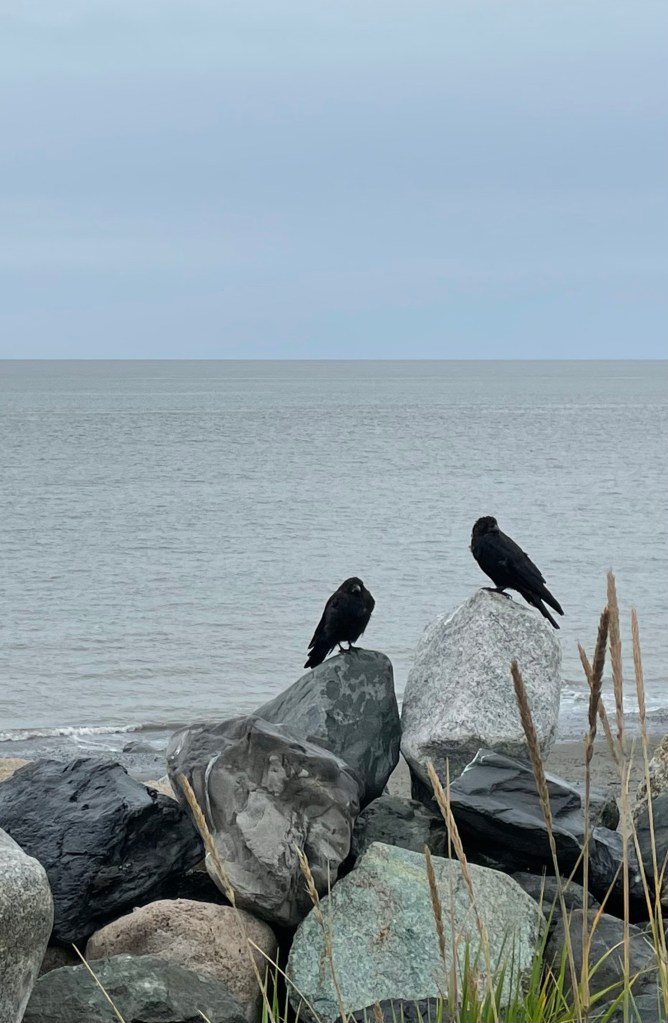

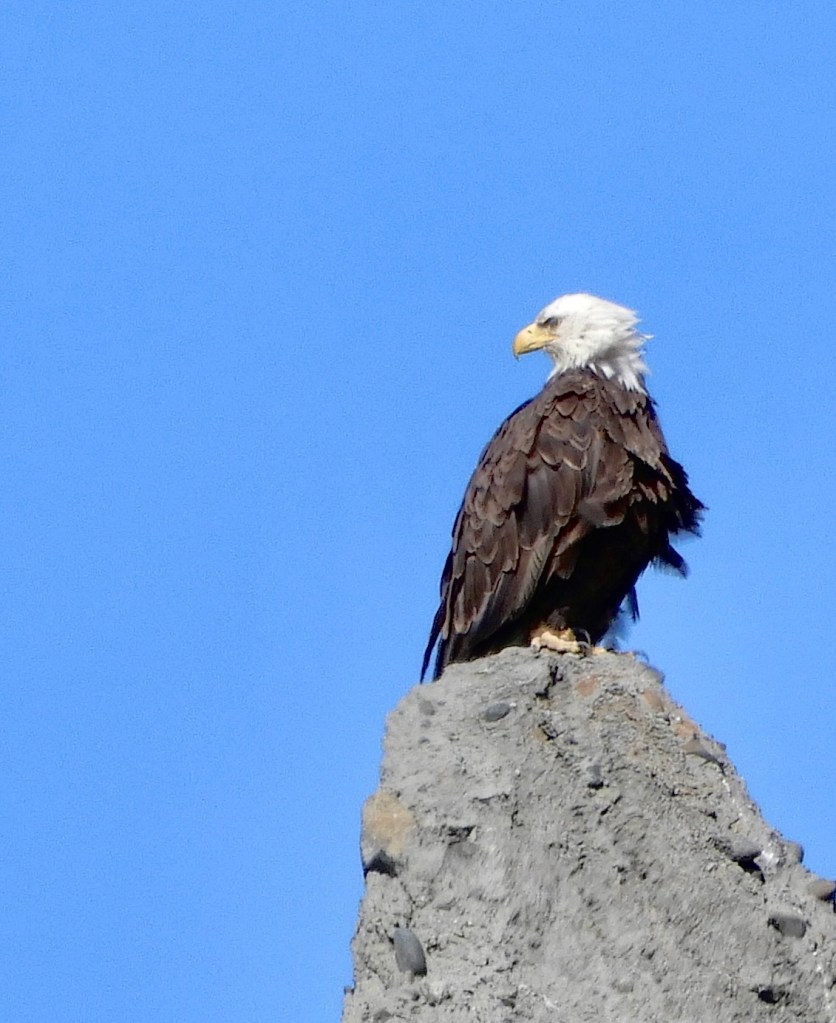
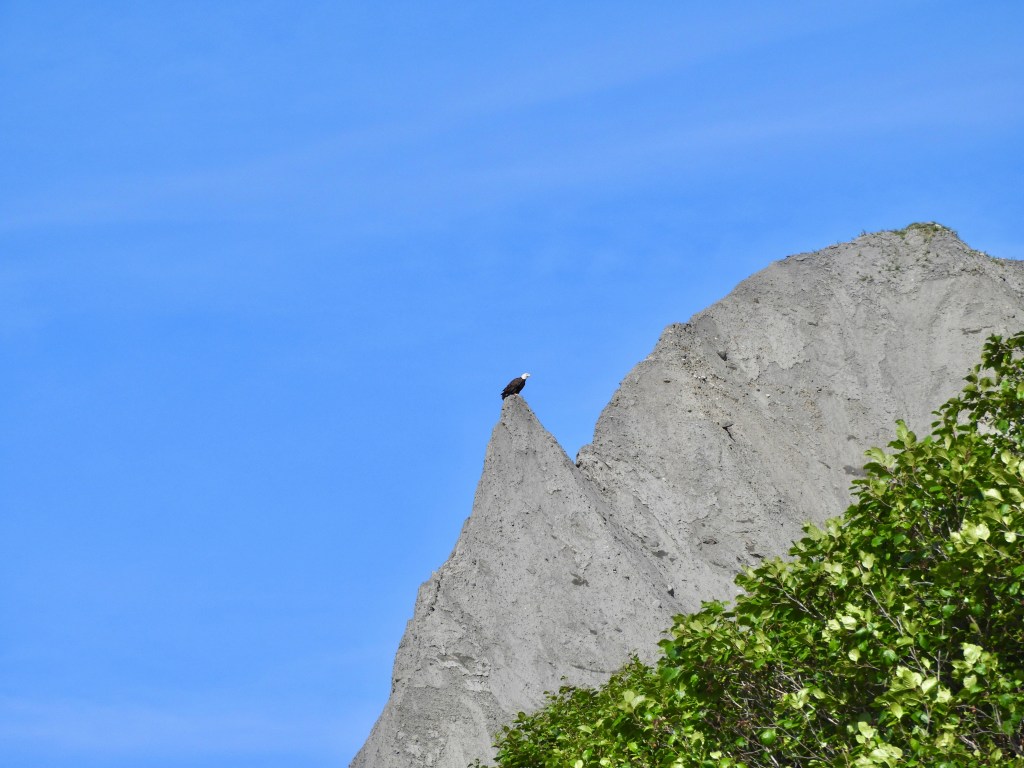


*actually, this day I watched one crow knock over another one and was viciously pecking it and beating it. The other began crying out, it sounded in pain, until several other crows walked up, as if to break it up, they just surrounded them closer and closer until the bully let the loser hop away, crying and sadly croaking as it did. None of the crows did anything except surround the bully. When it hopped a couple times after the loser, they tightened their circle until it turned the other way and separated. Then they all went back their ways. Super fascinating interaction. I was absolutely touched and in awe. Love these birds.


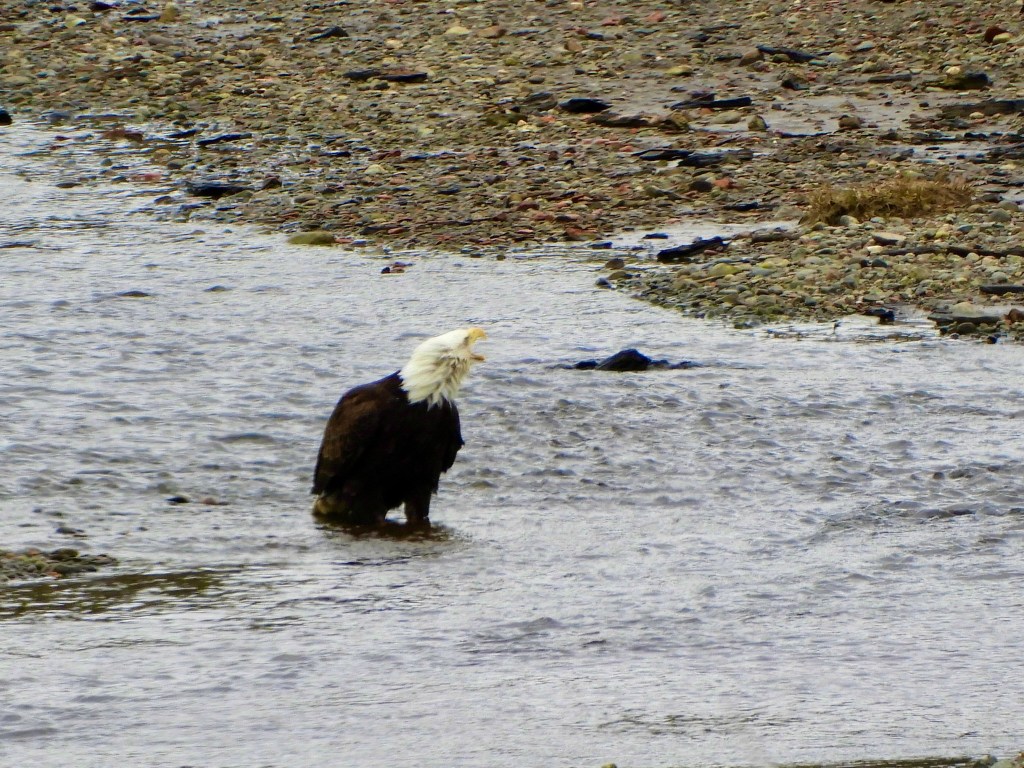

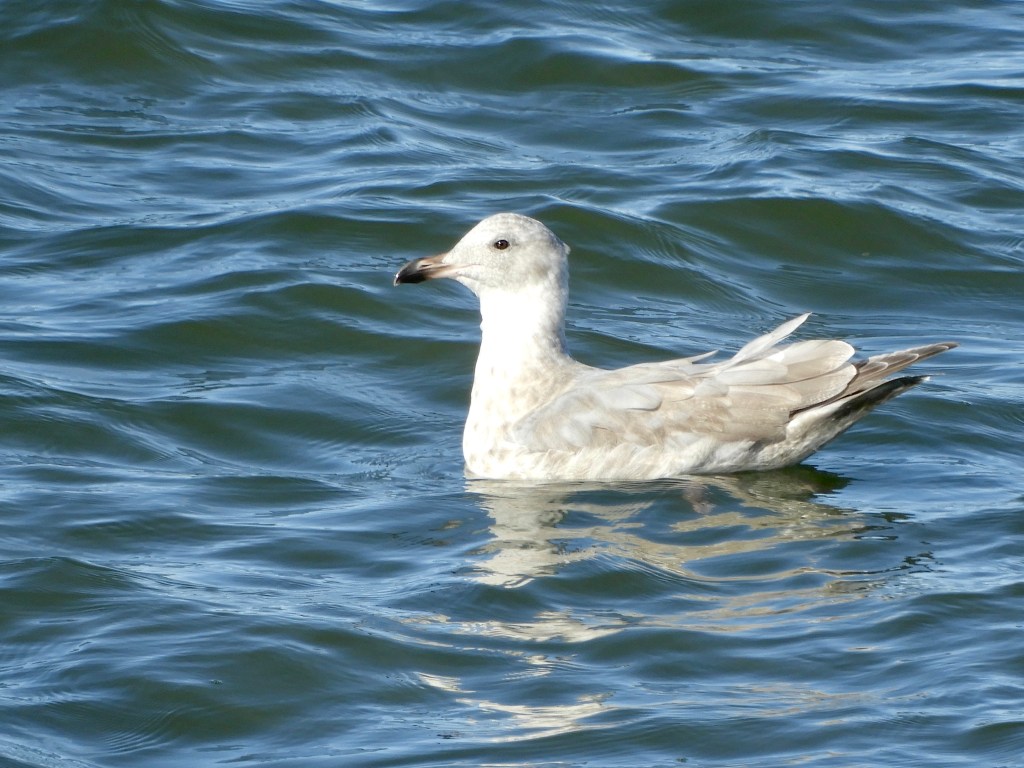

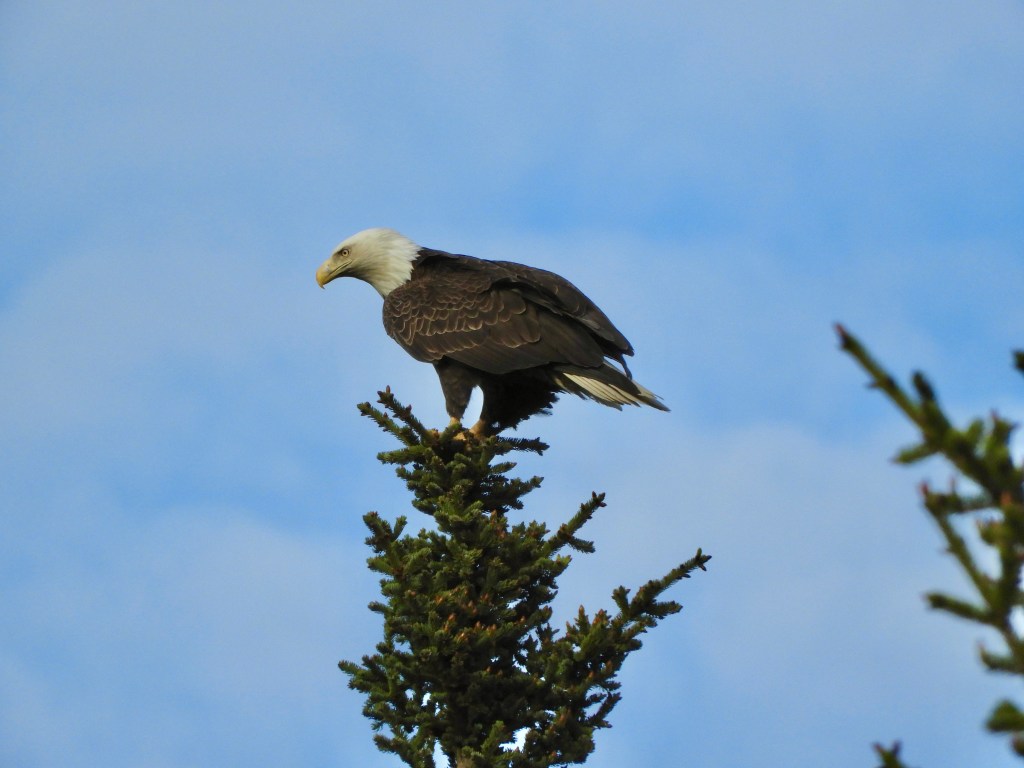
*this was an interesting interaction. A young bald eagle flew across the property with what I believe were moose guts in its talons. It flew into one of the spruce trees on my land, landing about 2/3 down, went deep into the branches, hiding, eating. Two more adult eagles followed it. One landed on the ground below the tree and this one in a nearby tree.


tara caribou | ©️2023 all photos by me
Nov 4 Photography


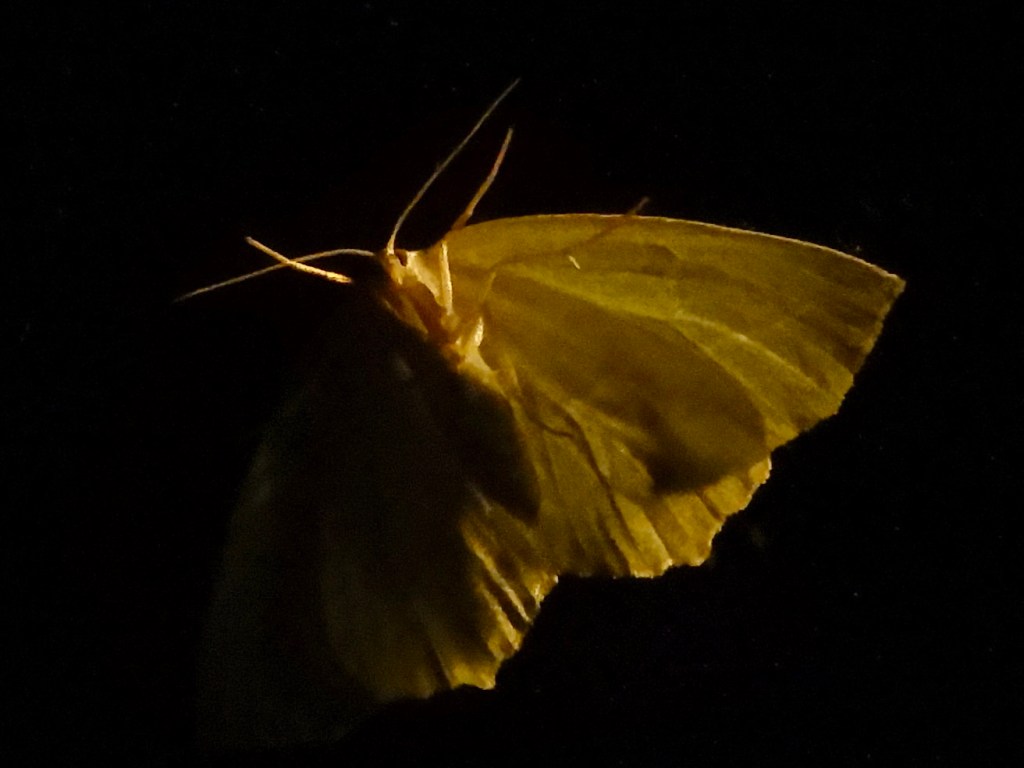
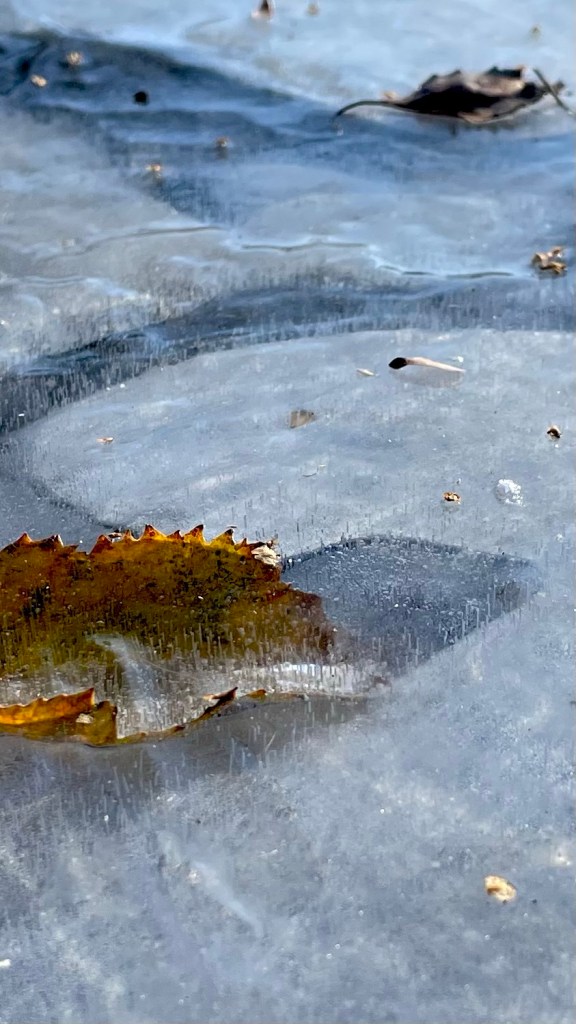

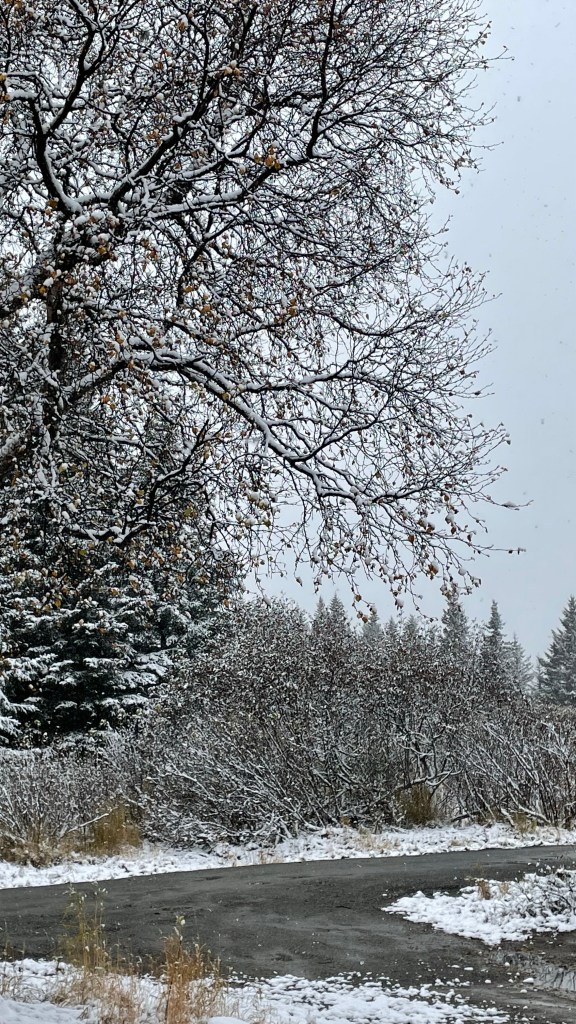

tara caribou | ©️2023 all photos by me
 Raw Earth Ink